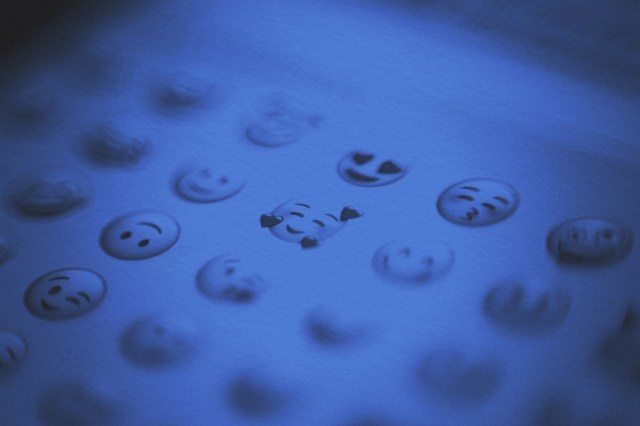
Do you know the hidden or double meanings of certain emojis? If you choose to sprinkle your texts and social media posts with these icons, exercise caution, lest you be misunderstood.
The rules of digital communication are constantly changing, and as soon as you learn an abbreviation for one thing, it might mean something new. And while emojis are pictures, not words, the rules are changing in the same way. These little icons might look like one thing, but they can be used to suggest multiple meanings.
Advertisement
Consider the house emoji (🏡) — it can represent a building, of course, but it also has gained another usage in the last few years. Work colleagues might add it to their calendars to let teammates know that they’ll be working from home on a particular day, for example. Here’s a list of other emojis with unspoken and alternative meanings you might not know about. If you choose to sprinkle your texts and social media posts with them, exercise caution, lest you be misunderstood.
🙃 Upside-Down Face
The upside-down smiley face emoji articulates dark humor and sarcasm. It’s not to be used when you’re being genuine or heartfelt. You’d be smart to avoid it in professional communication, too, unless your office has more of an edgy vibe.
😂 Face With Tears of Joy
For younger texters, the face-with-tears-of-joy emoji (also known as the crying-laughing emoji) doesn’t mean they’re actually laughing — it’s typically used by Gen Zers when something is decidedly unfunny. If you’re actually ROFL (rolling on the floor laughing), you might consider using the skull emoji (💀), which implies something is “so funny I could die.”
Advertisement
🐐 Goat
The goat emoji is always a compliment. “GOAT” is an acronym meaning “greatest of all time,” so if you receive a goat emoji, you’re doing something right.
🐝 Honeybee
Along with the lemon emoji (🍋), for the 2016 album Lemonade, the honeybee emoji ( 🐝) has been adopted by Beyoncé’s fan base, also known as the BeyHive (pronounced “bee hive”). They’ve been known to swarm social media with bee emojis whenever someone comes for their queen, such as when Emma Watson publicly criticized Bey for appearing to cater to the male gaze.
🥑 Avocado
Here’s a cute one that’s popular on Snapchat — the avocado emoji (🥑) is frequently used to denote someone as your better half.
💅 Nail Polish
While you could use this to communicate the experience of getting your nails done, the nail polish emoji (💅) often carries a more sassy connotation. It’s used to articulate being unbothered, indifferent, or somehow above a certain situation or conversation. There’s also another rising niche usage of people dropping the emoji to self-identify as part of the LGBTQ+ community.
Advertisement
💢 Anger Symbol
This emoji usage has Japanese origins, particularly in anime and manga. It’s meant to resemble the veins that appear on a manga character’s face when they’re angry — you can use it to let your friends know when you’re stuck on the bus and getting frustrated that you’re running late.
Featured image credit: Domingo Alvarez E/ Unsplash
Advertisement
More from our network
Word Smarts is part of Inbox Studio, which publishes content that uplifts, informs, and inspires.
How To Tell the Difference Between “Creole” and “Cajun”
In Louisiana and New Orleans, “Creole” and “Cajun” mean different things, but always remember to “Laissez les bons temps rouler,” a Cajun French phrase for “Let the good times roll!”
Around the coastal Louisiana area, you’ll hear a distinctive accent and a unique dialect. When Mardi Gras happens each spring, the influences from this region spread across the country, and you’re likely to see the words “Creole” and “Cajun” on restaurant menus, to describe parties, and in many other contexts that might not be exactly correct. These two words have been used interchangeably for quite some time, but they define two distinct cultures — one that arose in New Orleans, and the other rural.
Advertisement
The French founded New Orleans in 1718, naming it for the Duke of Orleans. At that time, the term “Creole” referred to non-Indigenous people born in colonized countries of the Americas. This was the era of enslavement, so early on, the term was exclusively for white people. In New Orleans, that meant the children of the white French ruling class.
But the distinction didn’t stick. “Creole” gained a more general meaning, and people born in the colonies who had mixed ancestry or parents from Africa were also called “Creoles.”
Creole on a Restaurant Menu
Tracing Creole roots on a family tree can help explain why the adjective could be used by both an upscale French-inspired restaurant and a home-cooking-style diner with dishes such as red beans and rice. (Red beans and rice, in particular, can be traced to Haitian emigres.)
Today, a diner who sees “Creole” on a menu can reasonably assume that dish will be spicy, but that shorthand can be traced through generations of culinary traditions. A French remoulade (close to tartar sauce), given the Creole twist, would be made spicy with paprika and hot sauce added.
Advertisement
Creole as a Language
In the Americas, especially on plantations, new languages arose as people of different backgrounds tried to communicate by incorporating various European languages. The results were called “Creole languages.” Louisiana Creole is based on French, and is still spoken by some of the descendants of the enslaved people who worked on the sugarcane plantations in the area.
"Creole" Is Not "Cajun"
While “Creole” is geographically associated with “Cajun,” they are not the same. Everywhere around Louisiana, there is Cajun food and music, but this word derives from les Acadiens, the name for the French-speaking people who lived along the eastern coast of Canada, then a French colony. When the British conquered Acadia in the 1700s, renaming it Nova Scotia and New Brunswick, the French (les Acadiens) were pushed out.
Some of les Acadiens went back to France, and others went to the French Caribbean. But the Spanish, who had just acquired French-speaking Louisiana, sent emissaries inviting them to come to Louisiana to help fend off the rival British colonists.
Advertisement
The new arrivals didn’t have the means to join the established class of French in New Orleans or the plantation owners. They settled with the Indigenous people and free Black folks and spread throughout the region, mainly near water, in swamplands, along levees and bayous, and on the coastal marshes. Les Acadiens turned into “Cajuns,” and as they made themselves at home, they retained a distinct culture from the New Orleans-based Creoles.
Food is, naturally, a major distinguishing factor in any culture. There are two simple ways to distinguish between a Cajun and Creole dish: Cajuns rarely use tomatoes and their food is spicier. A Cajun jambalaya (the Louisiana version of paella) is brown, not red, like the Creole style. Many Cajuns still speak a nonstandard form of French, but it is different from Louisiana Creole.
Visitors to Louisiana during the Mardi Gras season might decide to embrace the confusion. Cajuns and Creoles are both part of the American melting pot, so it’s hard to unravel what came from whom. In Louisiana and New Orleans, all that matters is to say, “Laissez les bons temps rouler,” a Cajun French phrase for “Let the good times roll!”
Featured image credit: Credit: Douglas Rissing/ iStock
Advertisement
More from our network
Word Smarts is part of Inbox Studio, which publishes content that uplifts, informs, and inspires.
We’re taught in grade school to use “a” before words beginning with consonants and “an” before words that start with vowels. But this simple grammar rule is more complex than it seems.
Some grammar rules are as straightforward as can be — at first glance, at least. We’re taught in grade school to use “a” before words beginning with consonants and “an” before words that start with vowels. That means you could plant “a herb garden,” right? Then why does “an herb garden” sound slightly better to our American ears? It’s because this simple grade-school grammar rule is more complex than it seems.
Advertisement
What Are Indefinite Articles?
The English language has two types of articles: definite and indefinite. They identify whether a noun is specific or generic. “The” is a definite article — the only definite article in English, in fact — and it indicates that we are referring to a particular noun. For example, “John bought the car” refers to one very specific car.
“A” and “an” are indefinite articles, and they can refer to any person, place, or thing. For example, if “Tom will bake a cake,” it could be chocolate, vanilla, or lemon. We don’t know what Tom has planned, based on the language used.
When To Use "A" or "An"
If “the” is the only definite article in English, why are there two indefinite articles? The simple answer is that they’re used in different situations, namely in regard to the letters that follow in the next word. Use “a” if the word that follows begins with a consonant:
They’re adopting a cat.
Did you wear a raincoat?
I’m eating a strawberry pie.
Alternatively, use “an” if the following word begins with a vowel:
She needs an eye exam.
I gave him an umbrella.
Can you get an avocado from the store?
Advertisement
Using Indefinite Articles With Different Sounds
What we’ve discussed so far is pretty straightforward: Use “a” before words that start with consonants and “an” before words that begin with vowels. But it’s not just about the letters — it’s also about the sounds.
When certain vowels make a consonant sound at the beginning of a word, it’s appropriate to use the indefinite article “a” with that word. For example, pair “a” with words that start with “e” and make the “yoo” sound, such as “a euphemism” and “a eucalyptus tree.” “A university” and “a uniform” receive similar treatment. The same is true of “o” words that begin with a “w” sound.
She wanted a unicorn for her birthday.
France is a European country.
I handed them a one-dollar bill.
On the flip side, words with a silent “h” use “an” (as in the “herb” example from earlier). This includes “an honor” or “an hour.” The same is true of initialisms that start with the consonant letters “F,” “H,” “L,” “M,” “N,” “R,” “S,” and “X.” These all begin with a vowel sound, so they need to be paired with “an.”
The salad featured an heirloom tomato medley.
He signed an NFL contract.
It was an FBI investigation.
A Historic Exception
There’s some debate about whether “a historic” or “an historic” is correct. The choice usually comes down to pronunciation, but there’s also a bit of tradition at play with this word. In British English, the “h” is silent, so “an historic” would be correct. In American English, the “h” was pronounced after the 19th century, so it would be logical to use “a historic,” but the indefinite article “an” is still commonly used, especially with “historical.” The Oxford English Dictionary notes that around a quarter of the examples of “historical” are preceded with “an” rather than “a.”
Featured image credit: Credit: JHPhoto/ Alamy Stock Photo
Advertisement
More from our network
Word Smarts is part of Inbox Studio, which publishes content that uplifts, informs, and inspires.
“Lorem Ipsum” Is Everywhere — So What Does It Mean?
“Lorem ipsum dolor sit amet.” You’ve probably seen this Latin-esque text used in typesetting or graphic design. But what does it mean, and where did it come from?
Lorem ipsum dolor sit amet. If this Latin-esque phrase looks familar, it’s because it’s the traditional placeholder or “dummy” text used in typesetting and graphic design for previewing layouts. You might be surprised to learn, though, that it doesn’t actually mean anything. It’s a passage of scrambled Latin text; the intended purpose is to draw the brain away from reading the text itself, and instead call focus to the design of the layout.
Advertisement
The use of classical-language placeholder text in web design is called “greeking,” from the expression, “It’s all Greek to me.” In other words, it’s incomprehensible. Here’s the text of a standard Lorem ipsum passage (when longer text is needed, it just repeats):
Lorem ipsum dolor sit amet, consectetur adipiscing elit, sed do eiusmod tempor incididunt ut labore et dolore magna aliqua. Ut enim ad minim veniam, quis nostrud exercitation ullamco laboris nisi ut aliquip ex ea commodo consequat. Duis aute irure dolor in reprehenderit in voluptate velit esse cillum dolore eu fugiat nulla pariatur. Excepteur sint occaecat cupidatat non proident, sunt in culpa qui officia deserunt mollit anim id est laborum.
A Brief History of “Lorem Ipsum”
Using Latin text as a printing placeholder began long before web design. As early as the 1500s, printers would use sections of classical works to make type-specimen books to demonstrate different fonts. Latin was chosen for this task because it was considered a lingua franca (common tongue) across Europe — far from the dead language it is today.
The exact origination of the scrambled Lorem ipsum text is unknown, but it came into widespread use in the 1960s when the typeface manufacturing company Letraset chose the passage for preprinted transfer sheets for use in the advertising industry. These sheets allowed designers and typesetters to easily transfer the text in various fonts, sizes, and formats for advertisement prototypes.
Advertisement
Fast-forward to the 1980s and the dawn of the personal computer: The Aldus Corporation used Lorem ipsum as part of its word-processing software before Microsoft adopted it for its Word program, and it took off from there. Even today, most online content-management platforms, such as WordPress and Squarespace, use the Lorem ipsum passage for preview text.
But Where Did It Come From, Really?
It would seem that Lorem ipsum stumbled into fame (or at least universal graphic design usage) a bit haphazardly. Where did this mish-mash of Latin copy actually come from? Until the 1990s, it was thought to be a jumble of random words, but there are clues to the mystery. Latin scholar and professor Richard McClintock traced the text to a passage from De finibus bonorum et malorum (“On the Ends of Good and Evil”), an ethical treatise written by the Roman statesman and philosopher Cicero, circa 45 BCE. McClintock was able to track the Lorem ipsum text by searching Latin texts for the word consectetur, which he ultimately found in the 1914 Loeb Classical Library edition of the Cicero text.
This version reads as follows, but the word dolorem is split between a page break (creating the word lorem), and the rest of the text was scrambled to make the Lorem ipsum dummy text.
Neque porro quisquam est, qui dolorem ipsum quia dolor sit amet, consectetur, adipisci velit, sed quia non numquam eius modi tempora incidunt ut labore et dolore magnam aliquam quaerat voluptatem.
The newest iteration of placeholder text is “copy pasta” — blocks of text that appear to have been copied and pasted across social media and online forums. Sometimes these serve the same purpose as Lorem ipsum, giving the brain something to gloss over. In its most benign form, copy pasta is a kind of internet joke form of the game Telephone, but versions of copy pasta have also appeared in misinformation campaigns. The nonsense text is just that — nonsense.
Featured image credit: Credit: ecbphotos/ Shutterstock
Advertisement
More from our network
Word Smarts is part of Inbox Studio, which publishes content that uplifts, informs, and inspires.
English is the most-studied language in the world, with around 1.5 billion people speaking 150 different English dialects. Let’s look at the main branches: British and American.
A dialect is a regional variety of a language. It features not only distinct pronunciations and accents but also a divergence in vocabulary and grammar, meaning that the same language will sound quite different in various dialects. English is a prime example of the vast differences displayed between dialects — it is the most-studied language in the world, with around 1.5 billion people speaking 150 dialects. And while mass media can bring down borders in some ways and expose people to all varieties of languages, research shows that English dialects are actually diverging more than ever before, with new ones evolving and emerging around the world.
Advertisement
The Birth of the English Language
Old English dates back to the fifth century in Britain, and it’s part of the Germanic language family (as opposed to the Romance language family, which includes French, Italian, and Spanish). It looks very different from modern English and changed even more thanks to the addition of the French and Latin words that the Normans brought to England during their 11th-century conquest. This transformed the language into Middle English, which continued to evolve until the 16th century, at which point the printing press was invented. Once printing technology was widespread, language and spelling became more standardized, resulting in the earliest modern English dialect: British English.
British English: The First Modern English Dialect
As the oldest modern English dialect still spoken today, British English remains hugely influential — around 70 million people use it currently. British colonization spread English around the globe beginning in the 16th century, and for this reason, all English dialects, including Jamaican, Canadian, Australian, and South African, are descendants of British English.
Advertisement
Key characteristics of British English:
“R” is pronounced only when it is followed by a vowel (“bright” vs. “start”)
Groups of people take a plural verb form (“The team are taking a time-out”)
The letter “z” is called “zed”
“U” is paired with “o” in the spelling of many words (“colour” and “flavour”)
“T” is used to create some past-tense words (“learnt” and “dreamt”)
American English: The Most Widespread English Dialect
Today, more people study and speak American English than any other English dialect — around 350 million people can speak it, and around 250 million use it as their first language. American English took shape during the colonization of what is now the East Coast of the United States in the 17th century. It retained many words and grammar rules from British English but also adopted words and pronunciations from languages all over the world as new settlers moved to the continent. Many German, Yiddish, Dutch, French, Italian, Spanish, and Indigenous American words entered the American English lexicon because of this “melting pot” of languages.
In the U.S. alone, there are more than 30 distinct American English dialects, also known as “accents.” This is why someone who speaks Californian American English uses different pronunciations, slang, and grammar than someone who speaks Cajun (in Louisiana) or New England English. Other common American English dialects include Southern, Midwestern, Pacific Northwestern, Hawaiian, and various East Coast accents, including the notorious Boston American accent (“Tell yah fath-uh to go pahk the cah”), in which the “r” is dropped in most words.
Key characteristics of American English:
American English is less formal than British English (“Can I…” vs. “Might I…”)
A “t” sound in the middle of a word sounds more like “d” (“wadder” vs. “water”)
Simple past tense is commonly used (“I ate dinner” vs. “I have just eaten dinner”)
The “r” sound is usually pronounced (“car” and “start”)
Many loanwords are adopted from other languages
While both come from the same origin in Old English, British English and American English dialects have diverged enough to merit plenty of linguistic attention.
Featured image credit: Credit: IR_Stone/ iStock
Advertisement
More from our network
Word Smarts is part of Inbox Studio, which publishes content that uplifts, informs, and inspires.
The semicolon is one of the most misunderstood (and misused) English punctuation marks. When should you use a semicolon? Let’s learn more about the specific functions of this unique punctuation mark.
The semicolon appears to be a visual blend of a colon and a comma, and it can perform similar jobs to each of those punctuation marks. Its primary use is to link ideas that are closely related in thought, but that’s a task that can also be done by a comma or an em dash. In part because of this, the semicolon is one of the most misunderstood (and misused) English punctuation marks; let’s learn more about the specific functions of this unique grammatical tool.
Advertisement
To Connect Independent Clauses
The most common way to use a semicolon is by joining two independent clauses. That means it links together two stand-alone clauses into one sentence.
We’re going to the dance; you could borrow my dress.
Tomorrow is the big game; I can’t stay out late tonight.
Keep in mind that the two independent clauses should be closely related. Otherwise, it makes more sense to break them into separate sentences. It’s also important to note that a comma can’t replace a semicolon in this usage — that creates a comma splice.
Another note: If there is an independent clause and a dependent clause, it’s not a place for a semicolon. Dependent clauses feature a subject and a verb but aren’t complete sentences. If there’s a dependent clause, a comma and a coordinating conjunction are likely needed instead of a semicolon.
Advertisement
In Place of a Conjunction
Independent clauses can be joined by a semicolon or by a comma and a coordinating conjunction. (Use the mnemonic FANBOYS to remember the seven coordinating conjunctions: “for,” “and,” “nor,” “but,” “or,” “yet,” and “so.”)
See how the the semicolon replaces the comma and the coordinating conjunction:
Tom went to the party, but Arleen stayed at home. / Tom went to the party; Arleen stayed at home.
The snake slithered past my feet, yet it didn’t seem to notice me. / The snake slithered past my feet; it didn’t seem to notice me.
When the semicolon links the independent clauses, it shows a relationship or contrast. It can also create variety. For example, the semicolon allows a writer to add a longer sentence among other short, clipped sentences.
With Conjunctive Adverbs
Semicolons are also used to link clauses when the second begins with a conjunctive adverb or transitional expression. These include “accordingly,” “furthermore,” “however,” “instead,” “otherwise,” and “therefore.”
Shawn set an oven timer; nevertheless, he burned the casserole.
Nora helped her brother study; however, he failed the class.
As long as it’s joining two independent clauses, using the semicolon is appropriate.
To Separate Items on a List
In speech, pauses or visual cues can break up long lists of items, but writers rely on punctuation to do the heavy lifting. Semicolons can make a long or complicated list of items easier to read. Typically, these are lists that contain phrases or other internal punctuation that might be difficult to read without semicolons.
Several speakers will be at the community center: Mr. Samuels, the judge; Khalid Basha, the lawyer; and Marta Sparks, the council member.
The President is visiting Cleveland and Cincinnati in Ohio; Pittsburgh and Philadelphia in Pennsylvania; and Buffalo and Albany in New York.
The semicolon should be used only if the list contains three or more elements, and they’re elaborate enough that the extra punctuation would help readers understand the meaning.
Featured image credit: Credit: yogesh_more/ iStock
Advertisement
More from our network
Word Smarts is part of Inbox Studio, which publishes content that uplifts, informs, and inspires.
The Debate Over the Longest Word in the English Language
Calling all those with sesquipedalian tendencies (those who use overly long words) — this one’s for you. If you’ve ever wondered what the longest English word is, the answer is actually up for debate.
Calling all folks with sesquipedalian tendencies (those who use overly long words) — this one’s for you. If you’ve ever wondered what the longest English word is, the answer is actually up for debate. Lexicographers (those who study words) consider a variety of parameters, and some disagree on which aspects are most important. Must the word be listed in the dictionary (and if so, which dictionary)? Does a technical or medical word count? Can it be the name of a place or a person, for that matter? These questions (and others) contribute to the lengthy discussion.
Advertisement
Some English words are still in use just because of their length — their original usages are long outdated. Consider, for example, the 28-letter word “antidisestablishmentarianism.” This noun originally meant “opposition to the disestablishment of the Church of England,” but today, it’s almost exclusively used as an example of one of the longest English words.
Other such examples include the 29-letter “floccinaucinihilipilification” (the estimation of something as worthless) and the 27-letter “honorificabilitudinitatibus” (a sesquipedalian synonym of “honorableness”). But while they might take up more than one line of text on a phone screen, none of these terms is in the running for the longest English word. Here are some words that are.
(Note: We hope this list doesn’t inspire any hippopotomonstrosesquippedaliophobia. This 36-letter term denotes a phobia of long words, and while it’s a newly coined term, it refers to a real social phobia that can arise while trying to pronounce or use very long words, especially in front of others.)
Advertisement
The Longest Word in the English Dictionary
Pneumonoultramicroscopicsilicovolcanoconiosis This 45-letter noun is currently the longest entry in the Oxford English Dictionary. It’s another word for silicosis, a lung disease caused by breathing in fine particles of silica, a mineral that is common in sand and concrete. The word was allegedly coined in jest in the 1930s by Everett M. Smith, president of the National Puzzlers’ League, as a jab at elaborate medical terms.
The Longest Technical Term in English
Methionylalanylthreonylserylarginylglycylalanylseryl…leucine This word goes on and on, officially tallying up to 189,819 characters. Perhaps not surprisingly, it isn’t found in any common dictionaries — it would fill up 12 standard pages and it takes approximately three and a half hours to pronounce the entire term. It’s the technical title of a protein that contributes to the elasticity of our muscles, but the name can be neatly shortened to “titin,” derived from the word “Titan,” a reference to the enormous gods of Greek mythology. Why is the full name so long? Per international science-naming guidelines, every single amino acid found inside a protein must be listed in its moniker, and titin contains 34,350 amino acids, resulting in this monstrosity of a word.
Advertisement
The Longest Place Name in an English-Speaking Country
Taumatawhakatangihangakoauauotamateaturipukakapikimaungahoronukupokaiwhenuakitanatahu If we’re considering proper nouns in this competition, the 85-letter name of this New Zealand summit might win for the longest word in an English-speaking country. Taumatawhakatangihangakoauauotamateaturipukakapikimaungahoronukupokaiwhenuakitanatahu, a hill on North Island, is named after the local legend of Tamatea, a fabled warrior celebrated by the Māori. The name of the hill comes from a Māori expression that translates to “the place where Tamatea, the man with the big knees, who slid, climbed, and swallowed mountains, known as ‘landeater,’ played his flute to his loved one.” While the full name is written out on the sign to mark the hill near Hawke’s Bay, locals tend to call it Taumata Hill.
The Longest Nonsense Word in English
Supercalifragilisticexpialidocious Coming in at 34 letters long, “supercalifragilisticexpialidocious” isn’t nearly the longest English word, but because it’s far more recognizable than most of its competition, it deserves a spot on the list. Sometimes cited as the longest nontechnical English word, this term was popularized by the 1964 Disney film Mary Poppins, in which a song helps clarify the bewildering pronunciation of the word. While it’s still considered a rare, fanciful term, it’s popular enough that it earned an entry in the dictionary as an adjective meaning “extraordinarily good” or “wonderful.”
Advertisement
The Longest Scrabble Word in English
Oxyphenbutazone This word might seem miniscule compared to some of the others on the list, but for gamers, it’s just as important. A Scrabble board is 15 by 15 blocks, so the maximum length of a word is 15 letters. Technically, any 15-letter word could be the longest Scrabble word, but “oxyphenbutazone” is noteworthy because it is also the highest-scoring Scrabble word possible when played on three triple-word squares with just the right preexisting tiles. The 1,778-point word is the name of an anti-inflammatory medication used to treat arthritis. The stars must align to use this word — it’s never actually been played in an official Scrabble tournament.
Featured image credit: Credit: Thomas M Perkins/ Shutterstock
Advertisement
More from our network
Word Smarts is part of Inbox Studio, which publishes content that uplifts, informs, and inspires.
Learn the Secret Dialect Still Spoken in California
Welcome to Boonville, California, a tiny hamlet in Mendocino County. While isolated, this town has a unique claim to fame: Residents developed their own English dialect, Boontling.
Welcome to Boonville, California, a tiny hamlet in Northern California’s Mendocino County. Settled in the mid-1800s, the remote town is sandwiched between two mountain ranges, with an estimated population of just over 1,000. While isolated, this town has a unique claim to fame: Residents developed their own English dialect, Boontling.
Advertisement
The name “Boontling” derives from a combination of “Boonter,” an adjectival demonym (a word used to describe people from a certain place) for the town, and “lingo.” There are fewer than 100 speakers of Boontling today, but when it developed more than a century ago, reportedly among women and children working in the fields, it thrived among the locals. In fact, it turned into a town pastime to coin a new word in Boontling and see if other Boonters could figure out the meaning.
Though Boontling includes more than 1,000 words and phrases, its syntax and grammar are distinctly English, so it isn’t considered its own language. Instead, it’s more of a jargon, or a specialized dialect. It combines loanwords and eponyms (words that come from the names of actual people) from English, Spanish, Scottish Gaelic, and Pomoan (the language spoken by the Indigenous Northern California Pomo tribe). And perhaps unsurprisingly, a large portion of the words are of a racy variety. (One of the milder ones: A Boonter named Barney was known to greet everyone with a kiss, so a “kiss” is called a “barney.”)
Here are a few words to cover the Boontling basics — try to sprinkle a few of these into your conversations.
Advertisement
Almittey
In Boontling, “almittey” is a noun. It refers to a belch, particularly a loud one, or a person who burps loudly or frequently. This eponym is in honor of a local woman who was reportedly known for her habitual belching.
Beljeek
A “beljeek” is a rabbit — specifically a black-tailed jackrabbit. This word is a combination of “Belgian” (as in Belgian hare) and “jackrabbit.”
Buckey Walter
This eponym is for a pay phone. While “buckey” is the Boontling word for “nickel,” the “Walter” part refers to Walter Levi, a local man who owned the first phone in the town. As such, “walter levi” is the Boontling term for “telephone.”
Advertisement
Doolsey
“Doolsey” refers to any kind of candy, sweet, or sugar. It’s borrowed from the Spanish dulce (“sugar”), which may have been indirectly borrowed from Pomoan before it made it to Boontling.
Golden Eagles
“Golden eagles” can be any kind of women’s clothing, but in particular undergarments. During the development of this jargon, Golden Eagle was a popular brand of flour. Locals frequently used the sacks to make clothing and underwear, and while other brand-name flour sacks also were used, apparently none of them had the same staying power.
Hedge
A “hedge” is a haircut — as one would trim a hedge, so must one keep their hair tidy with regular haircuts. Many recognizably English words in Boontling operate in this pattern. Words with similar usages, but perhaps in different fields (as in haircutting and lawn care), are swapped.
Linguistic swapping is also common in other English dialects, such as Cockney rhyming slang. “Bread and honey” translates to “money,” for example.
Kiloppety
To “kiloppety” means “to travel by horse-drawn vehicle, or on horseback.” It’s an onomatopoeia, meaning it comes from the sound of shod hooves clopping on the ground.
Wess
To “wess” is “to fib, or exaggerate the truth.” This eponym is styled after a local man named Wes who was known to stretch the truth.
Featured image credit: Credit: Vital Sinkevich/ Unsplash+
Advertisement
More from our network
Word Smarts is part of Inbox Studio, which publishes content that uplifts, informs, and inspires.
As children and teens during the ’60s and ’70s, boomers came up with some of the grooviest words to boogie down to. While many of these haven’t stood the test of time, other terms remain fresh. Here’s the skinny on the best boomer slang.
Between 1946 and 1964, an estimated 76 million babies were born in post-World War II America, giving rise to the baby boomers, one of the largest generations in the history of the United States. As children and teens during the ’60s and ’70s, boomers came up with some of the grooviest words to boogie down to. While many of these haven’t stood the test of time, other terms remain fresh. Here’s the skinny on the best boomer slang.
Advertisement
Groovy
Fashionable and exciting; enjoyable and excellent. “Groovy” had a lot of meanings throughout the 20th century. It was derived from the American jazz phrase “in the groove,” so it originally meant “performing well” in the 1930s. By the 1940s, “groovy” was a stand-in for words such as “excellent,” “first-rate,” and “wonderful.” It reached peak popularity in the ’60s before becoming outdated by the ’80s.
Freak Flag
Used in reference to the open, proud, or defiant exhibition of traits regarded as unconventional. Boomers can thank rock ’n’ roll trailblazer Jimi Hendrix for this one. In his 1967 hippie anthem “If 6 Was 9,” Hendrix exclaims, “But I’m going to wave / My freak flag high, high ow!” While “freak” on its own is more derogatory today, “freak flag” is still used on occasion, with the celebratory metaphor serving as a lasting nod to the counterculture movement of the ’60s.
Foxy
Attractive or sexy; cunning or sly. Today, calling someone “foxy” will elicit a few laughs, but in the ’60s it was quite the compliment. It was first used as “crafty or cunning” (in reference to the animal) in the 1520s, but it wouldn’t come to mean “attractive” until the late 1800s. The word had a resurgence in the 1960s, as seen in the Jimi Hendrix song “Foxy Lady.” The word “foxy” later evolved to be more of a punchline, such as in Foxxy Cleopatra, the name of Béyonce’s character in the 2002 film Austin Powers in Goldmember, which was set in 1975.
Advertisement
Bippy
Used euphemistically for an unspecified part of the body; generally understood as equivalent to “butt.” “You bet your (sweet) bippy!” This famous phrase was popularized in the late 1960s on the American television show Rowan & Martin’s Laugh-In. “Bippy” is a PG slang term for buttocks, hindquarters, rump, caboose, etc. There is no solid case for the word’s origin, but some etymologists say it’s related to “biped” (an animal with two feet), while others point to the Yiddish word for “navel,” pipik/pupik. Both seem to be a stretch — likely, it’s just a nonsense word chosen for its funny sound.
Copacetic
In excellent order. In the ’60s and ’70s, if everything was “copacetic,” it was all good. The phrase might date back to the 1880s in Black communities in the American South, but the etymological root of the word is unclear. Leading origin theories include Hebrew’s kol be sedher (“everything is in order”), the Creole coupèstique (“able to be coped with”), the Italian cappo sotto (“OK”), or the Chinook copacete (“everything’s all right”). One sure thing: Early 20th-century entertainer Bill “Bojangles” Robinson is credited with popularizing it through his catchphrase, “Everything’s copacetic.”
Boogie
Dance to fast pop or rock music; move or leave somewhere fast. Kool & the Gang might have described it best: “Jungle boogie (Get down with the boogie) / Jungle boogie (Shake it around)…” In the ’70s, partygoers weren’t just dancing — they were boogieing. This synonym for “dance” originated in the ’60s as a noun describing a style of rock music with blues influences, characterized by a strong, fast beat. Its natural progression from a music term into the dance lexicon seems inevitable.
Cool Beans
Used to express approval or delight. The year is 1964 and kids around America shriek, “Cool beans!” as they open their brand-new Rock ’Em Sock ’Em Robots. This phrase hung around in pop culture for a few more decades, all the way through the early ’90s, when it was a favorite of DJ Tanner on the sitcom Full House. While the sentiment is simple, the history of the phrase is complicated. “Cool beans” might come from the Australian slang “bean,” meaning “the epitome of fashion,” but more likely, it came from the mid-19th-century phrase “some beans,” used for something impressive. “Some beans” came from the even older phrase “full of beans” — stable jargon used to describe lively race horses that were fed beans to make them run faster.
The Skinny
Confidential information on a particular person or topic. Just as Gen Zers might get “the tea,” boomers got “the skinny.” This is the gossip, the latest news, or the 411. The phrase likely started as military slang during WWII, relating to the “naked truth,” much as “skinny dipping” also means “naked swimming.”
Advertisement
Doofus
A stupid person. What ’60s kid didn’t call their sibling a “doofus” at least once or twice? “Doofus” could describe someone who made a stupid decision, but it was also a word that a bully might use for a nerd. It might have transformed from a combination of the slang words “doo-doo” and “goofus,” or from the Scottish word “doof” (also meaning “dolt” or “stupid”).
Featured image credit: charles taylor/ Shutterstock
Advertisement
More from our network
Word Smarts is part of Inbox Studio, which publishes content that uplifts, informs, and inspires.
Porsche, IKEA, and Other Brand Names You’ve Been Mispronouncing
When a brand is born outside of an English-speaking country, do we use the brand’s native language, an anglicized version, or something in between? For example: “Porsh” or “Porsh-uh”?
One of the most common culprits of mispronunciation must be brand names. When a brand is born outside of an English-speaking country, do we use the brand’s native language, an anglicized version, or something in between? Some brands anglicize their name right away to avoid any confusion, such as in the case of Italian chef Ettore Boiardi, who changed his name to Chef Boyardee so Americans would have an easier time with it phonetically. Of course, not every brand is that accommodating (nor should they have to be), so pronunciation pitfalls abound, from the aisles of the grocery store to fashion week runways and everywhere in between.
Advertisement
Nutella
NOU-tella
NUT-ella
This chocolatey hazelnut spread is beloved worldwide, and it has roots in multiple European countries, so the pronunciation is naturally debated. According to the Nutella brand, the pronunciation is something like “NOU-tella” with an emphasis on the “NOU” (which sounds like the vowel sound in “newt” in American English, using a hard “oo”). If you’ve been saying it incorrectly, don’t worry — in a recent poll conducted by the brand, 78% of British people were pronouncing it incorrectly as “NUT-ella.” Nutella was also adamant that it doesn’t care how consumers pronounce the product name, so long as they enjoy it.
Porsche
PORE-shuh
Porsh
Let the German car brand end the debate — “Porsche” is a two-syllable word. While plenty of Americans drop the “e” at the end, the correct German pronunciation is “PORE-shuh.” It comes from the brand’s founder, Ferdinand Porsche. The German language has far fewer silent letters than English, a difference that resulted in the incorrect anglicized version. In a recent poll on brand-name pronunciations, “Porsche” was the second-most-mispronounced name — around 65% of participants were incorrect.
Advertisement
Givenchy
zhee-VAAN-shee
gee-VIN-chi
Beating out Porsche in the pronunciation poll was Givenchy — more than 70% of participants got the name of this French luxury fashion and perfume house wrong, making it the most-mispronounced common brand name. The first syllable causes American English speakers the most grief: The “zh” or “sz” sound is pronounced like the “s” in the word “vision”; there is no American “g” sound in this word. The ending is also softer than an Americanized version would be, ending in “shee” rather than a hard “ch” sound.
La Croix
la-CROY
luh-KWAH
This one might be counterintuitive. “La Croix” looks like a French word, so it must be pronounced like a French word, right? Actually, it’s a Midwestern company, and the sparkling water brand stayed true to its roots when picking a name. It was first produced out of a brewery in La Crosse, Wisconsin, in the 1980s, and the city name was combined with the name of the St. Croix River, resulting in a portmanteau of the two Midwestern locales: La Croix. The brand suggests remembering this by using a helpful saying: “La-CROY. It rhymes with ‘enjoy.’”
To add to the confusion, the French luxury fashion brand Christian Lacroix ispronounced “luh-KWAH.” It stays true to French phonetics, where “croi” produces a “kwa” sound, as heard in the word “croissant.”
Advertisement
IKEA
ee-KAY-uh
eye-KEE-ah
If you’ve been saying “Let’s go to eye-KEE-ah,” you’re not totally out of bounds. While the anglicized pronunciation of the furniture store’s name is technically OK to use — even American IKEA commercials use it — the traditional Swedish pronunciation features different vowel sounds. The first syllable is “ee,” as in “need”; the second is emphasized and pronounced as “KAY,” as in “OK”; and the third ends in an “uh” or “yuh” sound.
Ralph Lauren
Ralf LAUR-en
Ralf lau-RAWN
This pronunciation mix-up comes from a classic case of trying to put a fancy spin on a word that doesn’t require it. Ralph Lauren is an American fashion brand, and as such, it uses the American pronunciation of the name “Lauren,” with an emphasis on the first syllable. Some people add a European-esque emphasis on the second syllable, but this is incorrect, as Ralph Lauren himself uses the American style of his name.
Fage
FAH-yeh
FAH-gee or FAY-j
The Fage yogurt brand was founded in Athens, Greece, and its naming is twofold. First, the word “fage” (φαγε) is the verb for “to eat,” and second, the name “Fage” operates as an acronym. It stands for Filippou Adelphoi Galaktokomika Epicheiriseis (Filippou Brothers Dairy Company). With these Greek roots for the Greek yogurt brand, the pronunciation is “FAH-yeh.”
Moschino
Mos-KEY-no
Moh-SHEE-no
Founded by Franco Moschino, this Italian fashion brand is on the long list of designer names that have been (incorrectly) Americanized. In English, we often naturally turn the “ch” grouping into a “shh” sound, but in Italian, it takes the form of a hard “c” or “k” sound, so the second syllable is pronounced “KEY” (not “SHEE”).
Hermès
AIR-mez
HER-meez or HER-me
“H” is a silent letter in French when it stands alone as a consonant, so for this French luxury brand, go ahead and drop the first letter altogether. Typically, the “s” at the end would also be silent in French pronunciation, but the accent mark on the second “e” (called an “accent grave”) changes the pronunciation of the “e,” and therefore the “s.” The accent calls for the “e” to be pronounced like the vowel sound in the English word “net.” Because of this, the “s” is also softly pronounced.
Advertisement
Sriracha
sir-ROTCH-ah or see-ROTCH-ah
sri-ROTCH-ah
The trick to pronouncing this Thai chili sauce is to leave out the first “r.” As for the pronunciation of the first vowel, that’s up for debate. Some official sources, including Merriam-Webster and the Oxford Dictionary, say to pronounce the first syllable as the word “sir,” while in the Thai language, the first syllable is “see.” Both options seem to be acceptable for hot sauce fans, so long as that first “r” remains silent.
Versace
Ver-sach-EH
Ver-sach-EE
As confirmed by Donatella Versace herself, the correct pronunciation of this Italian fashion brand is “Ver-sach-EH,” with more of an “uh” or “eh” sound at the end (not an elongated “ee” as in “knee”). The fashion magnate explained the pronunciation of her family name in an interview with Vogue, putting an end to the discussion once and for all.
Featured image credit: Credit: redcharlie/ Unsplash+
Advertisement
More from our network
Word Smarts is part of Inbox Studio, which publishes content that uplifts, informs, and inspires.
Enter your email to receive daily lessons that dive into what makes English so fascinating. Each email is packed with odd rules, etymologies, and the tools you need to be a better communicator.
Sorry, your email address is not valid. Please try again.
Sorry, your email address is not valid. Please try again.