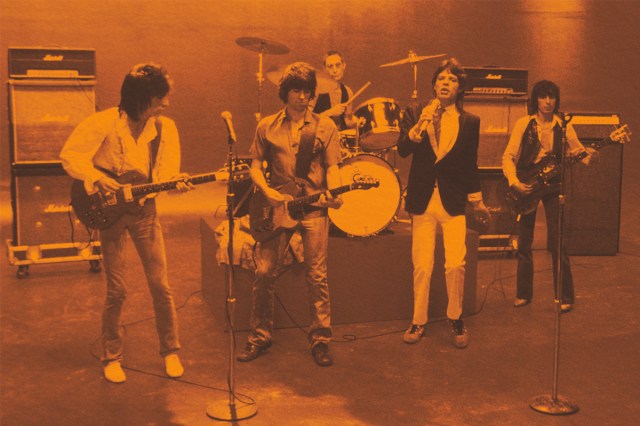
Have you ever wondered whether to say “each time” or “every time”? Let’s break down the differences between these similar words with a little help from the Rolling Stones.
Certain redundancies in English are acceptable for emphasis. Take the phrase “each and every,” often used in marketing, speeches, film, and songs. Even the Rolling Stones used it for emotional weight in their ballad “Each and Every Day of the Year.” Both “each” and “every” are determiners used to refer to individual members or items within a group, and they can be used together or interchangeably. But when should you use one over the other? A grammar guide from the University of Oxford encourages us to recognize their differences based on our focus.
Let’s start with “each.” This word zooms in, emphasizing individuals in a group of two or more things by identifying them separately. For example: “Each VIP ticket includes a backstage pass” or “Each song featured new choreography.” “Each” prompts you to picture the designated items one at a time. This works well when the group is small or the goal is to highlight individuality. While “every” might technically fit these examples, “each” is more precise.
“Every,” on the other hand, takes a broader scope. It refers to all members of a large group collectively, as in, “She knows the lyrics to every Rolling Stones song” or “Every fan was singing along.” It’s about total inclusion rather than individual focus. “Every” is also ideal for describing frequency or repeated actions, as in, “I go to concerts every summer.” Here, “each” isn’t the best fit because the focus isn’t on individuality.
The phrase “each and every” combines the features of both and makes sure we are paying attention to the individual and the whole — ideal for advertising and persuasive speeches.
While you can usually get away with using either interchangeably in casual conversation, knowing these subtle differences between “each” and “every” can add precision to your writing.
Featured image credit: Michael Putland/ Hulton Archive via Getty Images
Advertisement
More from our network
Word Smarts is part of Inbox Studio, which publishes content that uplifts, informs, and inspires.
As billionaires overtake millionaires, $1,000 may not be the biggest amount of money one can imagine, but it nevertheless has an imposing nickname. Here’s why we refer to this specific amount of cash as “a grand.”
In English, the concept of money has plenty of nicknames: “cash,” “moolah,” “bucks,” “dough,” “bread,” “scratch,” etc. But only a few specific amounts of money have sobriquets of their own. For example, $1,000 is commonly called “a grand,” a term that was coined in the early 20th century.
One of the earliest known uses of “grand” as slang for a thousand dollars dates back to a 1915 edition of TheBoston Daily Globe. At the time, a thousand bucks was considered a “grand sum” of cash, hence the nickname we still use. And while it might not be quite as life-changing in the context of today, when you take inflation into account, $1,000 in 1915 is roughly equivalent to $32,000 in 2025, which is an impressive sum of money — one might even say it’s grand.
Of course, slang evolves as language does, and we now have a colloquialism for “grand” (which is itself a colloquialism). People sometimes shorten “grand” to “Gs,” so if someone says “five Gs,” they mean $5,000. While we’re on the topic of single letters, a thousand is also sometimes represented by the letter “K.” This has to do with the prefix “kilo-,” a term derived from the ancient Greek khilioi, meaning “thousand.” In other words, $5,000 in cash can be represented by either “five Gs” or “five K.”
Featured image credit: Alexey_M/ iStock
Advertisement
More from our network
Word Smarts is part of Inbox Studio, which publishes content that uplifts, informs, and inspires.
In 1982, computer scientist Scott Fahlman created the emoticon — a series of characters representing a facial expression, such as 🙂 for happiness. These little text-based icons were effective, but in the years that followed, Japanese designers created a more detailed set of images for online communication. Though the images didn’t have a catchy name at first, that changed in 1997 with the introduction of a new term: “emoji.”
Lots of people think that “emoji” is derived from the English word “emotion,” but that’s a myth. “Emoji” is a Japanese word meaning “pictograph” that combines three individual components. In Japanese, e means “picture,” mo means “write,” and ji means “character.” All together, they create “emoji,” which, according to Merriam-Webster, refers to “any of various small images, symbols, or icons used in text fields in electronic communication.” These include winking faces, cartoon dogs, slices of pizza, and other colorful images. It’s merely a coincidence that “emoji” is so similar to the word “emotion.”
Japanese designer Shigetaka Kurita is usually credited for helping to popularize emojis in 1999. He claims he was inspired to create emojis from “pictograms, manga, and all sorts of other sources.” But emojis — both the images and the term itself — predated Kurita’s work by a few years. One of the earliest known uses of “emoji” appears in the October 27, 1997 edition of Nikkei Weekly: “P-kies CD-ROM Emoji Word Processor software featuring more than 500 pictorial symbols has become a hit.” While the specific person responsible for coining “emoji” may not be known, the playful and catchy connotation of “emoji” (despite the very literal meaning) gave the term lasting power.
Featured image credit: Giant Template/ Adobe Stock
Advertisement
More from our network
Word Smarts is part of Inbox Studio, which publishes content that uplifts, informs, and inspires.
How the English Language Differs Across the Canadian Border
While the differences between American and British English are quite noticeable, the distinction between American and Canadian English is more subtle. However, there are still a few notable variations between the dialects, so keep reading to learn more.
Americans share a lot of similarities with our neighbors to the north, such as a mutual fondness for beer, maple syrup, and ice hockey. English is spoken in both countries, though there are ways in which the pronunciation and vocabulary differ (and French is also an official language in Canada). Let’s examine how the English language varies based on which side of the border you’re located on.
Pronouncing Vowels
For the most part, Americans and Canadians pronounce words similarly, but slight differences in vowel pronunciation are more prominent in particular words. Saying the words “about” and “sorry” will signify a Canadian faster than wearing a maple leaf sweater. There’s a stereotype that Canadians pronounce “about” like “a boot,” but it’s actually closer to “a boat.” This change comes because Canadians tend to raise the /ou/ vowel sound, meaning the tongue sits higher in the mouth. All words containing “oat” or the /ou/ pronunciation follow this vowel pattern.
Do Canadians Say “Eh”?
Yes, Canadians do say “eh,” though it doesn’t come at the end of every sentence, as stereotypes might portray. “Eh” is an interjection that, according to Merriam-Webster, is “used especially in Canadian English in anticipation of the listener’s or reader’s agreement.” In other words, it’s like ending a sentence by asking, “Do you agree with what I just said?” or “Right?”
Language-learning platform Babbel shared in this YouTube video that “eh” is akin to the Japanese hé or Portuguese né. It’s essentially a polite way to invite the listener to participate in the conversation. This plays off of another Canadian stereotype: politeness. Instead of just stating a fact to someone, Canadians might say “eh” to encourage a back-and-forth dialogue, which often leads to a more enjoyable and engaging conversation.
Advertisement
Different Vocab
While we couldn’t possibly touch on every unique bit of Canadian vocabulary, there are a few notable terms used in everyday conversation. An American might be mystified by some of these slang terms, even though they’re English.
For instance, Canadians refer to CA$1 coins as “loonies,” as these coins feature the likeness of a bird called a loon. They also refer to CA$2 coins as “toonies,” a portmanteau of “two” and “loonie.” Americans might be confused by both the silly words and the larger coin denominations.
Differences extend to the culinary world as well. When Canadians say “Caesar,” they might be ordering a salad, but they’re more likely ordering a popular cocktail containing vodka, tomato juice, and clam broth (similar to a bloody mary). Canadians also say “back bacon” rather than “Canadian bacon,” the former term being a literal reference to the part of the pig it comes from. And Canadians love Timmies, a coffee chain whose formal name is Tim Horton’s — don’t forget your Timbits (donut holes).
Ask a Canadian to sing the alphabet and they’ll end with the letter “zed,” not “zee.” The letter “Z” comes from the Greek zeta, which was borrowed by the Romans who created the Latin alphabet that many English speakers rely on. It’s through this evolution that the majority of English speakers, including Canadians, Brits, Kiwis, and Aussies, pronounce “Z” as “zed.”
The reason why Americans say “zee” has to do with a 19th-century effort to distinguish American English from British English. Lexicographer Noah Webster declared “zee” as the official pronunciation of the letter “Z,” and it stuck. But in Canada, it’s still “zed.”
What About Spelling?
Americans and Canadians spell a lot of words the same way, including ones that end in the suffix “-ize”(e.g., realize, theorize, etc.). While British people would spell those words ending with “-ise,” Canadians and Americans always use “-ize.”
However, sometimes Canadian spelling differs from American spelling, as it tends to align more closely with British English. This includes words such as “traveling” and “canceled” here in America, which would be spelled as “travelling” and “cancelled” in Canada. Canadians also follow British rules in regard to English words originally derived from French, such as “color” and “honor.” While Americans drop the “u” (again, thanks to Noah Webster), Canadians and Brits prefer to spell these words as “colour” and “honour.”
Featured image credit: Andre Furtado/ Pexels
Advertisement
More from our network
Word Smarts is part of Inbox Studio, which publishes content that uplifts, informs, and inspires.
Have you ever wondered why doctors refer to the folks they tend to as “patients”? It has less to do with the act of waiting and more to do with the word’s Latin roots.
It can feel like an excruciatingly long wait to hear your name called at the doctor’s office. In those instances, it’s best to remain patient — though that’s not why people visiting the doctor are called “patients.” The etymological root of the word implies a state of suffering, which is what some people feel when visiting a medical professional.
“Patient” is a modern English word derived from the Latin patiens, which comes from the present participle of pati, meaning “to suffer.” It’s also related to the ancient Greek pēma, which means “suffering,” and the Sanskrit pāpman, meaning “want, need.” Middle English speakers spelled the word as “pacient” in the 14th century, and when modern English replaced Middle English in the 16th century, that spelling was altered to “patient.”
While “patient” has been used in a medical context for centuries, some now argue that it’s not a completely appropriate term. Given that “patient” implies suffering — at least etymologically — it doesn’t describe everyone who visits a doctor, especially those who go for routine checkups and elective procedures. Some medical providers have shifted to using terms such as “client,” “partner,” or “service user,” as those don’t inherently paint the person as a pained individual.
However, other medical providers and many recipients themselves see no issue with referring to people as “patients,” as terms such as “client” and “provider” have been shunned for being too commercialized. In a 2018 article for The Psychiatrist, Dr. Jawan Adil wrote, “Patients themselves like to be called patients,” and pointed to several studies on the topic. Despite the etymology being rooted in suffering, there seems to be comfort in the long-established meaning of “patient” being a recipient of medical care.
Featured image credit: National Cancer Institute/ Unsplash
Advertisement
More from our network
Word Smarts is part of Inbox Studio, which publishes content that uplifts, informs, and inspires.
My friends and I used to “give each other the chills,” a process that started by chanting “crack an egg on your head, let the yolk trickle down.” It was a middle school time-wasting activity, so the “chills” weren’t all they were cracked up to be. “All it’s cracked up to be” is a phrase that asks you to measure if something is as good as expected. And while it might bring to mind the act of cracking an egg, it has distinctly non-ovoid origins.
People usually use the phrase in the negative. When something is not all it’s cracked up to be, it means it’s not as good as you expected it to be. You can use the phrase without the negative modifier as well. Asking if the new superhero movie is “all it’s cracked up to be” implies you expect it will be a disappointment.
The idiom is a folksy way of speaking. An early example of it in print showed up in The Kentuckian in 1829: “He is not the thing he is cracked up for.” A few years later, in 1835, American frontiersman Davy Crockett similarly criticized Martin Van Buren in his writing: “Great men … are not the things they are cracked up for.”
The key to the idiom is probably in the word “crack.” British slang speakers have employed “crack” as a positive descriptor since 1793. However, there isn’t a documented direct line from the slang to the idiom in the negative.
As such, there’s no agreed-upon origination for “all it’s cracked up to be,” but the 19th-century print examples give us a good indication that it showed up in the American English lexicon in the early 1800s.
Featured image credit: tiverylucky/ iStock
Advertisement
More from our network
Word Smarts is part of Inbox Studio, which publishes content that uplifts, informs, and inspires.
Whether comparing someone unfavorably to a cheese or making an early “yo mama” joke, Shakespeare never shied away from getting creative with his jabs and insults.
The works of William Shakespeare provide the first recorded use of some 1,700 words in the English language. In some cases, these were preexisting words that Shakespeare was simply the first to write down, but many others were invented or introduced by the Bard himself. He also coined a wide range of expressions that we still use today, such as “in a pickle,” “with bated breath,” and “wild goose chase.”
And then there were the insults. Shakespeare was a master of barbs and jabs, and he used insults to both comedic and dramatic effect. His works include a plethora of colorful invectives that could provoke mighty guffaws from commoners standing in the pit, as well as bashful titters from aristocrats in the private galleries. The insults that are darker in tone could replace actual violence — as Hamlet says as he prepares to face his mother, “I will speak daggers to her, but use none.”
Here are some of Shakespeare’s finest insults, including a precursor to the “yo mama” joke and some of the most creative and satisfying put-downs in the English language.
You starveling, you elfskin, you dried neat’s tongue, you bull’s pizzle, you stockfish!
This rapid-fire assault from Falstaff in Henry IV, Part 1 compares its target — who happens to be Prince Hal, the future Henry V — to various thin, dried, and unappetizing things, including the skin of an elf, a shriveled cow’s tongue, a bull’s penis, and dried cod.
Away, you three-inch fool!
In Shakespeare’s comedy The Taming of the Shrew, Curtis uses this line to attack Grumio’s physical stature while also insulting his intelligence. Then there’s the secondary connotation of “three-inch,” calling into question the size of Grumio’s manhood. It’s a short insult, but it packs quite a punch.
Advertisement
Methinks thou art a general offence and every man should beat thee.
In Act 2 of All’s Well That Ends Well, the wise nobleman Lafeu confronts the tricky, deceitful Parolles. Lafeu doesn’t hold back, berating Parolles by declaring him so universally disliked that he deserves to be beaten by literally everyone.
Villain, I have done thy mother.
Proving that Shakespeare could be crude at times, this straightforward precursor to the modern “yo mama” joke is perhaps one of his most direct and brutal insults. Spoken by the cunning villain Aaron in Titus Andronicus— often considered the Bard’s most violent work — its vulgarity underscores Aaron’s cruel nature.
Away, you scullion, you rampallian, you fustilarian! I’ll tickle your catastrophe.
This colorful and — to modern audiences — largely impenetrable stream of insults is worth dissecting for its fantastic words. The diatribe, spoken by a page in a larger exchange with Falstaff in Henry IV, Part 2, begins with “scullion,” used in Shakespeare’s day to refer to any person of low rank. This is followed by “rampallian,” meaning “a wretch” or “a good-for-nothing scoundrel,” and then “fustilarian” (an alteration of the earlier and even more magical word “fustilugs”), used to refer to a ponderous, clumsy person. “I’ll tickle your catastrophe,” meanwhile, roughly translates to “I’ll smack you on your behind.”
Advertisement
I do desire we may be better strangers.
This is perhaps the most elegant insult in Shakespeare’s vast repertoire. Delivered by Orlando in As You Like It, it’s a graceful way of telling someone you’d rather never see them again.
You Banbury cheese!
In The Merry Wives of Windsor, we encounter the character Slender, whose name comically refers to both his lack of wit and and his physical stature. (He is described as having “a little wee face, with a little yellow beard.”) In Act 1, Scene 1, Bardolph insults him by comparing him to a very specific type of cheese — an insult that made sense to contemporary audiences familiar with this particular dairy product. Banbury cheese was very thin, with little actual cheese after the rind was removed — it was therefore a clever and fitting way to mock both Slender’s name and his physical slightness.
Thou cream-faced loon!
One Shakespearean insult that deserves to be revived for the 21st century is “cream-faced loon.” Spoken by Macbeth, it’s a fairly simple jab meaning “pasty-faced idiot” — but it certainly rolls off the tongue.
As insults go, being called a “luxurious mountain goat” might not sound so bad. But in the insult Pistol launches at a French soldier in Henry V, “luxurious” doesn’t have today’s connotation of “opulent or sumptuous” — rather, in Shakespeare’s time, it meant something akin to being self-indulgent, louche, or hedonistic. The Bard likely used “mountain goat” due to the animal’s association with randy behavior, creating an insult that in today’s parlance would mean something like “you damned, lecherous goat.”
Featured image credit: Birmingham Museums Trust/ Unsplash
Advertisement
More from our network
Word Smarts is part of Inbox Studio, which publishes content that uplifts, informs, and inspires.
Today, when people use the expression “throw down the gauntlet,” it is very much in a metaphorical sense. After all, not many people walk around wearing gauntlets — armored gloves — these days. The idiom is used as a challenge or dare, to say that one is ready to confront, argue, or compete with someone. Normally, this doesn’t involve an actual physical fight. It’s more likely to appear in a sporting, political, or business context, such as, “The leader threw down the gauntlet to his opponents, daring them to challenge his decision.”
Originally, however, an actual fight in the presence of gauntlets was far more likely. The origin of the phrase comes from medieval chivalric traditions — specifically, the settling of disputes between knights through trial by combat. To issue such a challenge, the instigating knight would dramatically remove his gauntlet and throw it onto the ground at his opponent’s feet. To accept the challenge, his opponent would pick up the armored glove — hence the other expression, “take up the gauntlet.” The challenged knight could decline by leaving the gauntlet on the ground, but this would carry great social shame and entirely unchivalrous implications of cowardice.
In the world of medieval chivalry, the throwing of the gauntlet represented more than mere aggression. It was a formal, honor-bound procedure. Challenges could arise from disputes over principles, romantic interests, land, or any perceived insults that demanded satisfaction through combat. A challenge could even be made against a claimant to a royal crown. When William the Conqueror seized the English throne in 1066, he asked his friend Robert Marmion to serve as his champion — a role that demanded he be ready to throw down the gauntlet at the feet of anyone openly challenging the new king’s legitimacy.
The age of knights dueling and wearing heavy metal gauntlets eventually faded into history. But the expression remains, and “throwing down the gauntlet” retains, to some extent, its original sense of courage and directness — just without the imminent danger of having to engage in one-on-one combat with a fully armored and likely angry knight.
Featured image credit: Nneirda/ iStock
Advertisement
More from our network
Word Smarts is part of Inbox Studio, which publishes content that uplifts, informs, and inspires.
Did Colonial-Era Settlers Have an American Accent?
What did early American colonists actually sound like? Probably not like modern Americans — and parts of the current American accent may be closer to 17th-century British English.
Colonial-era settlers did not speak with an American accent as we know it today. But they probably didn’t speak in a modern British accent either, at least not the Received Pronunciation — sometimes referred to as “the Queen’s English” or “BBC English” — spoken in London and southeastern England today.
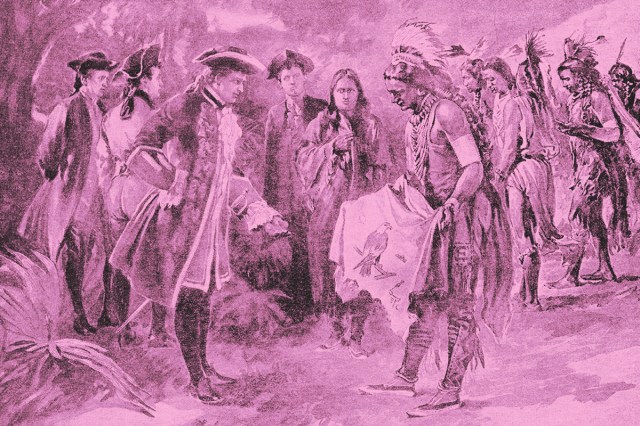
When British colonists — mainly English, at first — arrived in North America during the early 1600s, they brought with them the accents and dialects of their home regions. Many of these settlers came from cities such as London, Liverpool, and Bristol, with smaller numbers from Scotland, Wales, and Ireland, all bringing their distinct accents, pronunciation patterns, vocabulary, and speech rhythms. Therefore, there was nothing close to a unified “American” way of speaking.
But as these colonists settled together in the New World, a new way of speaking began to develop. A number of factors were in play. For one, there was the mixing of different English regional dialects, combined with isolation from England itself. Then there was contact with other settlers, who spoke Dutch, Swedish, French, and Spanish, as well as interaction with Indigenous peoples. It wasn’t long before a new English dialect began to emerge — in fact, it may have occurred within one generation.
It can be argued that this marked the origins of what is now known as “American English.” But without actual recordings, which didn’t exist until centuries later, we’ll never be able to say exactly how the early American colonists spoke, or precisely when they first started to sound noticeably different from the British.
Interestingly, some linguists argue that certain aspects of what we consider the modern “American accent” actually preserve older forms of English pronunciation that have since changed in Britain. This has a lot to do with rhoticity, or the pronunciation of “r” in words like “card,” “door,” and “park.” Brits in the 1600s, like modern-day Americans, typically pronounced all their “r’s.” But with the rise of the largely non-rhotic Received Pronunciation (the “standard” British accent) in the 19th century, Brits began ditching the hard “r.” Because of this, there’s an argument to be made that modern Americans may sound more like the Brits of several centuries ago than the current Brits do — at least where the “r” is concerned.
Featured image credit: Classic Image/ Alamy Stock Photo
Advertisement
More from our network
Word Smarts is part of Inbox Studio, which publishes content that uplifts, informs, and inspires.
What’s the Difference Between Language, Dialect, and Accent?
Is it an accent, a dialect, or a whole different language? The answer isn’t always obvious — and the differences might be smaller (or bigger) than you think.
The distinctions between language, dialect, and accent aren’t always clear-cut. A technical definition can be applied to each one — with accent perhaps being the easiest to differentiate — but there is a certain amount of overlap among the three linguistic classifications. Human communication is, after all, an incredibly fluid and ever-evolving process.
When we talk about accent, we are referring specifically to differences in pronunciation — how words sound when spoken aloud, or, as Merriam-Webster puts it, “an individual’s distinctive or characteristic inflection, tone, or choice of words.” We all speak with an accent (even if our accent is considered “neutral” for our particular language). Someone might speak the exact same language and use identical vocabulary and grammar as us, but they might still pronounce words differently — i.e., have an accent — based on their geographic origin or social background. In the United States, notable accents include those from New York City, Boston, and the South (which has its own variations, depending on the location). A person from Boston and someone from Alabama may both speak English, but their distinct accents sound different. In this case, the accent alone is unlikely to affect overall comprehension — but particularly strong accents can hinder a listener’s understanding, especially when combined with a difference in dialect.
Accents can be understood as a subset of dialect. Dialects are more complicated than accents in that they encompass differences that include not only pronunciation but also vocabulary, grammar, and sentence structure. Dialects represent regional or social varieties of the same language, and due to their unique vocabulary and grammatical features, dialects can hinder understanding between speakers of the same language, especially if they are not accustomed to the differences. A good example is Scouse, the distinctive dialect (and accent) of Liverpool and the Merseyside region of the United Kingdom. People from the U.S. might struggle to understand Scouse, even though it’s a dialect of English. Even east Londoners who speak their own Cockney dialect of English can struggle with Scouse — and Liverpool is only 200 miles away from London. However, spending time immersed in the dialect will familiarize someone with the new way of speaking.
The broadest of the three linguistic categories is language. Language represents a complete communication system with its own vocabulary, grammar rules, and often writing system — it includes dialects and accents. The general test for whether two communication systems constitute separate languages is mutual intelligibility: If speakers cannot understand each other without specific learning of the grammar, vocabulary, and syntax by both parties, they’re speaking different languages rather than distinct dialects. But the precise boundaries of what constitutes a separate language are not always easy to define, existing on a scale of difference rather than either side of a clear dividing line.
Featured image credit: jaouad.K/ iStock
Advertisement
More from our network
Word Smarts is part of Inbox Studio, which publishes content that uplifts, informs, and inspires.
Enter your email to receive daily lessons that dive into what makes English so fascinating. Each email is packed with odd rules, etymologies, and the tools you need to be a better communicator.
Sorry, your email address is not valid. Please try again.
Sorry, your email address is not valid. Please try again.