A brownie point is an unabashed win — you get credit for trying or succeeding at something. However, getting a brownie point does not mean you get an actual brownie. But even with no sweet treat involved, there’s an interesting history behind the idiom.
Before there were points, brownies popped up in fairy tales as good-natured elves who performed helpful household tasks. You can find the use of this word with this definition in Jane Eyre by Charlotte Brontë: “You talk of my being a fairy; but, I am sure, you are more like a brownie.” Young girls who were taught how to do household chores would earn the helpful-elf moniker.
The definition of a brownie point is “a credit regarded as earned especially by currying favor (as with a superior).” The key to understanding the origin is knowing that technically the “B” could be capitalized: a Brownie point. The Girl Scouts were founded in 1912 in Savannah, Georgia, by Juliette Gordon Low, and the group has grown over the past century from 18 members to a global organization with multiple tiers for all ages of girls and young women. “Brownies” is the name for the junior level of the Girl Scouts, for young girls in second and third grade, usually ages 7 to 9. The fairy-tale elves are the origin of the group’s name.
Enter, the Brownie point. In 1944, a Pennsylvania newspaper reported on a gathering of Brownie Girl Scouts: “The girls gave Brownie dances and sang Brownie songs. Awards were given to Lois Ginhaman and Helen Romig for attendance and Brownie points.” In the modern Girl Scouts organization, members receive patches in recognition for their achievements, not Brownie points.
Is this one local news report enough evidence to support the origin of the idiom? The mid-20th-century timing is right, and the Girl Scouts are popular enough that it’s plausible. It’s likely that the helpful reputation of the elves combined with the Girl Scout rewards to create the idea of “brownie points” for extra credit.
Featured image credit: Patti McConville/ Alamy Stock Photo
Advertisement
More from our network
Word Smarts is part of Inbox Studio, which publishes content that uplifts, informs, and inspires.
What’s the Difference Between ‘Though,’ ‘However,’ and ‘But’?
“Though,” “however,” and “but.” All three of these three words introduce contrasting statements, but they cast a slightly different tone, so it’s important to know how to use each of them appropriately.
“Though,” “however,” and “but.” All three words share a common goal: contrast. When any of these words appears in a sentence, the reader knows what comes next will be different from, or maybe even the opposite of, what came before.
Consider these examples:
I love ice cream, but I’m lactose intolerant.
I love ice cream; however, I’m lactose intolerant.
I love ice cream, though I’m lactose intolerant.
All of those sentences present the same facts, yet the word choice between clauses in each subtly changes the tone and rhythm. “But” is the most informal, as well as the most versatile choice. It’s a coordinating conjunction (like “and” or “so”) that connects two words or phrases, and it’s the default in everyday writing and speech. It implies a contrast between the clauses on either side of it. The phrase following “but” should be in opposition to the beginning clause. Also, remember that “but” needs a comma when connecting two complete clauses but not when connecting short phrases or simple words:
I was ready for school, but I missed the bus.
School was hard but interesting.
“However” is more formal. It is a conjunctive adverb, not a coordinating conjunction, so it needs more than a simple comma to make the connection. It may start a new sentence, or it may be used after a semicolon, beginning a new complete phrase. As with “but,” there is contrast between the two parts, usually with “however” introducing something that contradicts the first part. Other conjunctive adverbs include “rather,” “furthermore,” or “meanwhile.” Here are some examples of “however” in action:
The data is promising; however, more research is needed.
The data is promising. However, more research is needed.
The data is promising. More research is needed, however.
In terms of tone, “though” is the most conversational. Grammatically, it is a subordinating conjunction, meaning it connects a dependent clause to an independent one. A comma is not needed before “though” and the dependent clause. The purpose of “though” is to introduce something in opposition to the first part, or to qualify a statement.
I like the design though it’s not perfect.
Though it’s not perfect, I like the design. (A comma is used when the subordinating conjunction begins the sentence.)
When it comes to choosing among these three contrasting words, the choice is less about strict grammar than it is about the rhythm and tone you want to convey. For direct contrast, choose “but”: I love coffee, but I can’t drink it after 3 p.m.
Use “however” for a formal shift or a contradiction: I love coffee. However, I can’t drink it after 3 p.m.
“Though” is appropriate in casual usage or for a gentle concession: I love coffee though I can’t drink it after 3 p.m.
Featured image credit: ljubaphoto/ iStock
Advertisement
More from our network
Word Smarts is part of Inbox Studio, which publishes content that uplifts, informs, and inspires.
“Back to square one” isn’t just about frustration — it’s about resilience. Its origin likely comes from the gaming world, either in sports or in board games.
We’ve all been there — you try and try, but you fail and have to start over, “back to square one.” The phrase portrays the frustration of erased progress but also illustrates the determination to try again. So where is “square one”?
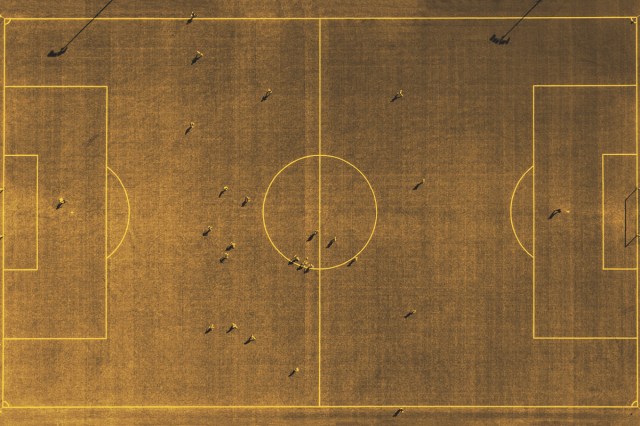
There are two main theories as to the origin of the phrase: British football (aka soccer) and board games, although both theories have their flaws. In 2007, the BBC wrote that the saying comes from the earliest live radio broadcast of a British football game in 1927. To help listeners picture the location of the ball during play, a grid of the football pitch (aka soccer field) was printed in the newspaper.
Radio commentators referenced those grid numbers during the broadcast, and “square one” was the rear left quadrant of the defender’s side of the field. That’s where the goalie would initiate a new play after an attack failed. Therefore, the ball and the players were “back at square one.”
The other theory is that “square one” is the starting point of the game Snakes and Ladders, which was inspired by an ancient Hindu game called Moksha Patamu and brought to Great Britain in the late 19th century. Americans might be more familiar with Chutes and Ladders, the version created by Milton Bradley in 1943. In the game, players roll dice and move across squares on the board, climbing ladders along the way. But a bad roll can lead to a snake or a chute, causing the player to fall back to where they started — square one.
In both the board game and the football game, “square one” was a literal location; now it is a metaphor for countless restarts. But it’s more than just starting again — “back to square one” is a state of mind. It suggests perseverance to start over and determination to not give up. You don’t go back to “square one” to take a nap. You go there when you intend to advance once again.
Featured image credit: AlenaPaulus/ iStock
Advertisement
More from our network
Word Smarts is part of Inbox Studio, which publishes content that uplifts, informs, and inspires.
Maybe you’ve been stumped by this grammatical dilemma before: Is it “toward” or “towards”; “forward” or “forwards”? This debate is a game of transatlantic tug-of-war, but the best choice often depends on your location.
Shakespeare once wrote, “Like as the waves make towards the pebbled shore, so do our minutes hasten to their end.” This line highlights a common confusion: the distinction between “toward” and “towards.” While Shakespeare used the latter preposition in his sonnet, I’ll stick with “toward.”
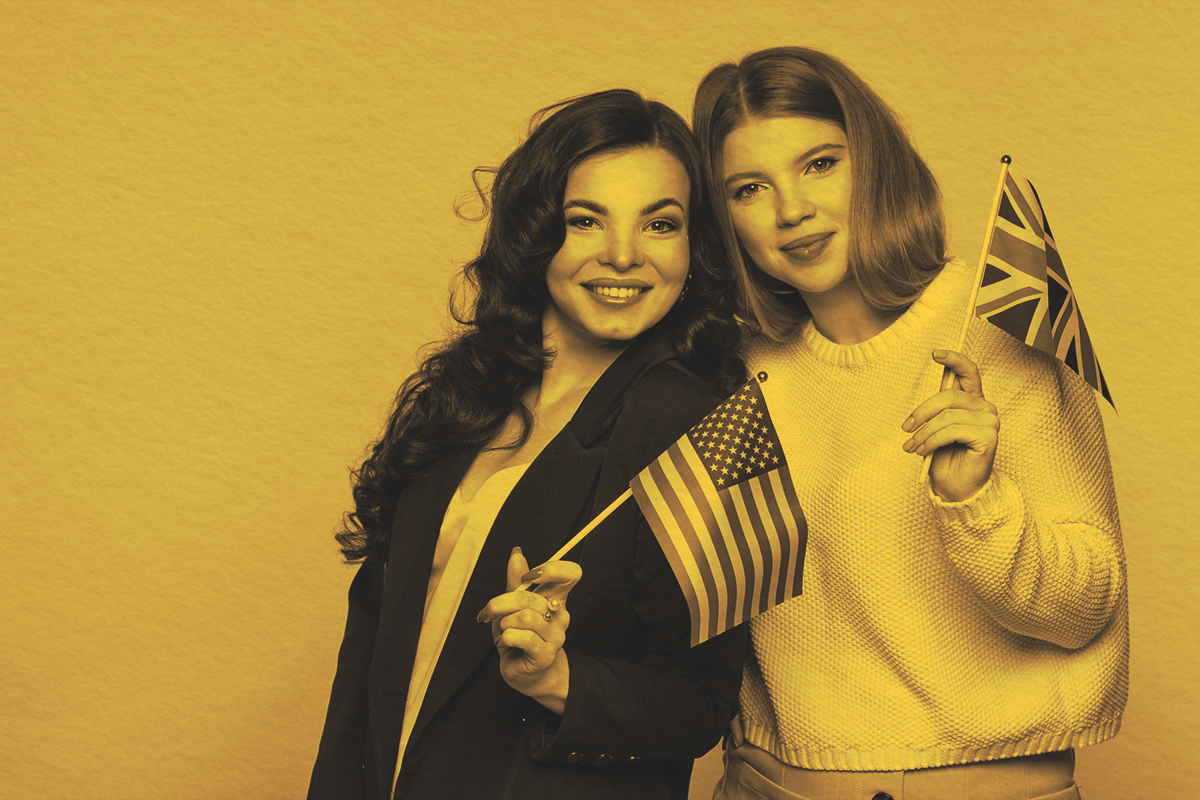
The right choice depends on whether you’re using American English, which prefers “toward,” or British English, which favors “towards.” Both terms are prepositions meaning “in the direction of,” and the “s,” or lack thereof, doesn’t change the definition. These variants have coexisted for centuries, originating from the Old English spellings “toweard” and “toweards.” The difference in spelling is one of many distinctions between British and American English dialects.
And the phenomenon isn’t unique to “toward.” Other directional words from Old English (typically adverbs) ending in “-ward” follow the same pattern: “forward,” “backward,” “upward,” “downward,” “inward,” “outward,” “onward,” and “afterward.” All of these often appear with an ending “s” in British English. That “s” stems from an old grammatical construct called the adverbial genitive, used in Old and Middle English to transform words into adverbs.
During the 19th century, the additional “s” at the end of directionals fell to the wayside in the U.S., partly thanks to Noah Webster (of dictionary fame), who labeled “forwards” as a corruption in his seminal 1828 dictionary. Other American grammarians agreed. In Good English (1870), Edward S. Gould called “towards” an “ignorant usage.”
Given these strong sentiments, it’s no surprise that “towards” declined in American usage during the mid-19th century, while “toward” steadily rose. In British English, “towards” remains dominant, though “toward” has also gained popularity, especially since 2000.
So, which should you use? It depends on your audience. American readers and style guides (including Chicago and AP) favor the form without the “s,” as in “toward.” But if you’re writing for an international audience — or copying Shakespeare — feel free to use “towards.”
Featured image credit: AscentXmedia/ iStock
Advertisement
More from our network
Word Smarts is part of Inbox Studio, which publishes content that uplifts, informs, and inspires.
While “chewing the fat” doesn’t sound like the most appealing of meals, it can be a pleasant way to spend your time. Where did this idiom for a casual chat or friendly small talk come from?
“Chewing the fat” refers to the act of having a conversation, typically a long, informal chat or friendly small talk. The phrase is a classic example of something we often say but without knowing why. After all, what does chewing fat have to do with casual discussion? A few theories exist to explain the expression’s origin — none of which is 100% certain.
Perhaps the most widely repeated explanation traces the phrase back to 19th-century sailors. During a voyage, sailors were often given salt pork as a protein source. The preserved meat was tough and therefore required considerable chewing, and as the seafarers gnawed their way through the chewy portions of fat, they would naturally pass the time by talking with their shipmates. Hence, chewing the fat — which then allegedly became associated with relaxed, unhurried conversation. In reality, however, there’s no direct evidence to support this origin story.
Another common theory suggests the phrase originated in rural 16th-century communities. If a family obtained a nice, fatty cut of pork, they would hang it in the parlor and invite people over to show off their wealth. Guests were then served a small piece, and they would all sit around and chew the fatty pork while enjoying a lengthy chat.
While it may sound reasonable enough, this story was entirely fabricated. According to the myth-busting site Snopes.com, an article called “Life in the 1500s” started circulating the internet in 1999. The above “chew the fat” theory about parlor pork — along with many other myths about medieval life — was spread by this spoof article, but there’s no evidence the phrase existed as far back as the 1500s. In fact, there’s proof against most of the ideas in the made-up piece.
A less common explanation claims the phrase comes from Native Americans (possibly Inuit), who would chew hides to soften them. While we know Native Americans did chew hides in this way, there’s no evidence to support this as the origin of “chew the fat.”
According to the Oxford English Dictionary, an early written usage of “chew the fat” comes from an 1885 book by J. Brunlees Patterson called Life in the Ranks of the British Army in India. In the book, Patterson discusses the frequent grumbling and griping of the soldiers, often to stave off boredom and let off steam — something he refers to as “chewing the rag, or fat.”
Here, “chew the rag” and “chew the fat” appear to be synonymous. The former phrase first appeared in print in 1875, according to the Random House Historical Dictionary of American Slang. (The relevant sentence reads in part, “Gents, I could chew the rag hours on end, just spilling out the words.”)
It’s possible, then, that “chew the fat” simply came about as a variation on “chew the rag.” Both, after all, are actions involving a lengthy chewing action — a movement much akin to talking. But as for the precise origin of “chew the fat,” it seems that may be lost to time.
Featured image credit: irabell/ iStock
Advertisement
More from our network
Word Smarts is part of Inbox Studio, which publishes content that uplifts, informs, and inspires.
The term “double threat” is perhaps most commonly used to describe an actor who can also sing, or a singer who’s also a skilled dancer. But in the world of linguistics, it could refer to nouns that can also function as adjectives.
In grade school, we learn that a noun can be a person, place, thing, or idea, while adjectives can be used to modify those nouns. But some nouns get extra credit, as they function as both a noun and an adjective. These nouns go by several names, such as attributive nouns or modifier nouns, but we’ll refer to them as “descriptive nouns.”
Think of terms such as “train ticket,” “coffee cup,” and “data scientist.” Each individual word is a noun by itself, but when paired, the premodifier (first noun) functions in the same way that an adjective would. The words “train,” “coffee,” and “data” all provide additional information that paints a clearer picture than if you were to just say “ticket,” “cup,” or “scientist.” The premodifiers are descriptive nouns, and the second words remain normal nouns. (Premodifers can also be standard adjectives, as in “blue boat,” or participles, such as “falling rain.”)
Sometimes descriptive nouns do a far better job than an adjective could. Take the example, “He wore a glove” — there are a lot of open questions about what type of glove. If you add an adjective and say, “He wore a leather glove,” there’s still some uncertainty. But if you add a descriptive noun to say, “He wore a baseball glove,” you’ve gotten the message across in a clear and concise manner.
For as useful as they are, descriptive nouns don’t have the same level of flexibility as a standard adjective. Let’s say you’re talking about a busy sports bar; while “busy bar” can also be written as “bar that is busy,” “sports bar” can’t be written as “bar that is sports.” Also, these descriptive nouns don’t have a comparative form. In other words, while you can intensify the adjective “long” as “longer,” you can’t amplify “chicken soup” as “chickener” or “chickeniest soup.”
Featured image credit: niwat/ Abobe Stock
Advertisement
More from our network
Word Smarts is part of Inbox Studio, which publishes content that uplifts, informs, and inspires.
Have You Heard of These Spunny Foonerisms (Funny Spoonerisms)?
Whether it’s a case of whimsical wordplay or simply being tongue-tied, spoonerisms can lighten up any sentence. These funny phrases first became popular during the 19th century and are named for a preacher from around that time.
Have you ever gone out on your lunch break and had a particularly disappointing meal? Perhaps you were inspired to sing a sad ballad about that bad salad. Forgive us — that’s not a bad pun, but an example of a spoonerism. This type of wordplay is “a transposition of usually initial sounds of two or more words.” In other words, it involves mixing up the starting sounds to produce an often-humorous result, such as “sad ballad” being derived from “bad salad.”
The word “spoonerism” is named for William Archibald Spooner, a British clergyman and educator who lived from 1844 to 1930. He’s credited with coming up with the concept and coining many famous spoonerisms, though it’s an open question whether the transpositions were an intentional creation. Some say that Spooner would get nervous and make these slips of the tongue when speaking in public. Others claim his students leaned into the bit and came up with many spoonerisms themselves, which are now attributed to Spooner himself. In either case, the term “spoonerism” was coined as early as 1885. Here are a few fun examples.
Spoonerisms Attributed to Spooner
Whether these spoonerisms were actually uttered by Spooner or simply attributed to the man later on, they’ve since become synonymous with his legacy.
Spoonerism: Weight of rages
Correct: Rate of wages
According to the Oxford Dictionary of Quotations, Spooner once said, “The weight of rages will press harder and harder upon the employer.” While he meant to say, “The rate of wages will press harder and harder upon the employer,” it’s entirely possible for both to be true if employers don’t keep their employees happy.
Spoonerism: Queer old dean
Correct: Dear old queen
No, Spooner wasn’t talking about an odd dean of the college he taught at; he was speaking about Queen Victoria. Though the story may be apocryphal, Spooner once delivered a toast to the queen in which he purportedly said, “Three cheers for our queer old dean!”
Spoonerism: Hags flung out
Correct: Flags hung out
When discussing the return of British soldiers after World War I, Spooner is said to have told his students, “When our boys come home from France, we will have the hags flung out.” We’d venture to guess that he was likely talking about the Union Jack flag, instead of suggesting that people would be hurling witches out of windows.
Spoonerism: Shoving leopard
Correct: Loving shepherd
While there are many versions of the Bible, we’re pretty sure there aren’t any that refer to God as a “shoving leopard.” Yet, it’s claimed that Spooner once told his parishioners, “Our Lord is a shoving leopard” (instead of a “loving shepherd”). While God is said to be all-powerful, we’ve never heard about the ability to transform into a big, powerful cat.
Spoonerism: Kisstomary to cuss the bride
Correct: Customary to kiss the bride
On her big day, it’s probably a good idea not to cuss out the bride. But don’t tell that to Spooner, as one of his most well-known attributions goes: “It is kisstomary to cuss the bride.” Let’s hope the groom didn’t listen, or else he might be sleeping on the couch on his wedding night.
Advertisement
Other Famous Spoonerisms
Not all spoonerisms are associated with their namesake. Many authors have come up with spoonerisms of their own — some intentionally and others by mistake.
Spoonerism: Hoobert Heever
Correct: Herbert Hoover
In 1931, radio host Harry von Zell famously referred to then-President Herbert Hoover as “Hoobert Heever.” The broadcaster was reading a scripted tribute for the president’s birthday when he made the famous flub. Later, von Zell explained that he “was very nervous,” and thought his career might have “ended right there in that one incident.”
Presidents and spoonerisms seem to go together. Look no further than this 19th-century letter penned by President Abraham Lincoln. While Lincoln lived before the term “spoonerism” was coined, he seems to have been quite familiar with this bit of wordplay. The letter reads as follows: “He said he was riding bass-ackwards on a jass-ack, through a patton-crotch, on a pair of battle-sags, stuffed full of binger-gred, when the animal steered at a scump… he fell right in a great tow-curd.”
Spoonerism: Runny Babbit
Correct: Bunny Rabbit
Children’s author Shel Silverstein wrote an entire book of spoonerisms titled Runny Babbit: A Billy Sook. The work, published posthumously in 2005, follows the adventures of the title character and his friends Toe Jurtle, Skertie Gunk, Rirty Dat, Dungry Hog, and Snerry Jake.
Featured image credit: Igor Suka/ iStock
Advertisement
More from our network
Word Smarts is part of Inbox Studio, which publishes content that uplifts, informs, and inspires.
Have you ever found yourself being vague on purpose? This practice, called “hedging,” has its place, but when it muddies your message or dulls the facts, it’s better left out.
We all like a little wiggle room, and no one understands this better than weather reporters during hurricane season. Because forecasts are unpredictable, reporters must strike a balance between accuracy and caution: “There appears to be another tropical disturbance forming … ” carefully avoids specifics. The phrase “appears to be” is a textbook example of “hedging,” or using language to express uncertainty.
The verb “hedge,” a synonym for “evade,” comes from the notion of hiding in a hedge to dodge something. And there are many ways to hedge linguistically. For example, modal verbs such as “may,” “could,” “can,” and “might” help us when we can’t commit fully. “The rain might be letting up” leaves room for a sudden downpour. Similarly, reporting verbs (such as “suggest,” “argue,” and “claim”) help present interpretations or tentative conclusions: “Data suggests we’re in for an active hurricane season.”
But hedging isn’t just for reporters or researchers — we do it all the time in conversation, too. You might say, “It seems that you spilled some coffee,” to be polite to a stranger. To a friend, you’d probably cut to the chase and tell them where to find the paper towels.
That’s the key: Hedging isn’t always appropriate or helpful. If something is a fact, state it plainly. We wouldn’t say, “It appears that the Earth orbits the sun.” Overusing hedging can make you sound suspicious, untrustworthy, or hesitant. For instance, “Research suggests vitamin C comes from citrus fruits” is an overuse of hedging. Replace “suggests” with “shows” to convey confidence.
A guiding principle of many style guides, including AP style, is brevity, so hedging should be used only when necessary. But knowing when it’s necessary can be tricky. The Online Writing Lab at Purdue University offers this advice: Ask yourself, “How has it been used in the research you’ve read?” and “Can you make this claim as strongly as you are doing here?” If your claims match the research and the experts, state them confidently. If there’s genuine uncertainty, soften it with some hedging.
Featured image credit: Rebecca Van Ommen/ The Image Bank via Getty Images
Advertisement
More from our network
Word Smarts is part of Inbox Studio, which publishes content that uplifts, informs, and inspires.
The name of the game pickleball has as clear an origin story as any other sport. But a debate eventually emerged over that name, which we’ll try to clear up.
Much like the ’90s trends of racewalking and Jazzercise, pickleball is a major sporting craze. People of all ages play this popular paddle sport, which admittedly has an unusual name. It’s not like the sport is played in a giant bath of brine, nor is anyone hurling dill pickles across the court, so why is it called “pickleball”?
In the summer of 1965, the Pritchard family was vacationing at their home in Bainbridge Island, Washington. To stave off boredom, U.S. Congressman Joel Pritchard and his friends cobbled together a game using a badminton court, some table tennis paddles, and a perforated plastic ball. Thus, pickleball was created.
The name of the game came from Joel’s wife, Joan. As an avid rowing fan, Joan threw out the name “pickle ball,” a reference to “pickle boat” rowing competitions in which leftover crew members are thrown together on a team. She felt this name was appropriate since the newly created game incorporated “leftover” elements of similar sports, such as badminton and table tennis. In the context of rowing, the term “pickle boat” came from old fishing fleets, as the very last boat to return to port was responsible for pickling that day’s catch. Joan’s recommendation was adopted and eventually shortened to one word.
But confusion over the name’s origins ensued. In 1968, the Pritchards got a new dog and named it Pickles. Years later, Joel was interviewed by a reporter about where the name “pickleball” came from, and he told the true story. Joel also joked about how they named it after the family dog, and the reporter opted to run with that (false) angle instead. This muddled the origin story for pickleball fans, but it was Joan who originally came up with the name.
Featured image credit: Chalffy/ iStock
Advertisement
More from our network
Word Smarts is part of Inbox Studio, which publishes content that uplifts, informs, and inspires.
The word “I” is the only English pronoun that gets the VIP capitalization treatment. This typographic quirk traces back to medieval manuscripts, leading to a unique rule of capitalization in English.
I can recall scratching my head in French class, puzzled about why je — the French equivalent of the pronoun “I” — isn’t capitalized. As it turns out, English is the odd one out in this respect; most other languages do not capitalize their version of “I.” From the Spanish yo to the Vietnamese tôi, a lowercase pronoun is the norm.
The story of our capital “I” can be traced back to 12th-century northern England, where the Old English term ic was shortened to i, which remained lowercase. It’s worth noting that older forms of the pronoun, such as the Old Frisian ik and the German ich, were still used during this time, especially before words that started with vowels, which helped with clarity and pronunciation.
By the mid-13th century, i morphed into the capitalized I, a necessary change due to illegible handwritten manuscripts. The documents were difficult enough to read already, and tiny, lowercase “i’s” often got lost in the mix. The pronoun needed to stand out as a distinct word, and capitalization was the easiest answer.
Now, you might wonder: Why aren’t any other personal pronouns capitalized? The objective case of “I,” “me,” is one of them. It remains lowercase simply because it had a different upbringing. From its inception, “me” has always been at least two letters long, derived from the Old English mē and traced back to the Greek me and Sanskrit mā. Since “me” never struggled to stand out — thanks to “m” and “e” being so visually distinct — clarification through capitalization wasn’t necessary. Instead, that honor is reserved solely for “I,” the one-letter word that simply needed a little boost.
Featured image credit: Deagreez/ iStock
Advertisement
More from our network
Word Smarts is part of Inbox Studio, which publishes content that uplifts, informs, and inspires.
Enter your email to receive daily lessons that dive into what makes English so fascinating. Each email is packed with odd rules, etymologies, and the tools you need to be a better communicator.
Sorry, your email address is not valid. Please try again.
Sorry, your email address is not valid. Please try again.
































?)