
2 MIN READ

What Does “Auld Lang Syne” Mean?

When you’re making New Year’s toasts and singing “Auld Lang Syne,” do you know what you’re saying? This traditional song has very old roots.

by Bennett Kleinman
Clock, midnight, with golden confetti. New Year's Eve concept

If you’re partying when the clock strikes midnight on New Year’s, you’re likely doing one of three things: laying a big smooch on a loved one, downing a flute of bubbly, or belting out the lyrics to the classic “Auld Lang Syne.” Many of us can sing along with the opening line of “Should old acquaintance be forgot,” but what does the titular phrase actually mean? To better understand auld lang syne, let’s travel back in time to Scotland in the 17th century.

Advertisement

The Oxford English Dictionary defines auld lang syne as a Scottish phrase meaning “times long past,” “times long ago,” or “old times,” and it’s used to evoke memories of old relationships and loyalties. The enduring popularity of the phrase is thanks to the Scottish poet Robert Burns, who wrote a 1788 song titled “Auld Lang Syne,” which was later published in 1796. But Burns was known for finding inspiration in folk songs and improving upon them. Sir Robert Ayton, one of the earliest Scottish poets to write in standard English, wrote a poem titled Old Long Syne in the 1600s, but it wasn’t published until long after his death in 1711. Some believe that Burns drew inspiration from this earlier poem.


At the time Burns’ song was first published, it was set to a different tune than the one we know today. But in 1799, publisher George Thomson paired Burns’ lyrics with a melody from the comic opera Rosina. This pairing of words and music became particularly popular among celebrants of an annual Scottish New Year’s celebration called Hogmanay, and it’s the version still sung today.

The song gained popularity throughout the Americas beginning in 1929, when Canadian bandleader Guy Lombardo debuted his annual New Year’s radio show. For over 30 years, Lombardo performed “Auld Lang Syne” as part of the annual set list, solidifying the song’s reputation as a traditional New Year’s tune.

Featured image credit: Bogdan Kurylo/ iStock
2 MIN READ

Why Does It Matter What Order Adjectives Are In?

“Let’s get cozy on the comfortable, big, old sofa and watch a movie.” Why does that sentence sound so weird? That’s the importance of adjective order at work.

by Bennett Kleinman
Blocks and arrows on white background

Some rules (both official and unspoken) prevent our lives from descending into confusion and chaos. For example: following the PEMDAS mnemonic for the mathematical order of operations,  waiting patiently until your number is called at the bakery, and knowing when to merge into traffic without causing an accident. Rules are also important in grammar, especially when using multiple adjectives to describe a single noun. There’s an order to these adjectives, and following it will make your sentences as clear and concise as possible.

Advertisement

Imagine someone walking up to a takeout counter and ordering “a pepperoni, delicious, extra-large pizza.” Sounds awkward, doesn’t it? That’s because if you’re using multiple adjectives, they must be in a specific sequence. The order starts with personal opinion (“amazing,” “worst,” etc.). After that are factual descriptions, in this order: size (“large,” “small”), physical quality (“thick,” “thin”), shape (“circular,” “triangular”), age (“new,” “ancient”), color (“red,” “blue”), origin (“Spanish,” “French”), material (“wooden,” “metallic”), type (“three-sided,” “electric”), and lastly, purpose (“cooking,” “gardening”).

Don’t worry about memorizing this adjective order. Most native English speakers learn the order based on common speech patterns, and you’ll almost never use all of these adjective types together (unless you’re feeling particularly verbose). It’s one of those things that are picked up naturally based on common speech patterns.

All 10 distinct adjective types aren’t required in a sentence; choose however many you want, but stick to the correct order. For instance, you might describe a spatula as a “red, plastic, cooking tool,” or refer to your car as an “amazing, new, red, four-door sedan.” There’s another set of rules regarding when to put commas between adjectives and when to leave them off, but we’ll save that for a later edition. 

Featured image credit: Yuriy Golub/ Shutterstock
3 MIN READ

Why Do We Add Possessives to Grocery Store Names?

A blend of savvy marketing, grammar norms, and retail tradition explains why some store names feature apostrophes and some don’t.

by Rachel Gresh
Exterior of a Wegmans supermarket

Recently, while I was raving about my favorite grocery store, Wegmans, a friend mentioned that their father grew up in Rochester, New York, with none other than Danny Wegman — third-generation CEO of the supermarket chain. This prompted an interesting question: Does the store name feature an apostrophe? I thought it did, but when I went down a search rabbit hole, prompted by my friend’s story, I noticed it was spelled “Wegmans,” sans apostrophe. 

Advertisement

According to traditional grammar rules, if it was intended to show possession by the members of the founding family, the name would technically be Wegmans’ — with an apostrophe after the “s.” Since this East Coast grocery chain is far from the only retail store that’s seemingly missing an apostrophe, I set out to solve this punctuation puzzle.

At the heart of the confusion is a fundamental set of guidelines for apostrophe usage. We covered possessive rules in depth in an earlier edition, but the one at play here concerns plural nouns ending in “s,” for which you just add an apostrophe (as in “Wegmans’,” “books’,” “dogs’”). “Wegmans’” also falls under the category of proper nouns ending in “s,” in which case the rule is the same.   

Many other brands — including McDonald’s, Trader Joe’s, Hershey’s, M&M’s, Levi’s, and Lay’s — follow the possessive apostrophe rule for singular proper nouns that don’t end in “s” (add an apostrophe and an “s”). However, brand names don’t always adhere to standard grammar conventions. Think of Tim Hortons, Little Caesars, and Michaels, which also indicate possession without using an apostrophe. 

Advertisement

Adding to the confusion, some brand names end with an “s” (or an “s” sound) but don’t require any punctuation, such as Publix, Bealls, Whole Foods, and Sears (originally named Sears, Roebuck and Co.). These brand names don’t need apostrophes because they aren’t meant to be possessive. 

Meanwhile, many colloquial versions of brand names blur these lines further by creating possessive nouns out of brand names. Ever heard someone say “Kroger’s,” “Aldi’s,” or “JCPenney’s”? Though these names are commonly used, the stores are actually named “Kroger,” “Aldi,” and “JCPenney.” These regional colloquialisms are especially common in the South and Midwest. Researchers suggest this happens because many brands, particularly those named after founders, follow a possessive-sounding pattern. Stores such as Apple or Target, on the other hand, don’t seem like they should be possessive, so patrons don’t instinctively add an apostrophe to turn them into Apple’s or Target’s.
So what about Wegmans? When the brand was incorporated in 1931, the family opted to drop the apostrophe for one simple reason: a more streamlined logo. This calculated marketing move aimed to make the brand more visually appealing, bucking grammar norms to create a memorable and modern design. Nowadays, adding the apostrophe back into the Wegmans brand name would cost more than half a million dollars in signage and marketing updates — a steep price for a punctuation mark.

Ultimately, while it may seem like an anomaly, the store’s apostrophe-less name is part of the family’s long-standing brand identity. Whether you prefer to say “Wegmans,” “Krogers,” or “Publix,” it’s clear that grammar, branding, and regional traditions play important roles in store naming conventions.

Featured image credit: Thomas Bland/ Alamy Stock Photo
4 MIN READ

How Popular Dog Breeds Got Their Names

Learn about the origins of popular dog breed names — from the playful pug to the burrowing terrier, their names reflect history, traits, and purpose.

by Bennett Kleinman
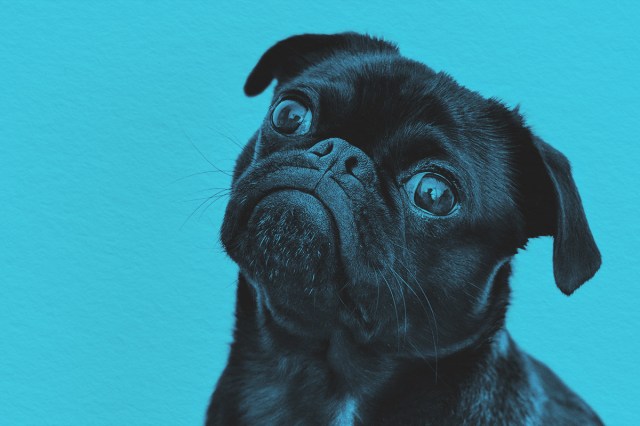
Close-up of a black pug

There are hundreds of dog breeds across the world, from affenpinscher to zuchon. Often, breed names seem to fit perfectly with the pups they describe: The name “pug,” for example, really captures the breed’s stout body and flat face. The etymological roots behind many popular dog breed names date back centuries and trace to the country of origin for the breed. Let’s examine the origins of some favorite canine monikers.

Advertisement
Pug

The word “pug” was originally used in a far more general context than how it’s used today. One of the earliest known uses dates to 1580, when the Middle English pugge was a common term of endearment for any person, pet, or plaything. By the 1630s, the word was used to describe a “small demon or imp” — a perhaps accurate description of pups who jump on the sofa when they’re not supposed to. The specific phrase “pug-dog,” however, appeared in print in 1749, and from there, “pug” became most closely associated with dogs. It’s also worth noting that “pug” was used in Britain throughout the 1800s to describe a “thing that is squat or stumpy,” which is an apt descriptor of the dog breed.

Beagle

Beagle” was coined in the late 15th century for a “small type of hound formerly kept to hunt hares.” The exact origins of the canine term are murky, but one of the most accepted theories is that it derived from the French becguele, which translates as “noisy person” or “gaping throat.” Beagles are known for their baying and howling, especially when they pick up on a scent while hunting, so a word meaning “noisy” is a perfectly appropriate name choice.

Advertisement
Poodle

While we may associate poodles with fancy haircuts and pampered lifestyles, they were originally used in a physically intense manner to hunt waterfowl. The name “poodle” is derived from the German Pudel, which is shorthand for Pudelhund or “water dog.” The name of this breed in English dates back to around 1800, but the breed was very popular in Europe for centuries before then. 

Labrador

The Labrador retriever is one the most popular U.S. dog breeds, though its roots are Canadian. This breed originated in the Labrador Territory, which is now a part of the Canadian province of Newfoundland and Labrador — the Newfoundland dog breed originated there as well. Labradors are known for their infatuation with water, and have been used for hundreds of years by fishermen and hunters to dive in the water and retrieve objects. Many early Labradors were known for their all-black color, though future bloodlines produced chocolate and yellow varieties that became highly popular.

Advertisement
Schnauzer

The breed name “schnauzer” originated from the Middle English snute, meaning “snout.” That term eventually evolved into the German noun Schnauze (also meaning “snout”) and later the verb schnauzen, meaning “to growl.” From there, the German word Schnauzer was coined, literally translating to “growler.” The breed made its way to the Americas in the 1920s, as noted in the August 1923 edition of Dog World: “A new breed has come to America — the Schnauzer.”

Basset

If you’ve ever seen a basset hound, you probably noticed its short legs, long ears, and the fact that its body sits so low to the ground. So it may not shock you to learn the breed comes from an Old French word that literally means “low.” The Old French bas dates to the late 14th century, and over time, this evolved into the French basset. Later, in the 1610s, the term “basset” was used to describe this specific type of hunting dog.

Terrier

Terrier is one of the seven major dog groups outlined by the American Kennel Club, and it includes a wide variety of breeds — Yorkshire terriers, Welsh terriers, Airedales, Jack Russell terriers, and a slew of other varieties, many of which trace their roots to the hunting dogs of the early 15th century. The word “terrier” comes from the Old French term chien terrier, which translates to “earth dog.” Many early hunting dogs would follow their prey into underground burrows to catch them, so they became known for digging into the earth.

Featured image credit: charlesdeluvio/ Unsplash
3 MIN READ

What Is a ‘Wild Goose Chase’?

A wild goose chase is a hopeless quest, but when the term was first coined in the 16th century, it referred to a type of unpredictable horse race.

by Rachel Gresh
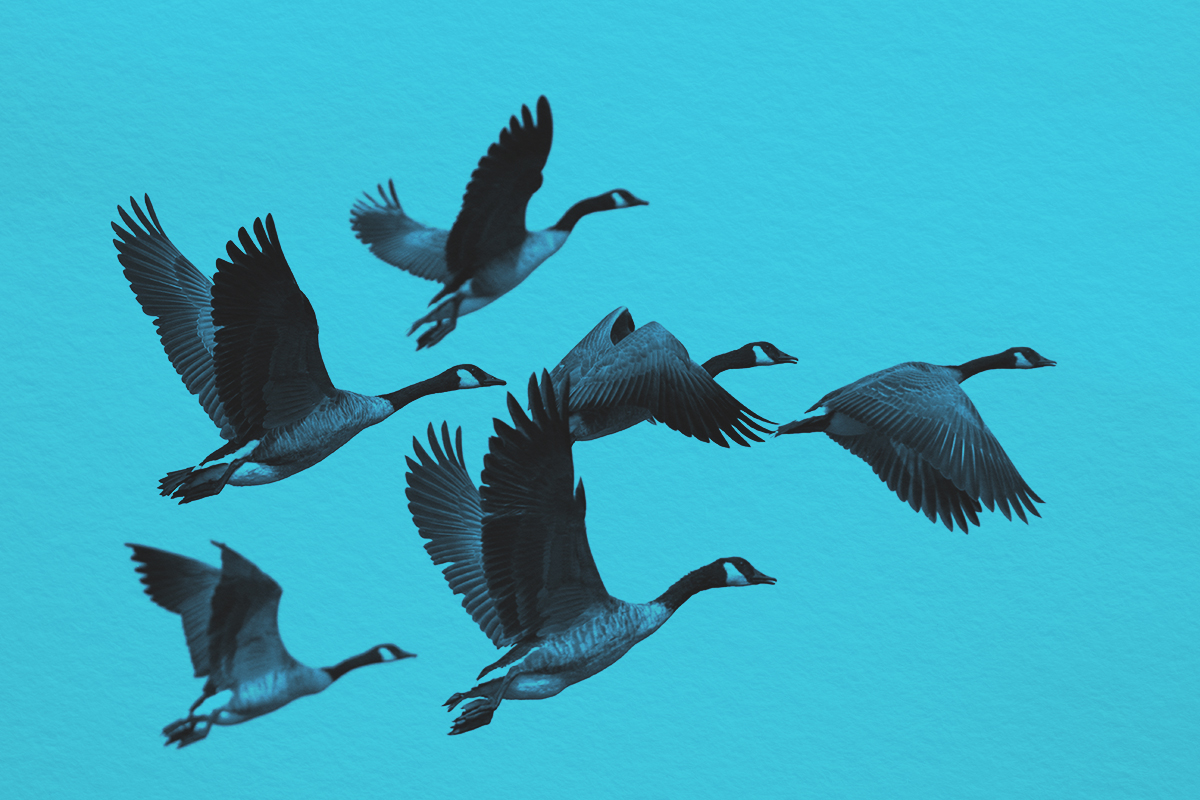
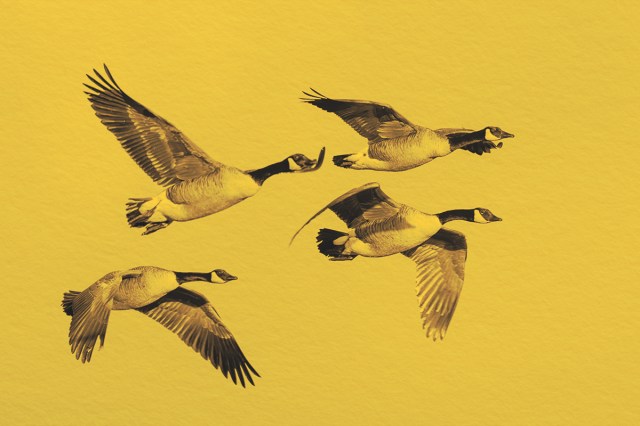
Flock of Canada Geese flying in Formation

We can thank Shakespeare’s Romeo and Juliet for many things, including the enduring trope of star-crossed lovers. Without its legacy, theater, rom-coms, and entertainment in general would look different. Among other terms and phrases that had their first appearance in the play (such as “uncomfortable” and “alligator”), the metaphor “wild goose chase” can be traced to Act 2. Interestingly, the expression was created in reference not to geese but instead to horses.

Advertisement

In Romeo and Juliet, the phrase pops up when the hot-blooded Mercutio is in a verbal sparring match with Romeo. He says, “Nay, if thy wits run the wild-goose chase, I have done, for thou hast more of the wild-goose in one of thy wits than, I am sure, I have in my whole five.” But Mercutio wasn’t referring to a pursuit of the notoriously temperamental waterfowl. The wild goose chase was an equestrian race where the lead rider sped unpredictably around a course, with other riders following in a wavelike pattern, mimicking the erratic flight of wild geese. Equestrian expert Gervase Markham described the event in his 1593 manual The Hunter: A Discourse of Horsemanship, noting the name was related to similarities between the race and a flying formation.

Mercutio uses the race as a metaphor for his conversation with Romeo, suggesting Romeo is steering the discussion in any direction he pleases, just as the head rider leads a wild goose chase.

Shakespeare’s popularity was such that words and phrases in his works were quickly adopted into the lexicon, and by the 17th century, “wild goose chase” was a common metaphor to describe an impulsive person on an erratic pursuit. A new definition emerged in 1755 in Samuel Johnson’s highly influential A Dictionary of the English Language, which defined the term as “a pursuit of something as unlikely to be caught as the wildgoose.” In this volume, widely recognized as the first comprehensive English language dictionary, the equestrian ties were severed, and the metaphor related to the difficulty of catching a rogue bird. 

Today, “wild goose chase” describes a foolish, fruitless, or hopeless quest, and both Johnson’s and Shakespeare’s contexts can apply. The older definition (referring to a lively horse race) still makes sense, as it may be a haphazard journey.  This makes the phrase a rare bird among English metaphors, as not many have an original meaning that remains relevant centuries later. So, whether you’re chasing a goal, an idea, an actual goose, or an unwieldy horse, the phrase “wild goose chase” still captures the essence of an unpredictable quest that is unlikely to succeed. 

Featured image credit: My Generations Art/ Shutterstock
2 MIN READ

What’s the Correct Way To Use a Semicolon?

So many people are afraid to use a semicolon because they don’t understand the rules, but this punctuation mark is actually simple to use. Follow these rules to use the semicolon correctly every time.

by Bennett Kleinman
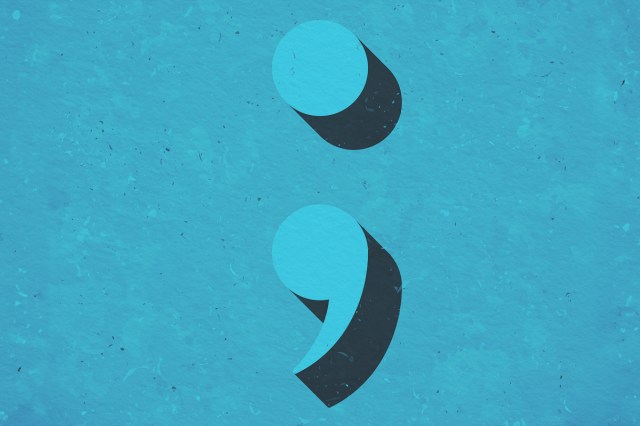
Icon of Semicolon symbol

Semicolons are often misunderstood, much like an angsty teen or the ending of The Sopranos. The semicolon is a useful punctuation mark that allows writers to express their ideas in more meaningful ways. Given its appearance, it should come as no surprise that its usage falls somewhere between a period and a comma.

Advertisement

There are three main ways to use semicolons, the most common of which is to connect two independent sentences that are part of the same thought. Here’s a pair of sentences that could benefit from a semicolon: The blue whale is the largest animal to have ever existed. It’s an aquatic mammal.

Notice that while each sentence has the components of a complete sentence and can exist as an independent thought, the second sentence is quite abrupt. The flow leaves something to be desired. However, if you add a semicolon (The blue whale is the largest animal to have ever existed; it’s an aquatic mammal), the two independent clauses form a more interesting sentence.

There are several do’s and don’ts to follow with semicolons. Never use a capital letter immediately after a semicolon unless the word is a proper noun, and don’t use a conjunction (“and,” “or,” “but,” etc.) either. Do, however, consider adding an adverb to add a bit of flourish to your writing: The blue whale is the largest animal to have ever existed; interestingly, it’s an aquatic mammal. (Proceed with caution, as we shared advice in a recent edition on how to judiciously employ adverbs.)

The second way to use a semicolon is when writing out lists that already include several commas. In the following example, the city/state combos already have commas, so the added semicolons make the overall sentence more clear: My favorite U.S. cities are New Orleans, Louisiana; Los Angeles, California; Denver, Colorado; and Paris, Texas.

A third usage for a semicolon is the cheekiest, as it forms the eyes of the winking emoticon ;). Perhaps these old-school text smileys have been overshadowed by fancier emojis, but I’m holding on to the 🙂 and 😉 as long as I can. 

Featured image credit: bgblue/ iStock
3 MIN READ

Why Is It Called “Boxing Day”?

In the U.S., December 26 is just another day, but elsewhere, Boxing Day is a special holiday with traditions all its own. Do you know how to celebrate Boxing Day?

by Bennett Kleinman
woman holding Christmas presents

In the United States, December 26 is just the day after Christmas. Lots of people hit the stores in search of big sales, while others stay in to play with new toys and recover from their Christmas food coma. But in Great Britain, Canada, New Zealand, Australia, and some other countries that were colonized by the British, the day is a holiday called Boxing Day. Contrary to what the name might suggest to Americans, it’s not a day for watching old highlights of Muhammad Ali. Instead, the holiday was founded on the premise of wealthier families giving gifts to those less fortunate. Boxing Day falls on the day after Christmas each year, unless the 26th is on a weekend day, in which case the public holiday (the official observation for the day off work) can be pushed to December 27 or 28.

Advertisement

The name of the holiday has a few possible origin stories. They’re all plausible and contribute to the overall meaning and celebration of Boxing Day, but there are different interpretations of how the name originally came to be.  The Oxford English Dictionary (OED) purports the phrase was coined in 1743 to give name to the tradition of tradespeople and employees receiving a Christmas box (which was traditionally a sum of money) from their employers. They would have been busy working on Christmas Day for their wealthier employers, so the Christmas boxes were traditionally distributed on December 26 — hence the holiday’s name.

According to the BBC, the term “Boxing Day” was popularized during the reign of Queen Victoria (1837 to 1901), when the still-unofficial holiday was practiced by richer families boxing up gifts the day after Christmas and handing them out to the poor. It was also common at that time for wealthy families to give their servants a box of gifts and have them take the day off, so they could share the gratuities with their families (supporting the OED etymology).

Boxing Day was made an official bank holiday in both England and Wales in 1871; it wasn’t until 1974 that Scotland followed suit. While literal Christmas boxes given out by rich employers aren’t common anymore, lots of people practice the spirit of the holiday by giving back money, gifts, or their time in support of those less fortunate each Boxing Day. However, we won’t judge if you spend part of your  Boxing Day eating leftovers and watching movies on the sofa.

Featured image credit: FreshSplash/ iStock
2 MIN READ

What Exactly Is “Yule”?

“Christmas,” “Advent,” “Noel” — there are several name choices for the December 25 holiday, but “Yule” has perhaps the oldest origin story. Do you know where it comes from?

by Bennett Kleinman
Yule Log in fireplace

Some words perfectly call to mind a specific holiday, such as “independence” for the Fourth of July, “spooktacular” for Halloween, and “Yule” for Christmastime and holiday joy. But while the term “Yule” is commonly dusted off and busted out each December, it takes a little digging to suss out the literal definition.

Advertisement

According to the Oxford English Dictionary (OED), “Yule” can mean a few things. Its original and now largely obsolete definition is simply “December or January.” That was the primary meaning a thousand years ago, but around the 14th century, the term was redefined as specifically having to do with “Christmas and the festivities connected therewith” — a meaning that it largely maintains today.

“Yule” comes from the Old English geol, which came from the Old Norse jol — a pagan midwinter festival celebrated since at least the 10th century. Over time, Christians adopted some of the traditions (using holly and mistletoe, ritualized gift giving, the Yule log) from the Anglo-Saxon festivities to use in the 12-day Nativity season, which begins each year on December 25. As English evolved, so too did the term geol, which was anglicized as “Yule” in the 1500s.

Speaking of the Yule log, long before there was a Netflix video of a burning log to stream in fireplace-less homes, “Yule log” came into the 17th-century English lexicon. In the 19th century, using “Yule” for the Christmas season saw a resurgence among British writers, specifically referring to  the “Christmas of Merrie England.” Today, whether you’re celebrating with a log, a tree, presents, or mistletoe, “Yule” acts as a catchall term around Christmas.

Featured image credit: Thomas Nord/ Shutterstock
4 MIN READ

5 Ways Shakespeare Changed How We Talk

Shakespeare’s inventive spirit expanded beyond his knack for drama — the Bard coined new words, popularized famous idioms, and even helped standardize the English language.

by Rachel Gresh
"The Complete Works of William Shakespeare" book

William Shakespeare is celebrated for writing enduring literary classics such as Hamlet and Romeo and Juliet, but his contribution to the lexicon of English is just as impressive as his storytelling abilities. Through his plays, sonnets, and poems, Shakespeare didn’t just entertain; he reshaped the very fabric of English by coining new words, redefining old ones, and popularizing expressions we still use today. Here are five ways the Bard of Avon’s linguistic innovation left a profound impact on how we speak, write, and think. 

Anglicizing Foreign Words

Shakespeare masterfully integrated foreign influences into his work by anglicizing words. For instance, in Henry VI, he introduced an early version of the term “bandit,” derived from the Italian bandito, to describe criminals or outlaws — a usage that has since become standard. The Oxford English Dictionary (OED) lists this as the earliest record of the term, though Shakespeare spelled it “bandeto.” Similarly, he adapted the Latin term frūgālis into the English word “frugal” (meaning “economical”) in The Merry Wives of Windsor, and the French expédience became the English “expedience” (meaning “haste”) in Richard III.

Converting Nouns to Verbs

Shakespeare embraced the practice of turning nouns into verbs, and we still use many of them today. For instance, the verb “to elbow” (“to nudge”) made its first written appearance in King Lear (1608). Before this, “elbow” was used only as a noun in English to denote the bony body part. Similarly, Shakespeare gave new life to the noun “champion” (“a victor”) in Macbeth, turning it into a verb meaning “to challenge to a contest.” (Today, the standard verb definition is “to defend or advocate.”) Shakespeare’s creativity gave new meaning to existing words, allowing audiences to quickly pick up on the altered usage.

Popularizing Prefixes and Suffixes

The Bard was a pioneer in playing with prefixes and suffixes to create original words. He was the first to record the word “dauntless,” which appears in Henry VI in the line, “Let thy dauntlesse minde still ride in triumph…” He combined “daunt” (“to subdue”) with the suffix “-less” (without) to form a word that means “fearless” — the new word “dauntless” is now firmly part of the English lexicon. Additional words suffixed by Shakespeare include “lonely,” “swagger,” and “gloomy.” He was especially fond of the prefix “un-” (typically meaning “opposite of”), which he used to coin words including “unaware,” “uncomfortable,” “undress,” and “unearthly.” His work helped standardize “un-” as a form of negation in English. 

Coining Idioms and Expressions

Shakespeare’s work is a treasure trove of idioms and expressions we still use today. We find the expression “heart of gold” in Henry V, where it was used to praise the king’s good nature. Today, it retains this meaning of kindness or generosity. Similarly, the expression “in stitches,” meaning “to laugh uncontrollably,” originated in Twelfth Night, where Shakespeare wrote, “If you desire the spleen, and will laugh yourselves into stitches, follow me.” 

However, one of the most famous phrases attributed to him is a misquote: “The world is your oyster” is a distortion of the original line, “The world’s mine oyster,” from The Merry Wives of Windsor. Both versions have the same meaning, suggesting that endless opportunities await.

Creating Compound Words

Shakespeare’s love for wordplay included creating original compound words or terms by fusing two existing words. The OED credits Shakespeare with the first recorded use of several now-common compounds, including “lackluster,” “skim milk,” and “shooting star.” In Richard II, he wrote, “I see thy glory like a shooting starre fall to the base earth,” coining the phrase that would become a staple in the English language. He also contributed to our animal vocabulary with terms such as “watchdog” (from The Tempest) and “puppy dog” (from King John).

It’s hard to imagine our modern language without Shakespeare’s immeasurable influence on words, phrases, and expressions. From puppy dogs and shooting stars to expressions such as “heart of gold,” it seems English would be far less dynamic without the Bard. The next time you use one of these words or phrases, know you’re keeping his linguistic legacy alive by preserving this inventive piece of English history.

Featured image credit: JannHuizenga/ iStock
3 MIN READ

Why Are There Multiple Meanings of ‘Clean as a Whistle’?

“Clean as a whistle” seems to have a clean meaning, but when you look into it, it’s not so tidy. There are alternative usages and multiple origin stories.

by Bennett Kleinman
Sports whistle with a lace

Whistles aren’t exactly the epitome of cleanliness. Imagine the sooty whistle of a train engine, or a football referee’s whistle filled with saliva. Most whistles are probably in need of a good scrub down. So why is it that we say things are as “clean as a whistle” when there are better proverbial examples of cleanliness we could use instead? 

Advertisement

First off, it’s important to note that “clean as a whistle” doesn’t always mean something is devoid of dirt and grime. The phrase could be used in the context of something being done “completely, entirely, thoroughly.” For example, “She sailed over the hurdles, clean as a whistle, and won the race.” While the idiom can be used in the context of cleaning up dirt (“The house was as clean as a whistle and ready for their guests”), it isn’t necessarily the case in every instance.

The origins of this phrase are murky enough that we can’t describe them as clean as a whistle either. But there are still several prevailing theories as to how the phrase was coined. In The Facts on File Encyclopedia of Word and Phrase Origins, author Robert Hendrickson suggests that “clean as a whistle” likely comes from a variation of a phrase found in The Author’s Earnest Cry and Prayer (1786) by poet Robert Burns: “Her mutchkin stowp as toom’s a whissle.” If you don’t speak Scots, a “mutchkin stowp” is a small drinking vessel, and “toom” means “empty,” suggesting that the “whissle” was as clean as could be.

Hendrickson raises some other theories, including that the phrase may be related to the crisp sound of a whistle rather than the instrument itself. He also suggests that it may be an evolution of the phrase “clean as a whittle,” referring to a piece of smooth wood that’s been freshly whittled down. In any context, it has to do with an action that’s been thoroughly accomplished.

Author Webb Garrison proposes the most literal interpretation of the phrase in Why You Say It, writing that “clean as a whistle” has to do with keeping whistles devoid of any debris that could alter the sound of the instrument. So let the debate rage (blow?) on as to whether you believe Garrison or Hendrickson, or have a theory of your own.

Featured image credit: Billion Photos/ Shutterstock