A squinting modifier is a grammatical quirk that creates ambiguity, often confusing readers who are unsure if the modifier is attached to the word before or after it.
Imagine you’re approaching a traffic light intersection with both signals red, and you’re unsure which direction will turn green first. You’re forced to shift your gaze back and forth, trying to determine your next move. This feeling mirrors the experience of reading a sentence with a squinting modifier. It forces the reader to pause, looking back and forth, unsure which word is actually being modified.
Advertisement
For example, consider the sentence, “Studies show that reading often improves memory.” The adverb “often” creates a dilemma. Does it modify “reading” (suggesting reading occurs frequently) or “improves memory” (indicating that improvement happens often)? Either interpretation is possible, leaving readers in doubt.
A squinting modifier is an adverb or adjective between two words or phrases. In the above example, the adverb “often” is the squinting modifier. Here’s another: “The house that got a new roof recently was sold.” It’s unclear whether the house recently got a new roof or if the house itself recently was sold. This confusion gives the modifier its name — squinting — as it seems to look in both directions.
These modifiers can be fixed by rearranging or rephrasing the sentence. The previous example can be fixed this way: “The house that got a new roof was recently sold.” Similarly, “Studies show that frequent reading improves memory” is another simple fix. By repositioning the modifier or rephrasing the sentence, you can eliminate ambiguity and clarify your meaning for readers, making your writing clear and concise.
Featured image credit: Prostock-studio/ Shutterstock
Advertisement
More from our network
Word Smarts is part of Inbox Studio, which publishes content that uplifts, informs, and inspires.
These complimentary terms are often used interchangeably, but they carry distinct meanings. Knowing the difference can help you choose your words more thoughtfully.
The old adage “cruel to be kind” might sound catchy, but the saying probably should be “cruel to be nice.” Both “kind” and “nice,” by definition, are positive traits, but “nice” often reflects a surface-level politeness motivated by social conformity. Think of holding a door open for someone — it’s a courteous gesture, but the motivation isn’t necessarily rooted in goodwill. You might be thinking, “Hurry up,” while the person walks to the door — so is this actually a sincere act if you’re slightly annoyed by it? There are a few usages of “nice,” but the one we’re talking about means “pleasant; agreeable; satisfactory.” This definition reveals surface-level intentions of being polite and doing what is needed to maintain the status quo — traits often motivated by societal expectations. By contrast, “kind” means “having or showing a friendly, generous, and considerate nature.” It describes an innate sense of being.
Advertisement
Ethicists at Santa Clara University agree: “The distinguishing factor seems to lie in the motivation of a person or act.” For example, an act of politeness, such as helping someone who dropped their groceries, might be considered nice, but kindness is more consistent and entails a heartfelt willingness to help over time. In essence, to be nice is an action, while “kind” describes a lasting personality trait.
Looking into the etymology further clarifies this divergence. “Kind” comes from the Old English cynde, meaning “natural” or “innate,” often linked to familial warmth. “Nice,” however, evolved from the Latin nescius (meaning “ignorant”), once used to describe qualities such as carelessness or foolishness before it transformed into its current meaning of “pleasant” by the mid-18th century.
Rest assured, both terms are complimentary today. However, “kind” implies a more genuine nature related to personality, while “nice” often describes polite actions fueled by social obligations, whether authentic or not. These terms can overlap but are not entirely synonymous, so recognizing these nuances can help you be more accurate in your descriptions.
Featured image credit: maxim ibragimov/ Shutterstock
Advertisement
More from our network
Word Smarts is part of Inbox Studio, which publishes content that uplifts, informs, and inspires.
Pop culture shapes the way we talk, but some phrases have become so widespread that you may have forgotten where they came from. These words and phrases originated in classic American television.
The impact of television is hard to overstate: It has given us countless hours of entertainment, provides important information, and serves as a platform for the life-changing products sold during late-night infomercials (we’re looking at you, George Foreman Grills).
TV also has had an indelible impact on the English language, as it has introduced us to a variety of new phrases and words that didn’t exist prior to those particular TV shows or episodes. In many cases, you may not realize that these terms were coined on TV — it seems like they’ve always been a part of our collective lexicon. Here are a few examples of phrases that leapt from the small screen to the pages of the dictionary.
Advertisement
Jump the Shark
The phrase “jump the shark” is a slang term that, according to the Oxford English Dictionary (OED), means “to begin a period of inexorable decline in quality or popularity.” While it can be used in general today, the origin is a specific storyline from the 1977 Happy Days episode “Hollywood: Part 3,” in which the character Fonzie leaps over a literal shark while he’s on water skis. However, no characters in the episode used the actual phrase “jump the shark.” It wasn’t until 1987 that this common idiom was coined. According to the Los Angeles Times, it was conceived of by future radio personality Jon Hein. To him, the shark storyline demonstrated the writers using more outrageous circumstances to try to win back viewers. He considered this to be the pivotal point that marked the decline in quality — and you can see the decline in popularity of Happy Days during the later years of the show.
Hein’s phrase has not “jumped the shark” and continues to be used colloquially to reference any previously popular or high-quality element that has taken a sudden turn for the worse or outlandish. It’s often used in reference to TV criticism, but could be applied to writing, personal behavior, relationships, or a variety of subjects that have ongoing output.
Advertisement
Friend Zone
The OED cites the first recorded use of the term “friend zone” in a season 1 episode of Friends. The term is defined as any relationship in which “one person has an unreciprocated romantic or sexual interest in the other.” In the context of Friends — specifically in the episode “The One With the Blackout” — Joey used “friend zone” to describe Ross’ relationship with his unrequited crush Rachel. The term has since evolved, and is now used as both a noun (as it was on Friends) and a verb. To be “friend zoned” means that one party has made clear that they are keeping another person (who has romantic interest) firmly in a friendship category.
Saying the Quiet Part Out Loud
The Simpsons has contributed much to the English language over its illustrious run, from “embiggen” to “meh,” and it also helped originate the idea of “saying the quiet part out loud.” In the season 6 episode “A Star Is Burns,” the character Krusty the Clown was bribed in exchange for a vote in a movie festival. When asked how he could vote for an inferior film, Krusty replied, “Let’s just say it moved me … to a bigger house! Oops, I said the quiet part loud and the loud part quiet.”
While it’s hard to trace the exact origins of concepts such as this, The Simpsons is believed to be the earliest use of the general idea in any form, as there’s no evidence of an earlier instance. Today, it’s more commonly written as “saying the quiet part out loud,” and the phrase is generally used when someone unintentionally reveals the subtext of a statement (or perhaps intentionally reveals it in a sarcastic or ironic manner).
Advertisement
Debbie Downer
In 2004, the hilarious Rachel Dratch played the character Debbie Downer on Saturday Night Live. The character was known for interrupting otherwise pleasant conversations with depressing facts about the real world, often unintentionally and never maliciously. Dratch debuted the character on the May 1, 2004 episode, and it became a recurring bit. Today, calling someone a Debbie Downer is essentially telling them to stop bringing down the mood and lighten up.
What is the greatest legacy of Buffy the Vampire Slayer? Buffy fans might have a lot of answers for you, but the widespread answer is popularizing the use of “google” as a verb. In the 2002 episode “Selfless,” computer geek and sidekick Willow asks Buffy, “Have you googled her yet?” — referring to the idea of using the internet to search for data about someone else. At the time, Google was still relatively new, and it wasn’t yet the de facto search engine for everyone. Founder Larry Page had used “google” as an intransitive verb as early as 1998, but Buffy ushered in a new transitive use about googling something specific, compared to how Page used googling as a general concept.
This brief line in an episode of Buffy contributed to “google” moving from company name to general term. The verb “google” was named the most useful word of 2002 by the American Dialect Society, and it entered the Oxford English Dictionary in 2006.
Featured image credit: Unsplash+ via Getty Images
Advertisement
More from our network
Word Smarts is part of Inbox Studio, which publishes content that uplifts, informs, and inspires.
It’s doubtful that we can trace the exact origin of the phrase “Doubting Thomas,” but we do know who it refers to. Are you familiar with the Thomas in question?
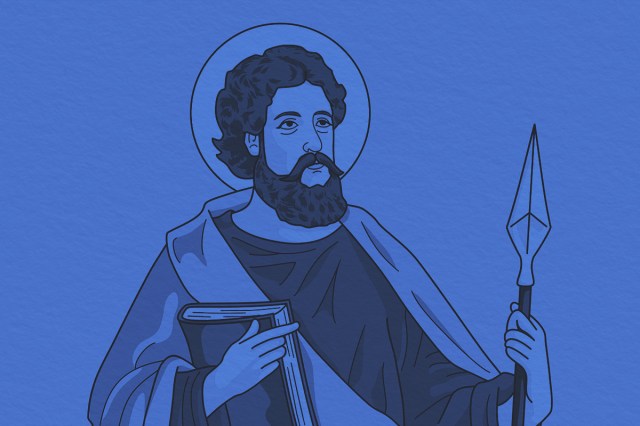
When talking about someone who’s habitually incredulous, why do we say “Doubting Thomas” instead of “Skeptical Samuel” or “Mistrusting Mary”? It’s because the Thomas in question happened to be quite famous. No, not Thomas Edison, and not Thomas the Tank Engine either. This Tom was known for his skepticism: The origins of this phrase refer to Thomas the Apostle from the Bible.
Advertisement
Thomas’ doubting nature appears in chapter 20 of the Gospel of John in the New Testament. According to that tale, Thomas was told that a resurrected Jesus Christ had appeared before the other apostles, though he refused to believe them until he saw it with his eyes. One week later, Jesus appeared before Thomas, causing the apostle to change his mind and believe. This scene has been a popular topic among artists as far back as the sixth century, with one of the earliest examples found in a mosaic at the Basilica di Sant’Apollinare Nuovo in Ravenna, Italy. It was later painted by Caravaggio in his 1601-02 work “The Incredulity of Saint Thomas.”
The phrase “Doubting Thomas” didn’t appear in the Bible, though, and it’s difficult to know for sure when it became a popular idiom. The Oxford English Dictionary cites an early example of the phrase in print in an 1883 article in Harper’s Magazine: “Doubting Thomases, who will only believe what they see, must wait awhile.” Given the long-lasting popularity of that magazine, it stands to reason that it helped inspire the readership to pick up and spread the usage of the same phrase.
Featured image credit: Luis Fraga/ Shutterstock
Advertisement
More from our network
Word Smarts is part of Inbox Studio, which publishes content that uplifts, informs, and inspires.
Those of us who are from the 1900s (as the kids say) likely equate the idea of being “preppy” with boat shoes, sweaters tied around your shoulders, and yachting with grandpapa in Nantucket. But that classical definition of preppy has changed in recent years, especially among Gen Zers. This made me wonder how the term has evolved over the generations since it was first coined.
Advertisement
The Oxford English Dictionary (OED) notes the word “preppy” was first used in 1900 as a synonym of “immature.” “Preppy” was in reference to “prep school,” where the students were children and teens — hence the “immature” connotation. This use was sporadic until the 1950s, a decade that marked the emergence of the baby boomer generation. However, the earlier term related to the school structure is the noun “prep.” Since at least the mid-1800s, to call someone a “prep” meant that they were a prep school student, and the school names themselves were often shortened. We see an example in a famous depiction of mid-20th-century prep school culture in J.D. Salinger’s Catcher in the Rye: “Pencey Prep is this school that’s in Agerstown, Pennsylvania.”
During the early 1960s, “preppy” came to refer to a specific fashion style worn by those who attended prep school — individuals who tended to belong to a conservative, wealthy social set. This style could be described as neat and classic, characterized by ties, sweaters, and school emblems. During the peak Generation X years (do the math for the young adulthood of those born between 1965 and 1980), the preppy style included plaid, herringbone, and houndstooth patterns, as well as tailored suits, loafers, and silk blouses.
Preppy fashions and attitudes spanned Gen X and millennial pop culture, depicted by conservative teen Alex P. Keaton on the 1980s TV show Family Ties, the Walsh twins in the 1990s TV phenomenon Beverly Hills, 90210, the snotty rich girls in the 1989 dark comedy Heathers, and high-society characters such as Carlton Banks from The Fresh Prince of Bel Air and the prep school students of Gossip Girl.
But while the word “preppy” had a similar connotation for the latter half of the 20th century, it means something very different for a Gen Zer. Instead of being restricted to the prep school social set, it has evolved into an aesthetic that anyone can achieve. TikTok user @preppyygals defines “preppy” as a fashion style that includes flowy, colorful dresses and shoes stamped with bright stars and other bedazzled elements. In a Today show story, a Generation Alpha member defined the aesthetic by retailers Lululemon and Lily Pulitzer. Another said it’s “when you wear pink and wear smiley faces.” This shift of “preppy” from a strict reference to prep schools to an open aesthetic (very different from tailored prep school uniforms) demonstrates how slang terms continue to expand and evolve the more people use them. What will “preppy” become for Generation Beta?
Featured image credit: Look Studio/ Shutterstock
Advertisement
More from our network
Word Smarts is part of Inbox Studio, which publishes content that uplifts, informs, and inspires.
Regionalisms can be found all over the menu, but breakfast is home to plenty of them. While you’re debating scrambled or over-easy, make sure you know whether to order “pancakes” or “flapjacks” in your town.
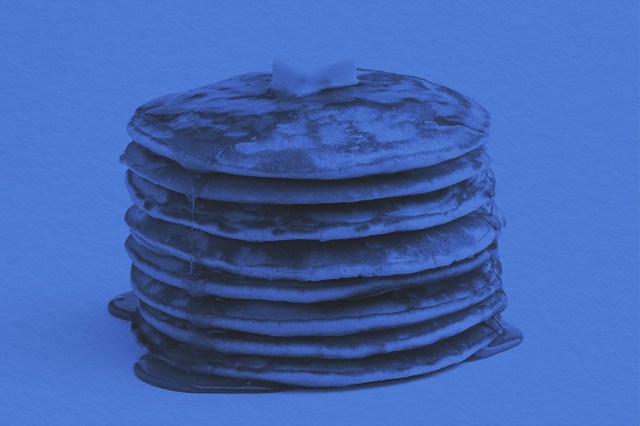
A full English breakfast traditionally includes eggs, bacon, sausages, baked beans, tomatoes, mushrooms, and toast. While there’s no such specific definition for a full American breakfast, if you were to ask for such a thing at an American diner, you’d likely get some form of eggs, bacon, and a stack of thin, hot, and starchy cakes, smothered in syrup. Depending on where you’re from, those cakes may be called “pancakes” or “flapjacks” — though we wouldn’t blame you if you scarfed them down so quickly, you don’t care about the name. This choice is one of several linguistic food debates common throughout America, with the words varying based on region.
Advertisement
The word “pancake” was the first of these similar terms to be coined, with an etymology dating to circa 1400. The food is defined as “a thin, flat cake of batter, usually fried and turned in a pan. Pancakes are usually eaten with syrup or rolled up with a filling.” The word was created as a literal reference to the cooking process. It’s perhaps the most common variant in the country, especially in large urban areas and the northern United States.
“Flapjack” is a Southern term that can describe pan-fried cakes, but also a specific type of apple turnover. However, in Canada and the United Kingdom, a flapjack is an entirely different food item akin to a biscuit containing rolled oats, as noted by Dictionary.com.
A third contender is “hotcake” — a term you’ll find on the McDonald’s menu. This word was coined in the United States in the late 17th century, referring to “any of various types of cake which are baked on a griddle or fried.” You’re probably familiar with the idiom “sell like hotcakes,” so it makes sense for the fast-food giant to use the alternative term as a tactic to help the food item stand out on the menu (compared with the more generic “pancake”).
Other hyper-regional terms for pancakes include “johnnycake,” which was used by New Englanders in colonial times, but might still be heard in the area. In parts of the South, you also may come across “hoe cakes” on a menu. Put any modern associations with the first word aside — this is related to the practice of cooking cakes on the metal part of a field hoe, which was common among enslaved individuals in that part of the country. Whichever term you decide to use, rest assured that you’ll be getting some decadent goodness on your breakfast plate. Now the only question is: chocolate chips or blueberries?
Featured image credit: Alena_Kos/ Shutterstock
Advertisement
More from our network
Word Smarts is part of Inbox Studio, which publishes content that uplifts, informs, and inspires.
Animals and insects feature prominently in many idioms — if it’s raining cats and dogs, maybe you’re making a beeline to find shelter. Where did this idiom come from?
When you think of bees, you probably imagine honey, buzzing, or possibly an animated Jerry Seinfeld in 2007’s Bee Movie. Maybe you’ve also used the expression “make a beeline” when you were describing a speedy or direct route. This, however, is a curious idiom. The phrase is related to a description of the insect’s flight path, but if you were to watch one buzz around flowers, it might seem like a circuitous journey. So where did this idiom, which means “to head directly toward something as quickly as possible,” come from?
Advertisement
In June 1828, the American Quarterly Review published an article that contained an early use of the term “bee-line,” referring to how a bee released from captivity appeared to set a direct course to return to its hive. This was true even if the bee appeared to move in a crooked pattern rather than a straight line, as it was still heading quickly back to its hive. Further scientific studies of the insects showed that bees also followed direct patterns in other situations, such as when they left and returned to the hive as part of their daily quest to harvest nectar.
Almost overnight, people began to use “bee-line” in an idiomatic sense. The term appeared in an October 1829 edition of the New-York Spectator: “I drew a bee line to the next tavern.” The exact phrase “make a bee-line” appeared in print by 1835, as seen in an example in a book called Clinton Bradshaw: “Now there’s the door — make a bee-line out, if you please, gentlemen.” These examples show a rapid shift from “beeline” as a scientific descriptor to the idiomatic usage.
Today, you may say that you’re making a beeline (the modern spelling is one word, no hyphen) if you’re running to catch a bus, trying to get to the post office before it closes, or hurrying to grab a discounted TV at your local Walmart on Black Friday.
Featured image credit: Martin Pelanek/ Shutterstock
Advertisement
More from our network
Word Smarts is part of Inbox Studio, which publishes content that uplifts, informs, and inspires.
What’s The Difference Between “Ensure,” “Insure,” And “Assure”?
Want to understand the difference between “ensure,” “insure,” and “assure”? While these sound-alike words all deal with protection, knowing their distinct meanings will transform your writing.
Try saying “ensure insure assure” as fast as you can five times — you’ll likely get tongue tied beyond belief. These three terms all sound quite similar, and to make matters more confusing, they all have definitions along the same lines regarding safety and protection. So how do you determine which of these seemingly indistinguishable words to use? Let’s look at the facts and get to the bottom of it.
Advertisement
“Ensure” is a verb with a variety of meanings as defined by the OED. It was first coined during the late 14th century as a verb “to tell (a person) confidently that (something is true).” Other early definitions meant to “pledge one’s faith… for the execution of a promise,” and “to make (a person) mentally sure.” In essence, “ensure” always meant that you were trying to convince someone of a true fact, or a future event that was bound to happen despite their doubts.
“Insure” dates to the mid-15th century. Several of its definitions are quite similar to that of “ensure,” according to the Oxford English Dictionary, as it too can mean to “make (a person) sure (of a thing).” But “insure” differs in the context of commerce, as it’s also defined as “to secure the payment of a sum of money in the event of loss or of damage.” So despite the fact that “ensure” and “insure” sometimes overlap, you would only use “insure” when talking about actual financial support.
Finally we have “assure” — a term that has to do with feeling a sense of safety. People have used “assure” as far back as the late 14th century, and it’s defined as “to make safe from or against… risks.” It can also mean to “make stable, establish securely.” Unlike how “insure” refers to recouping money after a disaster, “assure” is often used in the context of preventing those disasters from ever occurring (again).
So at the end of the day, here’s what you need to remember. “Ensure” has to do with the idea of convincing someone of a truth. “Insure” relates to being protected in the wake of a tragic event. “Assure” has to do with establishing a sense of safety to prevent disasters from taking place. Follow those general guidelines and you’ll be good to go.
Featured image credit: lovenimo/ iStock
Advertisement
More from our network
Word Smarts is part of Inbox Studio, which publishes content that uplifts, informs, and inspires.
Anyone who’s watched Survivor knows the nail-biting excitement of the Tribal Council. In this high-stakes elimination, the rules are simple: The contestant who receives the most votes is sent home. This means that the contestants with the fewest votes stay in the game — or is it the least votes? While these two adjectives may seem interchangeable (and many people use them as such), they have distinct uses, and knowing when to use one over the other can make a big difference.
Advertisement
The key to choosing between “fewest” and “least” lies in what you’re describing. If you’re talking about quantifiable nouns — such as people or items — “fewest” is your go-to choice. On Survivor, the votes are countable, so “fewest votes” is grammatically correct. “Fewest” is the superlative adjective of “few,” used to describe the smallest number of things in a group.
However, “least” also means “smallest.” The difference is in the context: “Least” is a superlative of “little,” referring to the smallest amount, not the smallest number. “Least” is not used with countable nouns. Instead, it’s reserved for mass nouns — plural things that can’t be counted individually, such as happiness, coffee, or snow. You could say, “I’m the least happy on the mornings that I have the least amount of coffee, and the most happy when there’s the least amount of snow.”
“Fewest” and “least” can be interchangeable — but only if you adjust your phrasing. Consider the coffee example above: “Fewest amount of coffee” doesn’t work because “amount” is not a countable noun. But you could say “fewest cups of coffee,” because “cups” is a countable noun. Similarly, “the least amount of work” or “the fewest hours of work” convey the same basic idea. The choice of adjective depends on whether you’re referring to a mass noun (amount of work) or a countable noun (hours of work).
In Survivor speak: The tribe has spoken and the rules are set. “Fewest” and “least” are not interchangeable, though they have similar qualities. As a rule of thumb, use “fewest” for countable things (such as books, students, or minutes) and “least” for uncountable things (such as health, happiness, or water). Understanding this distinction will help you use both terms correctly and more precisely.
Featured image credit: Prostock-studio/ Shutterstock
Advertisement
More from our network
Word Smarts is part of Inbox Studio, which publishes content that uplifts, informs, and inspires.
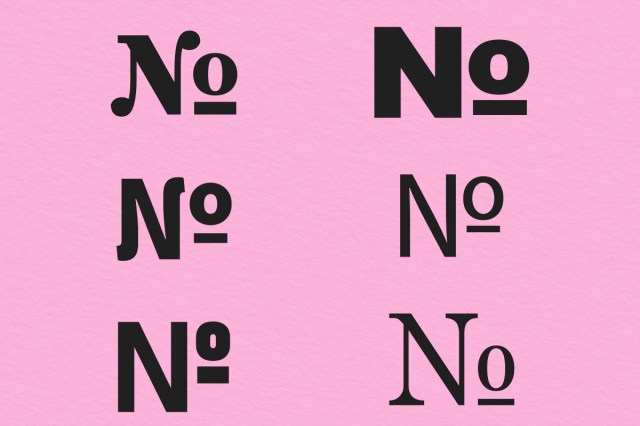
We’ve all heard the old axiom “there’s no ‘I’ in ‘team,’” but here’s another one for you: There’s no “O” in “number.” OK, maybe this isn’t a nugget of motivational wisdom, but it does make me wonder why “No.” is the standard abbreviation for “number.” English is full of odd abbreviations — take “lb” as an abbreviation for “pound” (which we touched on in a previous edition), “oz” for “ounce,” or “Rx” for “prescription.” While the letters in an abbreviation don’t always match the full word, there’s usually an etymological story to explain it. Let’s examine “No.” and “number.”
Advertisement
This abbreviation goes back to the Latin numero, which translates to English as “number.” The “numero sign” has been historically expressed as “N°,” “No,” or “No.” — versions that shorten the word “numero” to just its first and last letters. The Oxford English Dictionary has examples of the abbreviation being used as an adverb meaning “in number” going back to the 1660s, mostly used in reference books. A citation from a 1693 dictionary demonstrates the adverb usage: “No vi. that is, Six in number.”
The abbreviation began to be used as a noun, also in reference books, around the mid-to-late 18th century. In a 1797 edition of Encyclopædia Britannica: “When the magnifiers, No 4, 5, or 6, are used.”
The usage of “No.” continued to grow, and it was adopted for a wide variety of topics outside reference materials. In the 1836 “Sketches by Boz,” Charles Dickens wrote, “Mrs. Macklin, at No. 4. opened her little street door,” and in an 1840 letter, he wrote, “I am curious to see how the idea of the first No. of my projected work, strikes you.”
This repeated use in reference books, by major authors, and by reputable publications earned the abbreviation “No.” a permanent place in the common lexicon, despite the mismatch with the English word “number.” Without such usage, it might have faded away. But today, anyone will understand if you use “No.” to replace the word “number.”
Featured image credit: Serhii Poliakevych/ iStock
Advertisement
More from our network
Word Smarts is part of Inbox Studio, which publishes content that uplifts, informs, and inspires.
Enter your email to receive daily lessons that dive into what makes English so fascinating. Each email is packed with odd rules, etymologies, and the tools you need to be a better communicator.
Sorry, your email address is not valid. Please try again.
Sorry, your email address is not valid. Please try again.