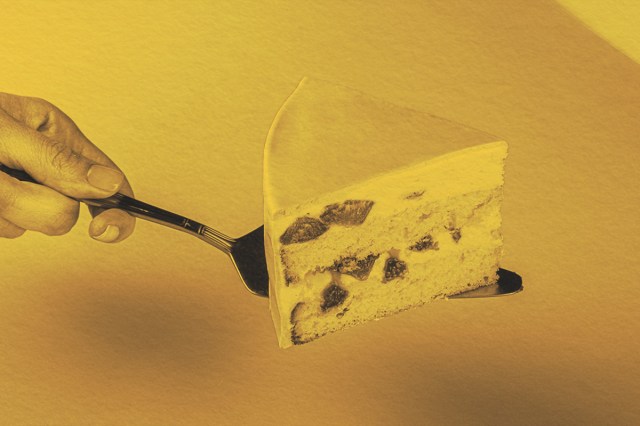
Tracing “piece of cake” back to its origins isn’t so simple. Its history winds through poetry and wartime slang before becoming the go-to phrase for effortless tasks.
Determining the origins of certain phrases is a piece of cake. But in terms of the idiom “piece of cake” itself, this goal is far from simple. We commonly use this phrase to describe any task that can be accomplished with ease. But you still may find yourself wondering why cake is the default dessert in this case, rather than a gooey brownie or a big bowl of pudding. Before we get sidetracked talking about sweet treats, let’s go back to the 1930s and discuss how the saying was first coined.
Advertisement
The Oxford English Dictionary notes the idiom originated in print in the 1936 edition of Primrose Path, a collection of poetry by Ogden Nash: “Her picture’s in the papers now, And life’s a piece of cake.” Oddly, earlier editions of the poem featured the line “And everything is jake” instead — “jake” being a slang term meaning “satisfactory.” While the rhyming swap preserved the poetry of the line, the meaning of “piece of cake” implied “ease” from the beginning, and it was not synonymous with “satisfactory.”
Shortly after Nash introduced the phrase, it was popularized by members of Britain’s Royal Air Force to describe an easy mission. Why they chose this phrase in particular is a bit of a mystery — maybe they read Nash’s poem, or perhaps they were inspired by “easy as pie,” a similar dessert-themed idiom dating to the 1890s. The cake idiom became indelibly connected with the RAF in short order, appearing in a 1942 article from the popular Life magazine about British pilots finding targets with ease. Many queries around linguistic message boards (they exist!) assume the idiom originated within the RAF, giving the pilots credit for the coinage. However, the American poet’s wording predated the military usage.
Featured image credit: niindo/ Shutterstock
Advertisement
More from our network
Word Smarts is part of Inbox Studio, which publishes content that uplifts, informs, and inspires.
10 Redundant Acronyms You Can Drop From Your Vocabulary
Is it a pet peeve for you when someone calls the ATM an “ATM machine”? For those of you who aren’t that picky about your words, “machine” is redundant after “automated teller machine.” Let’s learn about a few more repeated words to cut from your acronyms.
No matter how eloquent a speaker or savvy a wordsmith you are, you’re absolutely certain to say something redundant from time to time. In fact, “absolutely certain” is a redundant phrase, as are other common expressions such as “added bonus” and “unexpected surprise.”
Redundancies can get even sneakier with acronyms, shorthand versions of phrases usually made from the first letter of each word. Sometimes people tack on an extra word to an acronym, but that word is already contained within the acronym itself, which makes it redundant. Here’s a look at 10 of the most common redundant acronyms.
Advertisement
ATM Machine
“ATM” stands for “automated (or automatic) teller machine,” which means adding the word “machine” is entirely unnecessary. These cash withdrawal devices date back to the 1960s, though it wasn’t until the mid-1970s that the acronym was commonly used.“ATM” appeared in an October 1975 edition of Changing Times personal finance magazine: “An ATM requires a much smaller investment than the construction of a full-fledged branch office.”
PIN Number
When you visit the ATM, you need to input your PIN number to access your account. But “PIN number” is redundant, given that “PIN” stands for “personal identification number.” PINs were invented back in 1966 (corresponding with the ability to access bank accounts through ATMs and telebanking), and one of the earliest printed examples of the term is redundant. A May 1976 copy of the Lincoln Star advised people to “choose your own PIN number when you establish your Money Service account.”
Advertisement
LCD Display
Many digital screens have liquid crystal displays, a technology that was conceived of in the late 1960s. Often this is abbreviated to just “LCD,” though people often tack on an extra “display” at the end, making it redundant. This acronym first appeared in print in a 1973 electronics magazine, as per the Oxford English Dictionary.
PDF Format
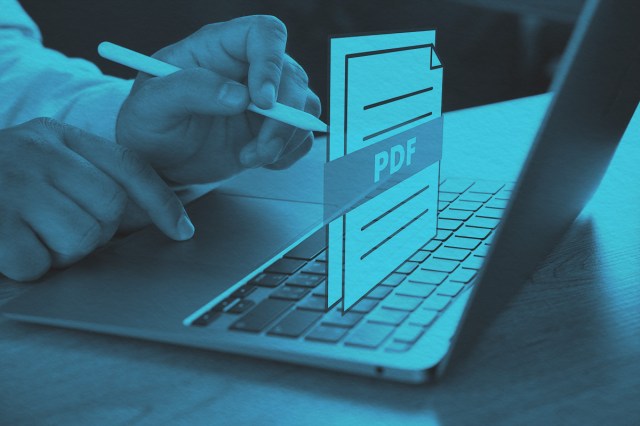
A PDF, or portable document format, is a type of computer file that was developed by Adobe to allow documents to be easily viewed across a wide variety of software and operating systems. There’s no need to say “PDF format,” given that “PDF” by itself is perfectly acceptable. However, in 1992, print appearances of “PDF” referred to “portable document files.” By 1996, “files” had switched to “format.”
DC Comics
DC Comics is known for its classic superheroes Superman, Batman, Wonder Woman, and the Flash. But did you know that “DC” stands for “Detective Comics,” which means that “DC Comics” is redundant? Detective Comics began publishing in 1937, and the name was shortened to just “DC” soon after.
Advertisement
MLB Baseball
“MLB” stands for “Major League Baseball,” so there’s no need to mention the sport as well. The same applies to any other major American sports league, such as the NFL (National Football League), NHL (National Hockey League), NBA (National Basketball Association), or WNBA (Women’s National Basketball Association). In all of these instances, the acronym is more than enough.
RSVP Please
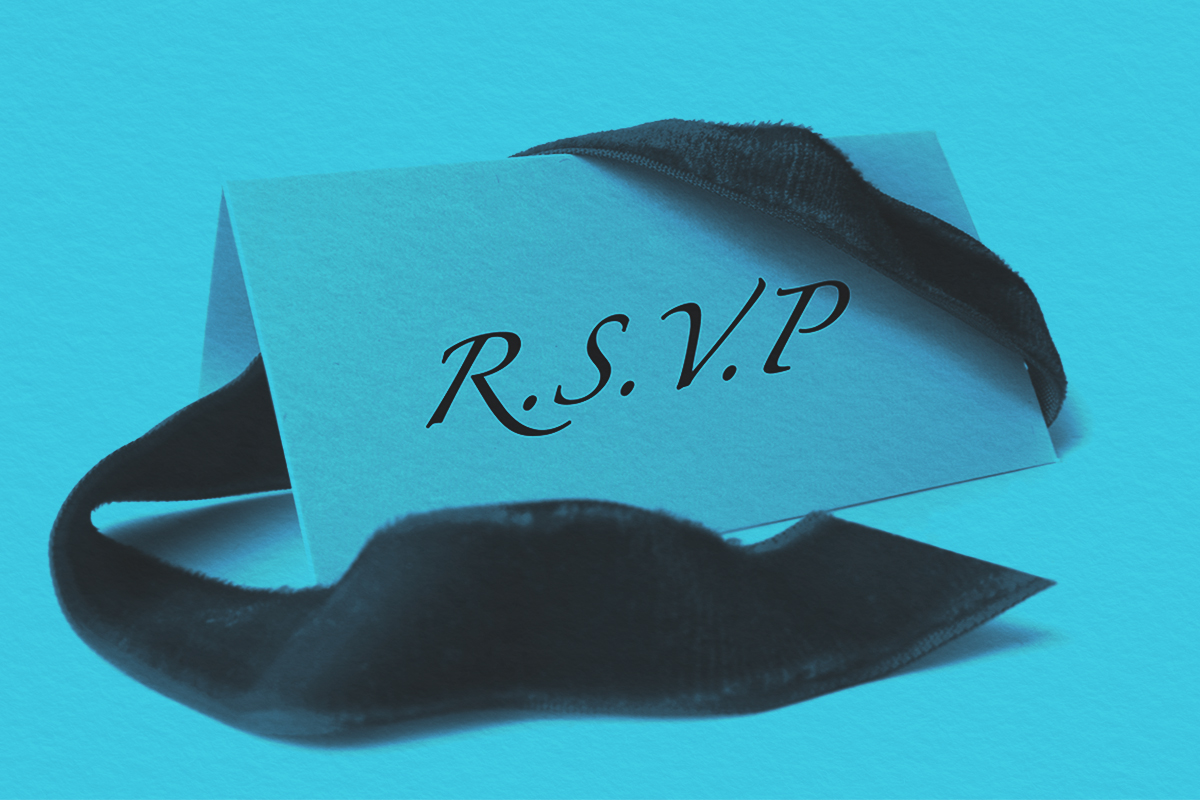
“RSVP” is shorthand for the French phrase répondez s’il vous plaît, which translates to “respond, if you please.” Given that knowledge, you’ll understand that saying “RSVP” is enough, and tacking on an extra “please” is unnecessary. The acronym was first used in this context by Londoners around 1825.
Advertisement
SAT Test
Before applying to colleges, high school students usually take the SAT test to determine their educational prowess. But saying “test” might be tarnishing that display, given that “SAT” stands for “Scholastic Aptitude Test.” The SAT started in 1926, though according to the Oxford English Dictionary, printed citations only go as far back as 1961. The exam remains an important part of the college admissions process.
Almost all commercially sold products have a 12-digit barcode on the packaging that can be scanned to bring up the price. This is the UPC (universal product code), so you needn’t refer to it as the “UPC code.” The very first UPC ever scanned was for a pack of Wrigley’s Juicy Fruit gum in 1974 — the same year the acronym appeared in print.
AC/DC Current
We’re not talking about the rock band — we’re talking about alternating current and direct current, which can be shortened to “AC” and “DC,” respectively (although the rock band did reportedly name itself after the electrical currents, due to their electrifying sound). AC was first discovered in the 1830s, and DC was developed by Thomas Edison in the 1870s. Obviously context is key, because it’s easy to confuse “AC” for “air conditioning” or “DC” for the comic book brand. But despite these potential mix-ups, adding on the word “current” will make both acronyms redundant.
Featured image credit: juststock/ iStock
Advertisement
More from our network
Word Smarts is part of Inbox Studio, which publishes content that uplifts, informs, and inspires.
Medical dramas are chock-full of interesting jargon, but one urgent request rises above the rest: “Stat!” This term undoubtedly has an air of urgency — but where did it come from? While it might seem like a modern invention, it traces back to the Latin word statim, meaning “immediately.” Let’s look at how “stat” made a centuries-long journey from ancient Rome to today’s email inboxes and hospital rooms.
Advertisement
Latin was adopted early on for most science and medical fields, and statim conveyed a critical need for action. By 1800, the term was being used in medical contexts in English, and the abbreviation “stat” was recorded in theMedical & Physical Journal, used as an adverb to ensure quick execution. This shorthand was a more efficient way to still signal urgency.
“Stat” as an adjective is demonstrated in a 1963 medical journal example: “I had just given her the stat dose when I noted she began to look jaundiced.” By this time, the original statim had all but disappeared from use.
Also around the mid-20th century, the term jumped from the pages of medical journals to science fiction novels. In Vonda N. McIntyre’s novel Star Trek: The Wrath of Khan (1982), a character demands, “Get a medic up here! Stat!” (Note that the context is still medical, albeit fictional, signaling an awareness of the word’s origin.) From there, “stat” entered everyday language and is now used to indicate any immediate need — even trivial things such as, “I need a coffee, stat!”
Whether in the dramatic pauses of a medical drama or the lighthearted urgency of a caffeine craving, this Latin loanword retains its centuries-old power, packing a punch when needed.
Featured image credit: STEKLO/ Shutterstock
Advertisement
More from our network
Word Smarts is part of Inbox Studio, which publishes content that uplifts, informs, and inspires.
Theft is usually frowned upon, but linguists will tell you that much of the English language was stolen — or borrowed — from other languages. And a student of the idioms and aphorisms that contribute to the charm of English will recognize the classic proverb “rob Peter to pay Paul.” We’ve already explored who Roger (“Roger that”) and Pete (“for Pete’s sake”) are in previous editions, and now it’s time to get to know Peter and Paul.
Advertisement
The usage of this idiom is pretty straightforward: It means to take something away from one person (Peter) in order to pay another (Paul), leaving the first person at a disadvantage. In another usage, it might mean to pay off one debt by taking on another. But why are the names of Peter and Paul used, rather than Wendy and Wanda, Michael and Thomas, Laverne and Shirley, or any other pleasing pairing of names?
Those who are familiar with the Bible and Christian history will have likely drawn the connection between the idiom and the biblical characters of St. Peter and Paul the Apostle, but still, the exact origins of the phrase are murky. The earliest printed appearance shows up in a 15th-century morality treatise written in Middle English: “To robbe Petyr & geve it Poule, it were non almesse but gret synne.” An overtly literal use of the phrase appeared in modern English in a 1661 document about the reformation of the Church of England — the context was discussing paying reparations to the church of St. Paul.
Those are some of the earliest examples of the phrase, but researcher Gary Martin, founder of the site Phrase Finder,suggests there are likely two reasons for why the names Peter and Paul were chosen and why the idiom has stuck around: First, nearly everyone living in the English world in the 15th century was of Christian faith, and thus familiar with the names Peter and Paul. Secondly, people love speaking in alliteration, and once that phrasing came into use, it was memorable, and the warning against “robbing Peter to pay Paul” remained in the lexicon.
Featured image credit: D-Keine/ iStock
Advertisement
More from our network
Word Smarts is part of Inbox Studio, which publishes content that uplifts, informs, and inspires.
Parallelism is a powerful grammatical tool that creates balance as it adds clarity to everyday conversation and pizzazz to movie lines and famous speeches.
What makes a movie line unforgettable? Consider Jedi Master Yoda’s sage advice: “Do or do not. There is no try.” The words are simple, yet profound. The line’s power lies not just in its meaning but also in its structure, shaped by a rhetorical device called parallelism. Parallelism is the art of balancing the elements of sentences — words, phrases, and clauses — to create grammatical harmony. In Yoda’s quote, the repetition of “do” and the matching verb form of “try” strengthens its impact. Imagine instead: “Do or don’t. There is no trying.” The discrepancy between verb forms breaks the rhythm, and the message loses some of its effect.
Advertisement
When parallelism stands out as a hallmark of memorable speeches and literature, it’s often paired with antithesis. This technique contrasts two opposing things for added effect. Think of this line in President John F. Kennedy’s inaugural address: “Ask not what your country can do for you — ask what you can do for your country.” Or consider Charles Dickens’ famous opening in A Tale of Two Cities: “It was the best of times, it was the worst of times, it was the age of wisdom, it was the age of foolishness…” These parallelisms not only create rhythm, but also pack a punch by using opposites.
The grammatical technique of parallelism sharpens everyday communication in less apparent ways, too. It’s used in series to create harmony between verbs or nouns. Instead of saying, “I spent my Sundays reading, swimming, and on walks at the beach,” create a parallel structure with matching verb forms: “I spent my Sundays reading, swimming, and walking at the beach.” Similarly, changing “We like movies and to walk in the park” to “We like to watch movies and walk in the park” enhances both flow and clarity.
Parallelism extends to noun forms as well. For instance, “Many public places, such as libraries or a coffee shop, offer free Wi-Fi” becomes more fluid as “Many public places, such as libraries and coffee shops, offer free Wi-Fi.”
By aligning comparable elements, parallelism enhances readability and creates a memorable rhythm that allows ideas to resonate more deeply with readers and listeners — whether you’re chatting with a friend over coffee or delivering a powerful line that lingers long after it’s spoken.
Featured image credit: Yeti studio/ Shutterstock
Advertisement
More from our network
Word Smarts is part of Inbox Studio, which publishes content that uplifts, informs, and inspires.
“Happy trails to you, until we meet again” — you can likely hear the tune for these sentimental lyrics in your head. But did a common phrase inspire this song, or vice versa?
The term “happy trails” may evoke images of a cheery cartoon with singing woodland creatures and rivers made of chocolate. But the phrase is more commonly used to wish someone well upon their departure, much like “have a safe journey” or “all the best.” It was coined in a 1950s song, but it became popular in the wonderful world of television, and the phrase is used in many other contexts today.
Advertisement
The term “happy trails” originated in a 1951 song called “Happy Trails in Sunshine Valley,” written by Foy Willing of Riders of the Purple Sage, a band that often backed Roy Rogers in his Western movies and that audiences knew from his 1940s radio program. Rogers and his wife Dale Evans took that as inspiration and wrote a shorter tune, “Happy Trails,” as the closing theme for their new TV show, The Roy Rogers Show, buthere was reportedly some bad blood between the two parties about Rogers borrowing the phrasing, and they said “happy trails” to each other.
The image of a cowboy and his wife waving to the audience while singing, “Happy trails to you, until we meet again,” was a shot of optimism that made The Roy Rogers Show and the song “Happy Trails” a cultural phenomenon. Country superstar Randy Travis later recorded the song as a duet with Rogers on an album in the 1990s, and Janis Joplin notoriously recorded the song as a birthday gift for her friend John Lennon in 1970 in her last recording session.
The wistful sentimentality of the lyrics has inspired usage of “happy trails” in other contexts. Theatrical actors use the song and the phrase to say goodbye to other performers at the end of a run or when someone is moving on to another production. And just as “bon voyage” is used to say “goodbye” outside of sending someone off on a seafaring journey, “happy trails” has made the leap from the song into common usage. Even if you aren’t a singing cowboy or theatrical actor, you can use it as a way to wish someone well upon their departure, especially if you want to convey some fond emotion about the history of your relationship.
Featured image credit: Korionov/ Shutterstock
Advertisement
More from our network
Word Smarts is part of Inbox Studio, which publishes content that uplifts, informs, and inspires.
Do You Know This Good Luck Saying for the First of the Month?
Saying “rabbit rabbit” is a quirky tradition that’s believed to bring good fortune on the first day of the month. But how did this unusual phrase come to hold such power?
Could the superstitious phrase “rabbit rabbit” have influenced the outcome of the 1932 U.S. presidential election? Some, including President Franklin Delano Roosevelt, seemed to believe it could. There’s a tradition of saying “rabbit rabbit” on the first day of the month to ensure good luck for the days ahead, and journalists documented FDR’s practice of reciting the phrase, as well as carrying a lucky rabbit’s foot (which is now on display at the FDR Presidential Library and Museum). That year, he made history as the first Democratic candidate in 80 years to secure both the Electoral College and the popular vote — though whether luck had anything to do with it is anyone’s guess.
Advertisement
Regardless, the president wasn’t alone in his devotion to the lagomorphic phrase. During World War II, British fighter pilots reportedly recited “rabbit rabbit” before taking flight, hoping for a successful mission. The first print citation seems to be in a 1909 British periodical: A reader’s submission recounts a story of how their child would say “rabbit” on the first day of the month, believing it would bring good fortune as the first word spoken.
But this superstitious belief in rabbits surpasses modern Western culture. In Chinese tradition, the rabbit is regarded as the luckiest of the 12 animals in the zodiac. Across many ancient cultures, the rabbit symbolized fertility and life, and in modern symbolism, rabbits serve as a beacon for the coming spring and a religious representation of renewal. All of these beliefs contribute to the enduring superstition that rabbits are harbingers of good fortune.
According to its adherents, saying “rabbit rabbit” is most effective when recited upon waking up on the first of the month. But if you forget to say it, don’t worry. According to NPR, saying “black rabbit” or “tibbar tibbar” (“rabbit” spelled backward) before bed will still do the trick in keeping any misfortune at bay for the month ahead.
Featured image credit: MediaProduction/ iStock
Advertisement
More from our network
Word Smarts is part of Inbox Studio, which publishes content that uplifts, informs, and inspires.
In the ever-expanding email lexicon, few abbreviations are as ubiquitous as “cc.” How has this 19th-century term come to be so important in 21st-century tech?
The evolution of technology is unrelentingly swift. Generations have witnessed state-of-the-art inventions become obsolete in the blink of an eye. The fax machine, the pager, and the landline, all once revolutionary, have earned their place in the annals of history. Yet email — born in 1971 when engineer Ray Tomlinson sent the very first “ping” — has remarkably endured. This persistent form of communication continues to redefine itself for the digital age, but one enigmatic email feature hasn’t changed for 50 years: the “cc.”
Advertisement
The “cc” field is a familiar sight perched within the recipient line of an email. The purpose is to send a copy of the message to an additional recipient who might need the information, but isn’t integral to the action of the message. Its modern definition traces back to its original usage in the late 19th century, when a duplicate was called a “carbon copy.”
Around the 1870s, long before photocopiers, documents were painstakingly duplicated by hand using carbon paper between two sheets of plain paper. Something written or typed on the top page would be transferred to the bottom piece of paper through the pressure on the carbon (essentially ink). The exact replica was called a “carbon copy.” By the 1920s, the term “carbon copy” had shifted to figuratively describe something that was a near-identical replica, such as “Mark was a carbon copy of his father.” This usage made its way into corporate America in the 1930s, when it was used in business as shorthand to ensure that multiple parties received the same information.
When email emerged in the 1970s, “cc” was quickly adapted, as the jargon was already familiar in professional circles. The concept of the “bcc” (blind carbon copy) soon followed, allowing a sender to conceal recipients entered in the “bcc” field. In the 1980s, the use of “cc” became so prevalent that it evolved into a verb, as in, “I cc’d Amy on that message.”
Even as digital technology seems to be on the cusp of the next big thing,”cc” is here to stay. The anachronism has survived 150 years, evolving from an industrial-era hand-copying tool into an indispensable feature of email etiquette, cementing its place in communication with one simple click.
Featured image credit: Rawf8/ iStock
Advertisement
More from our network
Word Smarts is part of Inbox Studio, which publishes content that uplifts, informs, and inspires.
Even Shakespeare grappled with this grammar choice. Here’s how to avoid the common mix-up between “which” and “that” by identifying what type of clause you’re writing.
“Caesar, thou art revenged, / Even with the sword that killed thee.” This pivotal verse from Shakespeare’s Julius Caesar uses “that” to introduce a restrictive clause, which means it provides essential context. But sometimes, you’ll see similar sentences incorrectly written with “which,” as in, “Even with the sword which killed thee.” Although these sentences convey the same meaning, the latter is actually a grammatical error. Here’s how to get it right.
Advertisement
The distinction between “which” and “that” can confuse even the most experienced writers.The key to using these words correctly lies in distinguishing between restrictive and nonrestrictive clauses. A restrictive clause provides critical information about the noun it modifies. You can’t remove the clause without altering the sentence’s meaning. For example, “The book that I borrowed is on the table.” The intent of the sentence is to specify the borrowed book, not just any random book, so “that I borrowed” is necessary information. A nonrestrictive clause, however, adds extra detail that can be omitted without changing the sentence’s core meaning. For instance, “The novel, which I read on the bus to kill time, was a thriller set in Nantucket.” Remove “which I read on the bus to kill time,” and the sentence still makes sense: “The novel was a thriller set in Nantucket.”
The key to this word choice typically relates to comma usage. Use “that” for restrictive clauses (no commas) and “which” for nonrestrictive clauses (with commas). For example: “The pen that I broke is in the trash” (restrictive), versus “The pen, which I bought in Maine, broke in my purse” (nonrestrictive).
If you’re still having trouble telling them apart, don’t sweat it. Even Shakespeare wasn’t so strict about this rule. In The Winter’s Tale, he wrote, “It is a heretic that makes the fire, not she which burns in’t.” Current grammar rules would dictate “that” in the restrictive clause, but Shakespeare wrote in what’s called Elizabethan English, which is a precursor to modern English, and the rules don’t exactly match up. It’s also worth noting that Shakespeare’s works were meant to be performed on a stage, and it’s less likely that someone will nitpick your use of “that” versus “which” in spoken word.
Featured image credit: Krakenimages/ Shutterstock
Advertisement
More from our network
Word Smarts is part of Inbox Studio, which publishes content that uplifts, informs, and inspires.
Sometimes banishment can be a good thing — just look at Napoleon’s exile to Elba or when Pete Best was pushed out of the Beatles. The concept applies to the English language as well, which is rife with words that have overstayed their welcome. Linguists at Michigan’s Lake Superior State University are particularly passionate about the topic, so much so that they’ve released a Banished Words List annually since 1976. This quirky tradition seeks to playfully ban any words, acronyms, or slang for “Mis-Use, Over-use, and General Uselessness.” Let’s take a look at the 2025 contenders for linguistic banishment.
Advertisement
Some “banished” words have been used so frequently that they’ve lost all meaning. This includes “cringe” — the No. 1 entry — as saying it is likely to make anyone within earshot do that exact action. We also have “game changer,” which has been said so often that it’s nothing more than a cliché. “Era” is the third entry on the list, as a certain megastar’s tour encouraged marketers to make everything in the past year an “era.” Next up is “dropped,” which used to be reserved for major album debuts. However, I recently heard someone use it for a new grocery product, so I can confirm it is indeed over.
The 2025 Banished Words List also includes acronyms and slang, such as “IYKYK.” This translates to “If you know, you know,” and was lambasted for being too cryptic and also unhelpful. Another bit of modern slang to get rid of is “Sorry, not sorry,” a phrase that’s more backhandedly disingenuous than it is sincere. LSSU also recommends doing away with youthful slang such as “Skibidi” (a true nonsense word) and “100%,” the latter of which has been overused in place of more straightforward phrases like “I agree.”
To complement LSSU’s Banished Words List, I have a few other recommendations. Let’s start with “very” — overuse of this term is a sign of lazy writing. English is full of so many descriptive terms, so forgo phrases such as “very happy” and use “ecstatic,” “overjoyed,” “blissful,” or another synonym instead. I’d also like to get rid of the phrase “It is what it is,” as it’s unhelpful and fails to contribute much, if anything, to the conversation.
Obviously none of these words is actually being banished, but it’s worth using this list to analyze your personal vernacular. If you find yourself guilty of falling back on these terms and phrases, try to incorporate some more interesting alternatives in their place.
Featured image credit: Me dia/ Shutterstock
Advertisement
More from our network
Word Smarts is part of Inbox Studio, which publishes content that uplifts, informs, and inspires.
Enter your email to receive daily lessons that dive into what makes English so fascinating. Each email is packed with odd rules, etymologies, and the tools you need to be a better communicator.
Sorry, your email address is not valid. Please try again.
Sorry, your email address is not valid. Please try again.