
4 MIN READ

9 Emojis We Wish Existed

From iced coffees to acoustic guitars, here are the emojis we desperately need but still don’t have. đŸ€”

by Bennett Kleinman
Smartphone with various emotions floating around

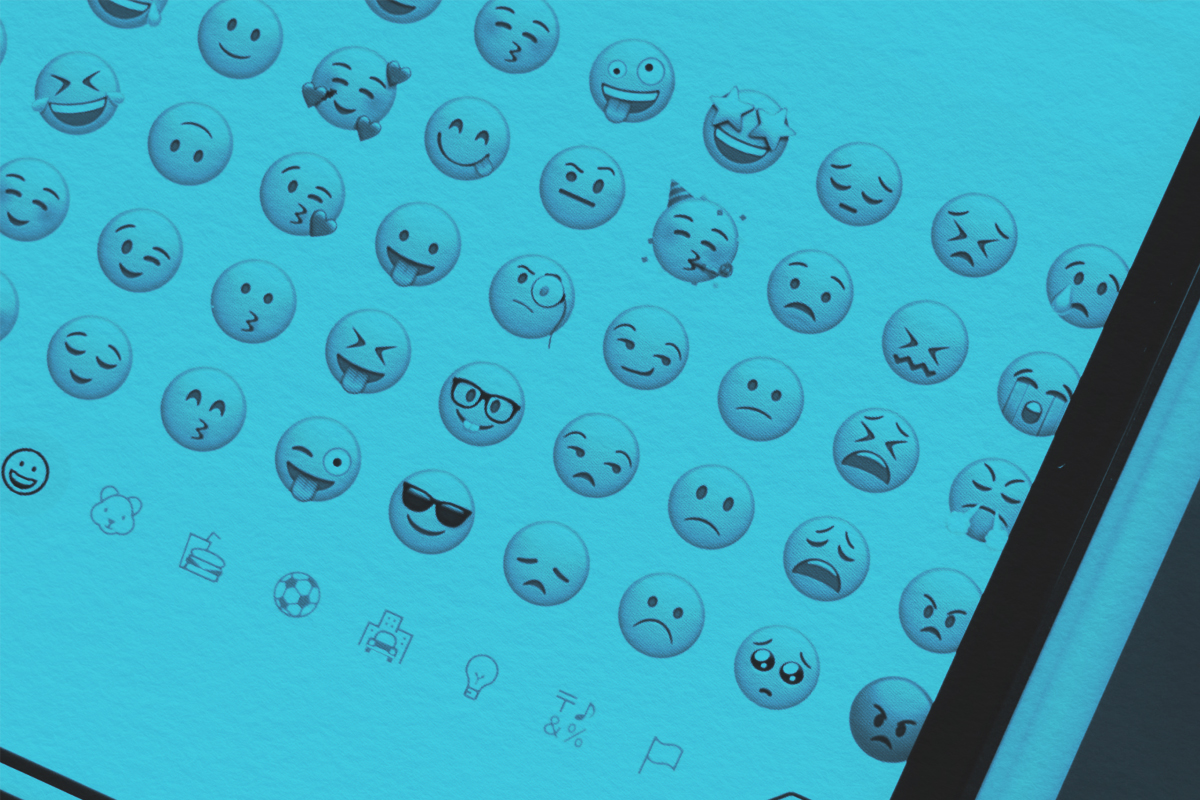
If you frequently use emojis 👋, you know there are times when it’s a struggle 😭 to find the perfect image. For all the ❀and 👍we use daily, sometimes you’re left scratching your head đŸ€”and settling for a lackluster emoji that only half describes how you feel đŸ€Šâ€â™‚ïž.

Thankfully, much like the word-based English language, the world of emojis is evolving, with new emojis added regularly 🎉. While device companies and various platforms (Facebook, Google, etc.) decide how each emoji appears on their network, Unicode, an international committee responsible for computing standards, decides exactly which icons make up the emoji keyboard. So if anyone from Unicode is listening, here are 10 emojis we’d like to see on the next big update 🙏.

Acoustic Guitar

While it’s fun to bop your head and rock out from time to time, not every song requires the intensity of an electric guitar (an emoji that already exists 🎾). It would benefit us all to have access to an acoustic guitar emoji, which is far more appropriate for those mellow numbers — please reference the Ken sing-along in the Barbie movie. The truth is that the musical instrument options are lacking in general, and we could stand to add a banjo, an accordion, or perhaps bagpipes.

Iced Coffee

Some people love iced coffee year-round, but they have to settle for sending the Hot Beverage ☕ emoji, depicting a steaming cup. Think about it: If you text a hot coffee to your friend, they may think you want to sit down at a cafe and chat. But a tall iced coffee emoji says, “Let’s walk through the park and catch up, chilly treat in hand.”

Advertisement
Dumpster Fire

Sending someone a Fire đŸ”„ emoji may mean that you think something is really cool — the exact opposite of a dumpster fire, which suggests disaster. Unfortunately, we only have separate Wastebasket đŸ—‘ïž and Fire đŸ”„ emojis. You can send the familiar “This is fine” meme in a pinch, but it would be nice to have a go-to emoji for those situations when everything goes awry.

Multiple Balloons

A single red balloon evokes images of the evil clown Pennywise from It — not a birthday bash — and yet 🎈 is the only balloon emoji currently available. A bunch of balloons in festive colors, on the other hand, alongside the party popper and cake emojis, shouts “celebration.”

Angsty Teenager

Is your child or grandchild in an angsty stage of life? Perhaps it’s just a phase, but it’s one that could be capitalized on by adding an angsty teen emoji. Maybe it could be an expressionless yellow smiley emoji with a goth-style haircut, or a more realistic teenage face rolling their eyes.

Advertisement
Gingerbread Person

Few symbols are more evocative of the holiday season than gingerbread people, but a gingerbread cookie doesn’t exist on the emoji keyboard (yet). The standard Cookie đŸȘlooks like a chocolate chip cookie, and the other option is a Fortune Cookie đŸ„ . While we’re requesting sweets, we could use a candy cane emoji, too, as both would help brighten up texting during the holiday season.

Mic Drop

Plenty of situations call for a mic drop — the end of an opinionated venting session, the perfect quip, a snappy retort. The Microphone emoji đŸŽ€ exists, but we need some motion added to it, similar to how the Speaker Loud Volume emoji 🔊 demonstrates the levels of sound. A mic drop emoji has the potential to become one of the most used and popular emojis among texters who need some added emphasis.
Grilled Cheese

As far as cheese emojis, we have a hunk of unmelted Cheese Wedge 🧀 and then a sophisticated pot of Fondue đŸ«•. A grilled cheese emoji would be perfect for texting a friend about a late-night craving or those nights when you get home from work and can’t be bothered to cook anything more complex.

U.S. State Flags

The Stars and Stripes are represented by an emoji đŸ‡ș🇾, but it would be nice if we could display some home state pride as well. There are flags for almost every world nation, so maybe the flags of the individual U.S. states will be added at some point, too. 

Do you have any emoji ideas you’d like to see become a reality? Let us know, and maybe we’ll submit a proposal to Unicode for an emoji the WordSmarts community would like to add to the emoji keyboard. 

Featured image credit: Planet Volumes/ Unsplash+
2 MIN READ

What’s An “Eggcorn”?

Discover how “eggcorn” became the word for linguistic mix-ups like “pre-Madonna” and “doggy dog world.”

by Bennett Kleinman
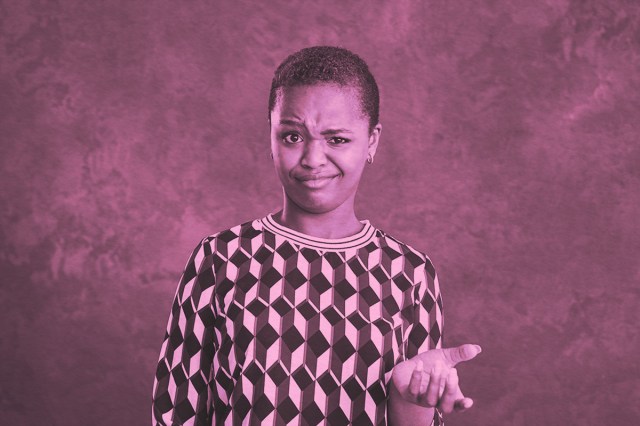
Woman with a surprised confused demeanor

The culinary world is full of strange hybrids such as turducken, sushirritos, and cronuts. You would be forgiven for thinking “eggcorn” falls into this category, too, but as far as we know, you won’t find any movie theaters selling buckets of popcorn topped with scrambled eggs. Instead, “eggcorn” is a linguistic term, used specifically to designate words and phrases that come about due to mishearing or misinterpreting another word or phrase.

One common eggcorn is “all intensive purposes,” which people incorrectly hear instead of “all intents and purposes.” There’s also “duck tape” for “duct tape,” “pre-Madonna” for “prima donna,” and “doggy dog world” rather than “dog-eat-dog world.” In all of these examples, the first version is a misinterpretation of the correct second version, making the former an erroneous eggcorn.

Of course, “eggcorn” is an eggcorn itself — specifically a misinterpretation of the word “acorn.” The Oxford English Dictionary considers the earliest presentation of “eggcorn” in an 1844 letter from S. G. McMahan, who wrote, “I hope you are as harty as you ust to be and that you have plenty of egg corn [acorn] bread.” This example isn’t from a renowned scholar or in famous literature, but 159 years later, it caught the attention of University of Pennsylvania linguistics professor Mark Liberman.

In a 2003 blog post, Liberman discussed mistaking “acorns” for “egg corns” for the first time in an academic sense. He wondered if there was a word to describe the situation, ultimately determining that extant words like “malapropism” or “mondegreen” weren’t accurate. At the suggestion of a friend, Liberman proposed “egg corn” as a new term for these situations, given the misinterpretation was unique in itself. The term had been adopted as the one-word “eggcorn” and was used in a Boston Globe article about misheard Shakespeare references by 2004 — proving the right word will quickly fill a void.  

Featured image credit: Studio Romantic/ Shutterstock
2 MIN READ

Why Do We Say ‘Eat Your Heart Out’?

With an origin story in an ancient Greek epic, this idiom is now used to provoke envy or make playful jabs.

by Bennett Kleinman
Human heart with ecg graph

“Eat your heart out” isn’t just a great advertising slogan for an all-you-can-eat buffet. It’s also a phrase most commonly used in a boastful manner to induce feelings of envy, regret, and other similar emotions. If someone tells you to eat your heart out, they might be lauding an accomplishment over your head. For instance, maybe you expressed some doubt they would get a promotion at work, and they want to brag a bit. As to why the heart was chosen out of all the organs for this phrase, perhaps it’s because our hearts are so deeply intertwined with passion and emotions, unlike the kidneys or skin, for example.

The phrase’s origins can purportedly be traced back to the Iliad, an ancient Greek epic likely written in the mid-sixth century BCE. Translations of this work — including this example from English professor Michael Delahoyde — depict characters metaphorically eating their heart out in a state of grief. In another translation, Bellerophontes is called out specifically: “But after Bellerophontes was hated by all the immortals, he wandered alone about the plain of Aleios (Aleus), eating his heart out, skulking aside from the trodden track of humanity.” But these are modern interpretations of an ancient epic, and so it’s important to understand that the phrase wasn’t written verbatim in the original ancient Greek.

Much later, around the 16th century, “eat your/one’s heart out” became a widely used metaphor. According to the Oxford English Dictionary, one of the earliest uses appears in a circa 1532 translation of the Hellenistic Greek phrase “Όᜎ áŒÏƒÎžÎŻÎ”ÎčΜ ÎșÎ±ÏÎŽÎŻÎ±Îœ,” which essentially translates to “eat no heart.” It wasn’t long before the phrase evolved into the modern taunt.

“Eat your heart out” can be expressed in a lighthearted and satirical manner. If someone is hamming it up while filming a home movie, they might say “eat your heart out, Steven Spielberg.” They’re not talking to Steven himself but rather making fun of the situation and pretending to be a serious actor. While it does have ancient metaphorical origins, choose carefully whether you use “eat your heart out” satirically or as a taunt, as it can leave a negative impression. 

Featured image credit: Explode/ Shutterstock
3 MIN READ

Why Is It Called a ‘Blue Moon’?

While this phrase has a metaphorical usage, it also has a literal placement on the lunar calendar. Unfortunately, the frequency of the blue moon is also up for interpretation.

by Samantha Abernethy
Full moon in night starry sky

The earliest documented mentions of “blue moon” — dating to the 16th century — suggested something was impossible because the idea of the orb in the sky being blue was outright absurd. Now the idiom “once in a blue moon” refers to an event that rarely happens, and as of the 20th century, a blue moon on the lunar calendar happens every two to three years. 

In an astronomical sense, a more apt term might be “bonus moon,” because the color blue has little to do with it. Today, “blue moon” refers to one of two different lunar events: the third full moon of a season that contains four full moons or the second full moon in a calendar month. We can credit the Farmers’ Almanac for the first interpretation. This folksy guide follows a tropical year calendar, measured from one winter solstice (December 21) to the next. There are almost always 12 full moons per year — three per season. But every once in a while, four full moons occur in a single season. In the 19th century, the Farmers’ Almanac began recognizing a blue moon as the third full moon during a season that had four. Why the third full moon? The last full moons in each season already had designated names, such as June’s Strawberry Moon. 

The second definition of “blue moon” — meaning the second full moon in a single month — is the result of an accidental oversimplification of the Farmers’ Almanac rule printed in a 1946 issue of Sky and Telescope magazine. This categorization of “blue moon” is more common. The next monthly blue moon is expected on May 31, 2026. The next seasonal blue moon will happen on August 21, 2032, according to Space.com.

If a (somewhat) rare blue moon isn’t blue in color, though, why is it called as such? This is still a linguistic mystery. One theory proposes a misunderstanding of the Old English word belewe, meaning “betray.” Another suggests someone misheard the French la deux lune, meaning “double moon,” and yet another offers that the second full moon in the month was called “blue” in the Czech language

The next time someone suggests something happens “once in a blue moon,” you might want to ask them to be more specific about how often that occurs.

Featured image credit: Sergey Nivens/ Shutterstock
2 MIN READ

Why Do Some Sentences Sound Better Than Others?

Writing tip: Readers are more likely to grasp simpler concepts at the beginning of a sentence. Use the concept of sentence weight to reserve the complex ideas for the end.

by Rachel Gresh
The point of view of someone reading a book in their lap

Ever wonder why certain sentences just click? Take, for instance, the final line of The Count of Monte Cristo, “Until the day when God will deign to reveal the future to man, all human wisdom is contained in these two words, — ‘Wait and hope.'” Notice how the emphasis falls on the end of the sentence. This is a prime example of effective sentence weight. Rearranging the line stifles its impact: “All human wisdom is contained in these two words — ‘Wait and hope’ — until the day when God will deign to reveal the future to man.”

To understand sentence weight, imagine your sentence spanning across a seesaw. English speakers instinctively favor the “heaviest” or most complex part of the sentence on the right side, or at the end of the sentence, and simpler, more digestible elements at the beginning. This concept, sometimes called “end-weight,” appeared in Lindley Murray’s 1795 book English Grammar, which served as the template for grade-school grammar lessons for centuries.

Longer or complex phrases (such as prepositional phrases) inherently carry more weight than simpler clauses. Excessive complexity at the start can confuse or disengage the reader. The sentence, “It was thoughtful of Mary to send me a card for my birthday,” sounds better than, “For Mary to send me a card for my birthday was thoughtful.” Linguists have tested pairings of this nature, and the audience always prefers the heavier end-weight structure. The latter feels awkward because the weighty idea comes too early and is distracting.

This is a valuable tool for writers. Consider this line from The Great Gatsby: “In his blue gardens men and girls came and went like moths among the whisperings and the champagne and the stars.” Placing this line on the metaphorical seesaw would undoubtedly cause the right side to plummet to the ground — the end of the sentence is heavy with vivid and complex imagery.

While the “rules” of sentence weight provide guidance, they are by no means rigid. English syntax allows flexibility, and sentence structure can be altered for stylistic effect. When in doubt, consider your seesaw. Weightier ideas typically belong at the end, anchoring the sentence with their emphasis.

Featured image credit: Blaz Photo/ Unsplash
5 MIN READ

7 Contemporary Classics To Read for Black History Month

Black authors can be found in bookstores and libraries on the shelves of all genres. Check out some recommendations for 21st-century Black authors.

by Julia Rittenberg
Various book covers with pink overlay

As a celebration of art, history, and culture, Black History Month brings attention to fascinating figures from the past and present. President Gerald Ford officially recognized the month of February as Black History Month in 1976, and it continues to serve as a reminder of the amazing contributions that Black people have made to American culture. 

Black authors are especially important to the American literary canon. Langston Hughes, Zora Neale Hurston, James Baldwin, Toni Morrison, and more are fixtures in any library. And we have a list with some contemporary authors to inspire your reading for Black History Month. 

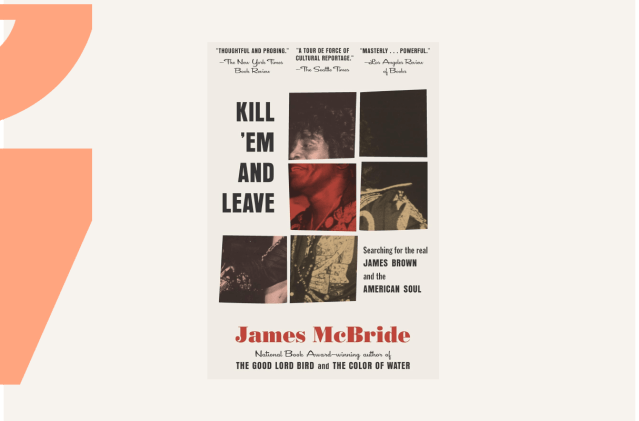
Kill 'Em and Leave: Searching for James Brown and the American Soul by James McBride

Kill ‘Em and Leave: Searching for James Brown and the American Soul by James McBride

In addition to writing award-winning fiction, James McBride is a trained musician with a special interest in the legacy of James Brown. Here, he traces Brown’s origins and how he ping-ponged around the country, explaining the history of the places he landed. McBride also conducted interviews with people involved in creating the sound, look, and mythos of James Brown for his depiction of a compelling figure.

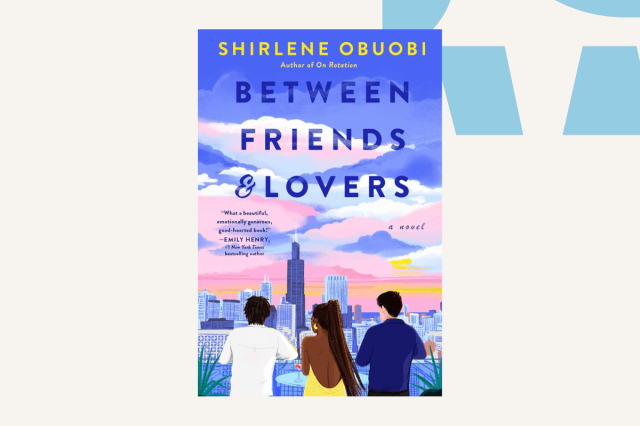
Between Friends & Lovers by Shirlene Obuobi

Between Friends & Lovers by Shirlene Obuobi

This funny contemporary romance is perfect for anyone who has disconnected from their path and wants to make a change. Josephine Boateng exists on social media as Dr. Jojo, expert advice giver on love and life. In reality, she’s trying to pursue medicine and get over an unrequited crush on an old friend. When she meets Malcom, an author who needs her advice, an unexpected romance blossoms. 

Advertisement
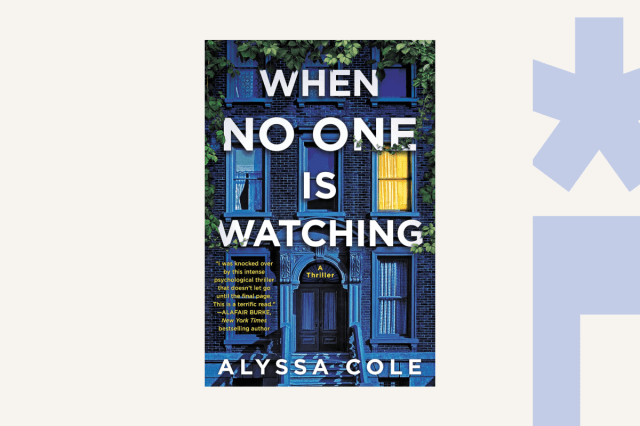
When No One Is Watching by Alyssa Cole

When No One Is Watching by Alyssa Cole

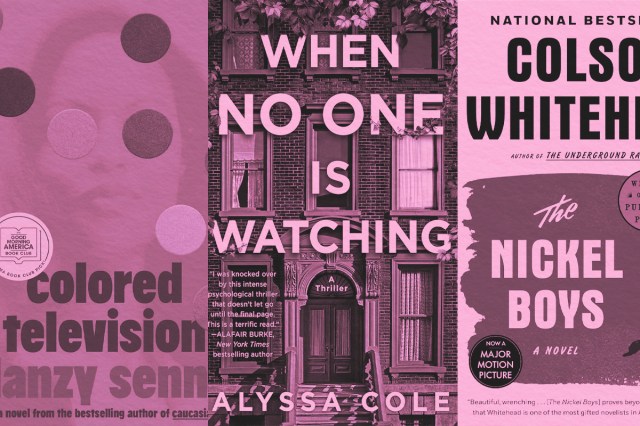
Well-known romance novelist Alyssa Cole genre-hopped to write an impressive thriller. Sydney Green is a Brooklynite whose neighborhood is disappearing around her as she sees houses for sale every day, with the residents supposedly moving out of the city. She teams up with a new neighbor, and they realize that people aren’t simply moving — they’re disappearing without a trace. 

Colored Television by Danzy Senna

Colored Television by Danzy Senna

Jane is desperate to finish her epic novel and get some stability for herself, her husband, and their two children. While she’s house-sitting for a rich friend in Los Angeles and trying to finish her book, she grows more frustrated with her lot in life. She partners with a Hollywood producer who promises to bring her voice to television and let her realize her true vision. But since it’s Hollywood, appearances are deceiving. 

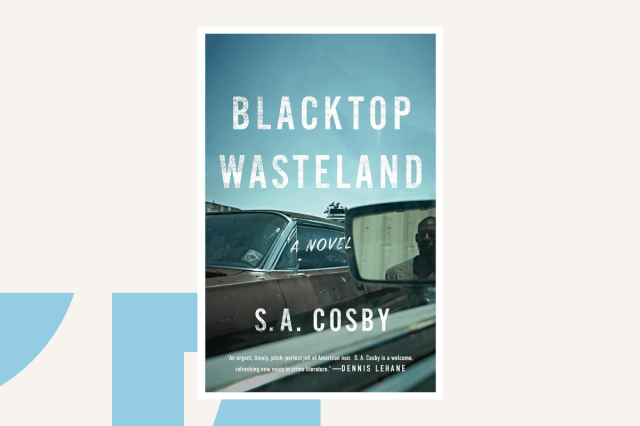
Blacktop Wasteland by S.A. Cosby

Blacktop Wasteland by S.A. Cosby

Beauregard “Bug” Montage is not making enough to support his family through his modest mechanic job, and his past as a getaway driver comes back to haunt him when he decides to participate in a diamond heist. It’s supposed to be one-and-done, but it rapidly spins out of control as the criminal life sucks him back in. This is an excellent road trip novel for anyone who likes a propulsive thriller. 

Advertisement
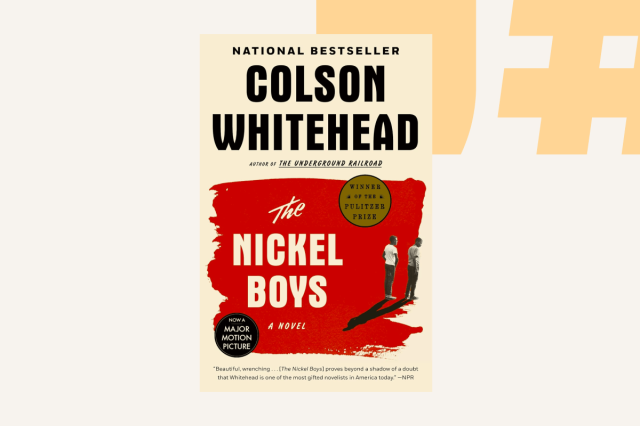
The Nickel Boys by Colson Whitehead

The Nickel Boys by Colson Whitehead 

The recent movie adaptation of this novel is gaining major critical praise and awards attention. Two boys meet at a reformatory school in Florida in the 1960s. Elwood is an optimist, staunch in his belief that the world will change and ready to take on the challenges of the Civil Rights Movement. His friend Turner has been at the Nickel Academy for years and is the cynical opposite to Elwood. Their friendship defines the rest of their lives.  
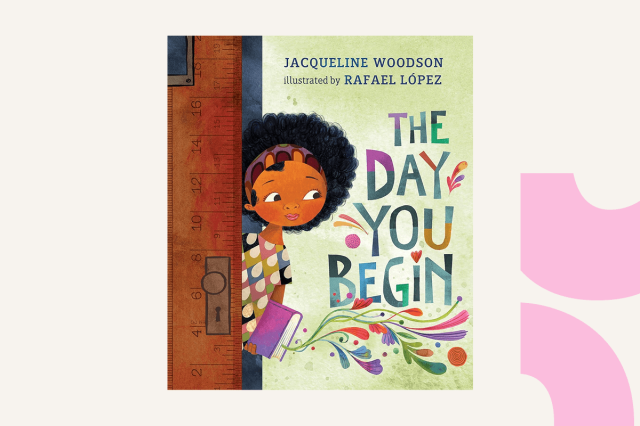
The Day You Begin by Jacqueline Woodson, illustrated by Rafael Lopez

The Day You Begin by Jacqueline Woodson, illustrated by Rafael Lopez

If you’re looking for a book to read as a family, Jacqueline Woodson has a fantastic catalogue of books for children to young adult readers. The Day You Begin follows Lyra as she learns to speak up and find her place in the world. Though she initially feels too different, Lyra learns that she can make connections with other kids over small things. 

Advertisement

More books to explore: 

FICTION

Queenie by Candice Carty-Williams 

Get A Life, Chloe Brown by Talia Hibbert

The Final Revival of Opal & Nev by Dawnie Walton

Butter Honey Pig Bread by Francesca Ekwuyasi

Sag Harbor by Colson Whitehead

Advertisement
NONFICTION

Creative Quest by Questlove

All That She Carried by Tiya Miles by Morgan Parker 

There’s Always This Year: On Basketball and Ascension by Hanif Abdurraqib

How To Say Babylon by Safiya Sinclair

The Yellow House by Sarah M. Broom

YOUNG ADULT BOOKS

The Poet X by Elizabeth Acevedo

On the Come Up by Angie Thomas

Legendborn by Tracy Deonn

Love Radio by Ebony LaDelle

King of Dead Things by Nevin Holness

PICTURE BOOKS

Ambitious Girl by Meena Harris and Marissa Valdez

Just Like Me by Vanessa Brantley-Newton

Hair Love by Matthew A. Cherry, illustrated by Vashti Harrison

Crown: An Ode to the Fresh Cut by Derrick Barnes, illustrated by Gordon C. James

Thank You, Omu! by Oge Mora

Something, Someday by Amanda Gorman, illustrated by Christian Robinson

Featured image credit: Book covers Courtesy of Amazon
2 MIN READ

What Do the Letters of Vitamins Stand For?

Have you ever wondered how vitamins are named? These are the ABCs of vitamin nomenclature.

by Rachel Gresh
Capsule pills on White Table

It’s time for some myth-busting: The “C” in “vitamin C” does not stand for “citrus,” though the nutrient is famously abundant in citrus fruits. Science began exploring the unique capabilities of vitamins around 100 years ago, and named the essential compounds by highlighting their attributes and order of discovery. 

In 1920, Polish biochemist Casimir Funk coined the term “vitamin,” derived from the Latin word for life (vita) and “amine,” a nitrogen-rich compound. Before this coinage, in the 1890s, a compound was identified that prevented beriberi, a disease that commonly afflicted sailors. Due to this usage, it was eventually named vitamin B. Next up in 1918, vitamin A was identified as “fat-soluble A” by nutrition scientist Elmer McCullum. While conducting food experiments, he found an “accessory” substance in some fats, choosing “A” as its epithet. The name was changed to “vitamin A” in 1920 with the coining of Funk’s “vitamin.” Vitamins A and B established an alphabetic naming convention with 

Advertisement

vitamins C, D, and E following suit alphabetically and in order of discovery. In 1929, Danish scientist Carl Peter Henrik Dam identified a new compound that, if the standard were followed, should have been named “vitamin F.” However, Dam chose “vitamin K” in reference to the Danish word blodkoagulation (blood coagulation), emphasizing the vitamin’s role in this process.

Later, researchers identified various forms of vitamins within the letter categorizations. They identified and numbered them during the next few decades, beginning with the earliest discovery, vitamin B1, or thiamine, named after the Greek word for sulfur, theion. By the 1930s and 1940s, 13 essential vitamins — A, C, D, E, K, and the eight B vitamins — had been identified and named. This includes vitamin B7 or biotin, which comes from the Greek biotos, meaning “life,” and vitamin B9 or folic acid, which derives from the Latin folium, meaning “a leaf,” a nod to its abundance in green, leafy vegetables.

While the names of vitamins might seem overwhelming or even arbitrary when you’re staring at the rows of numbers and letters at the drugstore, each was carefully selected to represent its order of discovery or reflect its unique properties. It’s more than just a letter; a vitamin’s name reflects its history.

Featured image credit: Nataliya Vaitkevich/ Pexels
3 MIN READ

What’s the Difference Between ‘Fair’ and ‘Just’?

“Just” and “fair” are often used interchangeably, but “just” leans toward adherence to strict rules, whereas “fair” suggests equity based on context.

by Rachel Gresh
Close-up of a Judge's gavel on desk

“The first duty of society is justice,” Alexander Hamilton once said. The famed statesman could have chosen the word “fairness” instead of “justice,” but that phrasing carries less authority. This divergence between two seemingly synonymous terms can be traced to their ancient origins to reveal their key differences.

“Just” derives from the Latin iustus (see our exploration of how the letter “i” turned into the letter “j“), meaning “lawful” or “rightful.” The adjective use (different from the adverb usage) has been used in this context since the Roman Empire. “Fair,” on the other hand, traces back to the Old English fĂŠger, meaning “beautiful” or “pleasant,” and it eventually broadened to also mean “good” or “advantageous.” By the 13th century, the metaphorical usage of “equitable” emerged — and this is what formed the bridge between the two concepts.

Advertisement

Today, “just” is firmly tied to legal jargon. “No idea in Western civilization has been more consistently linked to ethics and morality than the idea of justice,” experts from the Markkula Center for Applied Ethics at Santa Clarita University wrote in a 2018 article. We use the adjective “just” when trying to describe what is lawful or grounded in objective principles, typically in alignment with some established legal or ethical code.

“Fair,” as an adjective, is used in a relative sense, but still usually in the context of a guiding principle. The familiar adage “fair and square” emphasizes core ideas of fairness: equality and balance. While both terms touch on concepts of moral integrity, “fair” is more flexible and considers context based on all parties’ needs and circumstances. 

Consider their usage in a recognizable setting: You’re driving in an unfamiliar city, and you turn right on a red light. This is against local laws, and you receive a citation. Receiving a traffic ticket is a “just” consequence because the action was against the law, but it may not seem “fair” because the rule breaking was unintentional. Similarly, in a dreaded group project scenario, it might not be “fair” for every member to receive the same grade, but it is “just” if the grading guidelines are made clear at the outset of the project.  Ultimately, which word you choose is up to you, but they aren’t always synonymous. The distinct nuances of these terms can shape how we evaluate situations and make decisions, from the courtroom to the classroom.

Featured image credit: Chalirmpoj Pimpisarn/ iStock
2 MIN READ

Why Do We Say ‘Get Your Ducks in a Row’?

Like many idioms, this phrase has muddy origins. Wherever it came from, it’s primed to set you up for success.

by Bennett Kleinman
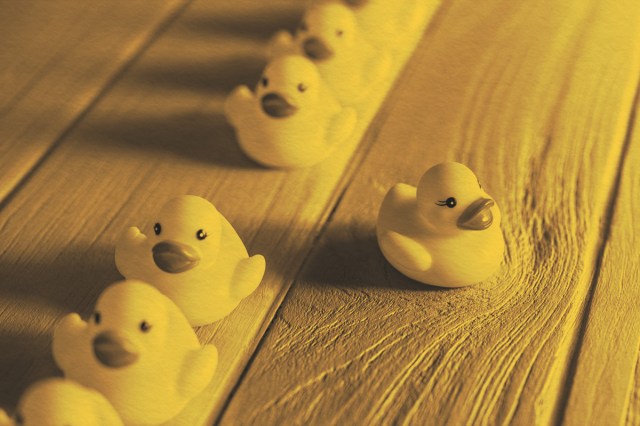
Line of yellow rubber ducks, with one out of sync

Unless you have a trail of pet ducklings to lead to the lake, or you’re a French chef prepping for a busy dinner service, you probably won’t have many opportunities to literally “get your ducks in a row.” This figurative phrase dates to the 19th century and is most likely of North American origin. Why it became so popular is the biggest question, and one with an uncertain answer. 

What we do know is that the idiom “getting your ducks in a row” means preparing for an anticipated event. This could include laying out your clothes the night before starting a new job, prepping the snacks and beverages before hosting a big house party, or scheduling a taxi to the airport. Essentially, lining up your figurative ducks means minimizing the risk of future complications when it’s time to act.

The etymological origins of these ducks are murky. One of the earliest examples of the phrase is from the November 15, 1889, edition of The Plaindealer newspaper in Detroit, Michigan: “In the meantime the Democrats are getting their ducks in a row, and their ticket is promised to be very strong.” Here, the expression is used plainly as if it would be widely understood, but it lacks an explanation.

Perhaps it was expected to be understood because duck hunting (and lining up the bounty of the hunt) was a popular practice at that time. Another theory ties it to the classic duck-shooting carnival game; however, the game’s origins are unclear, making it difficult to know if it predated the phrase. Others attribute the idiom to duckpin bowling, in which players line up ducks (pins) to knock them down with the ball. But that game didn’t become popular until the early 20th century, years after the phrase was used in that 1889 newspaper.

While there are theories behind this curious turn of phrase, the origin may remain a largely unanswered question. We assure you that no ducks were harmed in the making of this article.

Featured image credit: enviromantic/ iStock
3 MIN READ

The Sweet History of Necco’s Conversation Hearts

From outdated relationship advice to modern-day “Text Me” messages, discover how conversation hearts have been speaking love’s language for over 100 years.

by Bennett Kleinman
Valentine's Day Conversation Hearts

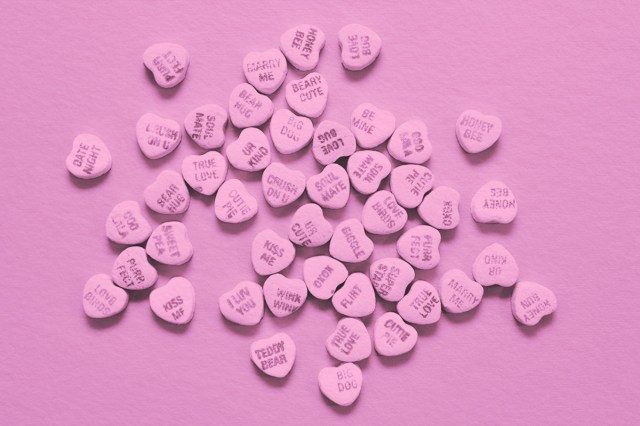
On Valentine’s Day, you can show your love through a dozen red roses, a heart-shaped box of chocolates, or a love letter, but why not make your gesture a little sweeter with a box of Sweethearts conversation hearts? These classic treats are the only ones to state right on the candy how much you adore that special person in your life, sharing simple messages such as “Kiss Me” and “Be Mine” with your valentine. These heart-shaped confections originated in the mid-19th century, so let’s take a look back at the history of one of the most popular ways to share a Valentine’s Day message. 

The Early History

In 1847, a pharmacist named Oliver R. Chase invented a machine to make cutting lozenges more efficient. The clove- and cinnamon-flavored treats that contained tons of sugar to mask the taste of medicine were a big hit. Eventually, the pharmacist cut out any medicine and started Chase and Company with his brothers to sell candy only.

The Chases conceived of new ways to market their products, including hand-printing messages on each lozenge (drawing inspiration from a British candy called “cockles,” which contained paper sayings tucked inside each one). In 1866, Daniel Chase developed a machine that made the printing process more efficient, using a felt roller pad and some vegetable dye to imprint messages on the candy. Around 1901, Chase and Company merged with several other candy companies to create the New England Confectionary Company — or Necco, as it was known throughout the 20th century until its bankruptcy in 2018. 

Advertisement
The Debut of Conversation Hearts

The messages were initially printed onto candies of various shapes, such as a scallop shell, a baseball, and a horseshoe. In 1902, the iconic heart-shaped variety made its debut. The earliest hearts were larger than the dime-size ones available today, with plenty of space for relationship advice. Examples of these early hearts read:  “Married in White, you have chosen right” and “Married in Pink, he’ll take to drink.” That type of advice disappeared as the hearts shrank in size, but shorter phrases from that era are still around today, including “Be Mine” and “Kiss Me.”

Changes Over Time

In a 2011 interview with TIME magazine, Necco marketing director Aimee Scott talked about how the company tried to incorporate a novel candy heart theme every year, adding in new phrases and carrying over some old ones. Scott claimed they “keep about 30 to 35 of the older ones” and “try to have about 20 new sayings,” which was largely dependent on popular flirtatious terminology at any given time.

Some past themes include weather (e.g., “Chill Out,” “Cloud 9”), technology (“Tweet Me” or “Text Me”), and also Spanish varieties (“Te Amo”). Some older candy hearts are clear relics of decades gone by, including groovy phrases from the 1970s and 1980s, such as “Dig Me” and “Hep Cat.” “Fax Me” notably debuted in the 1990s, though the candy heart phrase hasn’t appeared in recent years.

Conversation Hearts Today

While Necco declared bankruptcy in 2018, Spangler Candy acquired the company and began to produce candy hearts again in 2020. The treat almost immediately reclaimed its market share as the most popular non-chocolate Valentine’s Day sweet.  Continuing the Necco tradition of evolving on a theme, you can take your situationship one step further with Sweethearts “commitment” hearts, featuring messages such as “Marry Me” and “4EVER EVER?”

Featured image credit: The Desk Images/ Shutterstock