Who could forget the famous words of Don Vito Corleone inThe Godfather: “I’m gonna make him an offer he can’t refuse”? This line — one of the most memorable in cinematic history — expertly encapsulates his intentions in a casual yet pointed remark. But it might capture the attention of grammarians for another reason: The deliberate use of “gonna” rather than “going to” helps the line land smoothly, and amplifies its impact. “Gonna” can do the same for your everyday conversations — even the dictionary says so.
While many slang terms will never make it into formal lexicons, “gonna” has earned its place in the hallowed pages of the Oxford English Dictionary as a variation of the etymon (a fancy way of saying “original version”) “going to.” Similarly, Merriam-Webster recognizes “gonna” as an informal pronunciation and spelling contraction for “going to.” While it may seem like a modern invention, “gonna” is nothing new.
The phonetic simplicity of “gonna” has ensured its longevity and spread across continents. An early recorded usage dates to an 1806 collection of poems by Scottish writer Alexander Douglas: “Now, Willie lad, I’m ganna gie You twa or three directions.” This Scottish dialect was the likely genesis of the contraction, which later crossed the Atlantic Ocean and spread throughout New England. By the late 19th century, spelling variations included “gaunna” and “goin’ a”; “gonna” finally emerged in a 1904 Daily Times article in Watertown, New York.
Today, “gonna” is so ingrained in conversational American English that it’s almost the de facto pronunciation of “going to.” But this use of informal contractions isn’t an isolated occurrence. Similar terms — including “wanna” (short for “want to”), “gotta” (“got to”), and “kinda” (“kind of”) — also emerged during the 19th century, marking a shift in preference toward contractions in casual conversation.
Although “gonna” isn’t gonna fly in academic writing or business communications, it’s perfectly acceptable in relaxed settings. It keeps the conversation flowing without sounding too stiff — whether you’re delivering the lines of a mobster in a Hollywood film or chatting over a cup of coffee with a friend.
Featured image credit: Snapwire/ Pexels
Advertisement
More from our network
Word Smarts is part of Inbox Studio, which publishes content that uplifts, informs, and inspires.
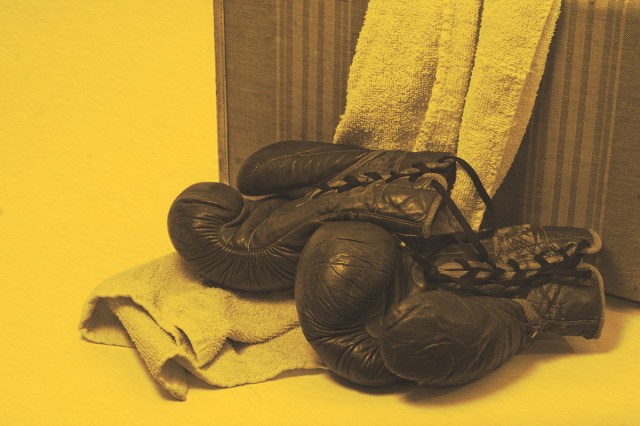
Boxing is an edge-of-your-seat-exciting sport to watch, and some evocative turns of phrase have been pulled right from the ring. “Saved by the bell” is a last-minute reprieve, and “down for the count” is a creative way to depict hitting rock bottom. But do these phrases pack the same punch as “throwing in the towel”? The versatility of this phrase — a gesture that means “I’m done” or “I surrender” — has ensured its popularity for over a century.
Like many metaphors, “throwing in the towel” started out in a literal sense, though the action isn’t as standard in boxing today. To avoid a severe pummeling, a boxer’s coach can throw an actual towel into the ring, signaling to the referee their intention to forfeit. Per Olympic boxing rules, this action results in “abandonment,” and the opponent is victorious. But how did the phrase rise to such power in the general public?
Modern boxing rose in popularity during the mid-19th century, and with it, so did boxing slang. Around this time, “throwing in the towel” took on a more figurative meaning. One of the earliest recordings comes from a 1915 publication: “He was down to his last six shillings, and felt like throwing in the towel.”
Today, we use the phrase not only in sports but in any situation where someone is giving up. Say you read this on a music blog: “After a lackluster arena tour, the artist threw in the towel on his music career.” You can sense an air of defeat from that musician. The power of the phrase lies in its vivid imagery. In our mind’s eye, we can imagine someone throwing a towel in earnest, the same way we can picture flying a white flag in retreat.
It’s not just about lazily giving up — throwing a towel into the ring feels like a bold, final decision. Whether said sarcastically or seriously, it paints a lasting image that resonates with us all.
Featured image credit: Kerry Garvey/ Shutterstock
Advertisement
More from our network
Word Smarts is part of Inbox Studio, which publishes content that uplifts, informs, and inspires.
Almost everyone has heard the advice to avoid talking about money in social situations. Etiquette isn’t our specialty, but language is — and since discussions of money apparently have an impolite connotation, a number of different slang words, or euphemisms, have cropped up to fill the gap. Though the word “money” is not inherently vulgar, euphemisms stand in for concepts people are uncomfortable talking about directly. Here are some of the offbeat terms used over the years to refer to the cash in our pockets.
Cash
Cash IS king. “Cash” was coined in the 1590s as a derivation of a few Romance language words: the French caisse, Italian cassa, and Latin capsa, all of which mean “money box.” Originally, “cash” referred exclusively to an actual box that people kept their money in. By the 18th century, the term was more widely used in reference to money itself.
Moolah
The colloquial term “moolah” popped up in the 1930s, as seen in the Daily News (New York). The origin is unclear, but some have speculated that it might have originated from the Spanish word for mule, mula, because it’s one of the spelling variants. “Moolah” sounds right at home in a New York gangster period film.
Bread
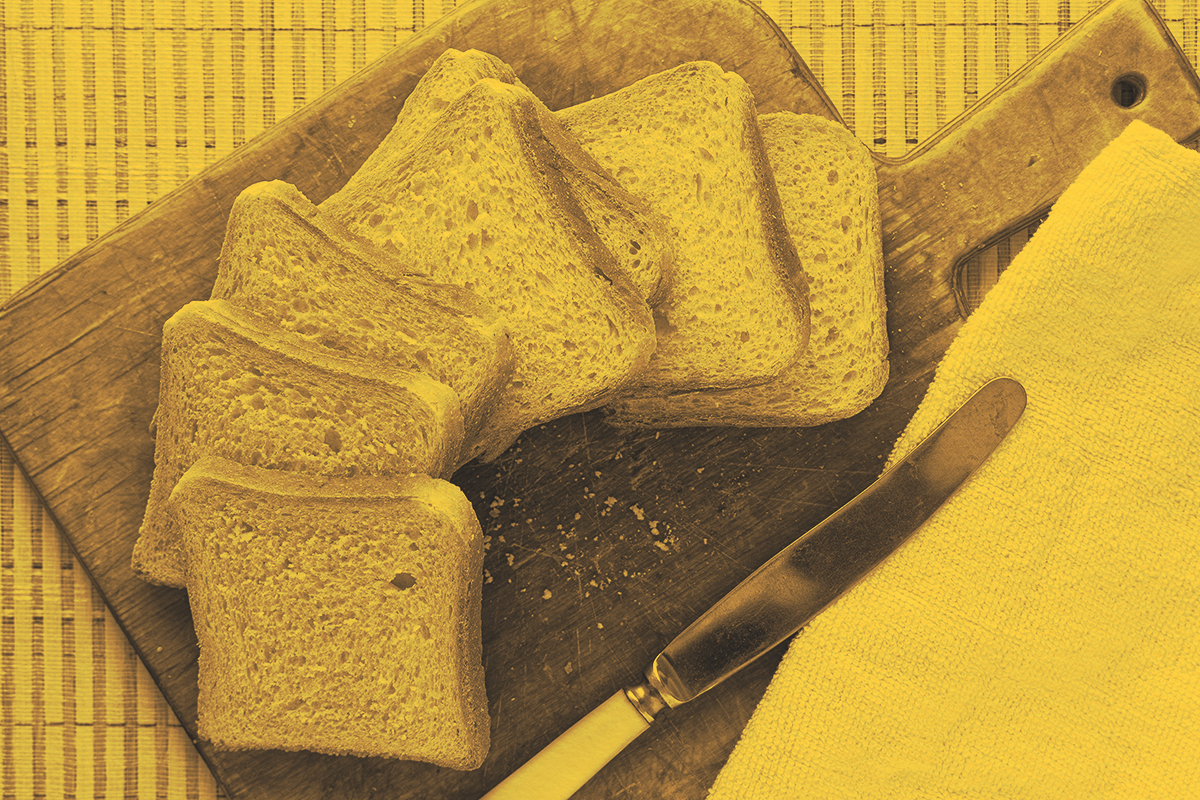
Bread is a familiar food, and the word “bread” was used to refer to food in general in Old English, so we know it’s long been a staple of people’s diets and acts as a barometer for the health and wealth of a society. The use of “bread” to mean “money” didn’t start until the 1940s, but using the word in a broader sense to represent one’s livelihood dates to the early 18th century.
Advertisement
Dough
Dough is the uncooked material of bread, so naturally, “dough” is another slang term for “money.” It comes out of a similar reference to survival necessities such as bread. People started using “dough” for “money” in the 1850s, and it became particularly popular in 20th-century jazz music. The song “The Lady Is a Tramp” from the Rodgers and Hart musical Babes in Arms includes the line, “No dough? Hi ho!” in reference to traveling on a whim. In more recent music, hip-hop and rap artists Lil Wayne, Chief Keef, and Notorious B.I.G. have song titles that include “dough,” and the lyrics are about making money.
K
If someone has $10,000 in hand, you might say they have “10K.” This shorthand comes from the Greek kilo, which means 1,000 and is often used as a prefix in measurements (e.g., “kilogram,” “kilowatt”). But when it comes to money, the “K” always appears and is pronounced after the value, likely because “10K” is a representation of “10 thousand dollars,” in that order.
Bucks
As a specifically American term for money, one “buck” usually references one U.S. dollar. However, the phrase “make a quick buck” can mean earning a larger, unspecified amount of money. (“Quick buck” also has a scammy connotation.) As it was first documented in 1856, “buck” could be a shortening of “buckskin,” which was a trading unit between North American Indigenous communities and frontiersmen. People used buckskin for making warm clothing.
Advertisement
Clam
The mollusk clam with two round shells of equal size, connected by a muscle, gives us another food-adjacent term for an American dollar. Many Native American tribes turned the clam shells into wampum — strings of beaded shells used for bartering. The Library of Congress notes that wampum was regarded as legal tender in New England from 1627 to 1661. Clamshells were considered to be legal tender as recently as 1933, when Californians used them to make up for a lack of available currency during the Great Depression.
Kale
In addition to its reputation as a food trend overtaken by hipsters, “kale” is a food-based slang term for money. Its use as “money” dates back to 1902, probably related to the fact that kale is green like American dollars. “Cabbage,” also in the leafy green vegetable family, similarly means “money,” and “long green” doesn’t mean green beans, but it falls under money slang as well.
Ducat
As with many other turns of phrase that we can credit to the Bard, we have Shakespeare to thank for European currency sneaking its way into English money slang. A ducat is a gold coin formerly used for currency in many countries, but the word originated from “the name or effigy of Roger II of Sicily, Duke of Apulia, which first issued the coins (c. 1140).” The sum of 1,000 ducats is a major plot point in Shakespeare’s The Merchant of Venice, though modern audiences might remember the term better from the 1995 movie Clueless, in which the main character Cher narrates that a teacher “earns minor ducats for a thankless job.”
Advertisement
Smackers
“Smack” has a long list of definitions across multiple parts of speech, including as an onomatopoeia for a sharp slap. But “smackers” or “smackeroos” are American dollars. “Smacker” entered the English language in the 1910s, likely from the sense of “smacking” some money into someone’s hand or down on a table. “Smackeroo” joined the slang fray in 1939.
Beginning in 1869, $100 bills were printed with a “C” in the upper corner, representing the Roman numeral for “100,” so the bills came to be known as “C-notes.” In 1914, the newly established Federal Reserve issued its first official $100 bill and changed the design, doing away with the “C,” though the name remains popular.
Benjamins
The slang term “Benjamins” refers to founding father and American statesman Benjamin Franklin, whose portrait has appeared on the $100 bill since 1914. But according to the Oxford English Dictionary, “Benjamins” only developed as a slang word for money after appearing in the lyrics for the 1994 song “One More Chance” by the Notorious B.I.G.
Featured image credit: Alexander Mils/ Unsplash+
Advertisement
More from our network
Word Smarts is part of Inbox Studio, which publishes content that uplifts, informs, and inspires.
When it comes to socks, bicycle wheels, and chopsticks, pairs are essential for success. Such can be the case in certain aspects of grammar, too. When a pair of consonants teams up this way, it’s called a “geminate.” These double consonants are typically pronounced twice or lengthened, as in “midday,” “bubble,” and “roommate.” However, all doubled consonants are considered geminates, even if the sound isn’t altered significantly. “Geminate” can be a noun for the word containing the doubled consonants, an adjective describing the occurrence, and a verb for the speech sound. “Gemination” is also a noun for the grammatical concept.
“Geminate” shares an etymological root with “Gemini,” the third sign of the zodiac, aptly represented by the twins Castor and Pollux. Both the grammatical usage and the astrological sign trace back to the Latin root geminus, meaning “twin.” In modern grammar, “geminate” also applies to certain compound words, such as “life force,” “bookkeeper,” and “cat tail,” which all feature double consonants. But the pronunciation of geminates can vary based on dialect. In the South, for example, both “t’s” in “butter” might be pronounced, while in other regions, the second “t” would be undetectable. Pronunciation differences don’t matter to the concept of a geminate, though; the double consonant spelling is what counts.
English isn’t the only language that relies on gemination. In fact, it plays a more prominent role in a language such as Italian, in which a doubled consonant can alter the verb tense. For example, the Italian verb bevve means “drank” (past tense), while beve means “drinks” (present tense). This spelling change causes significant differences in verb tense and overall meaning.
Geminates also create new words in Japanese, but the double consonant sound is instead represented by a small “tsu” character (っ). For example, きた (or “kita”) means “arrived,” while きった (or “kitta”) means “sliced.” Notice the tsu character っ in the second spelling, indicating gemination.
Perhaps “geminate” is a new word for you, but you likely use gemination in your speech every day, and these examples show that it’s a powerful concept in languages across the world.
Featured image credit: Andrii Yalanskyi/ iStock
Advertisement
More from our network
Word Smarts is part of Inbox Studio, which publishes content that uplifts, informs, and inspires.
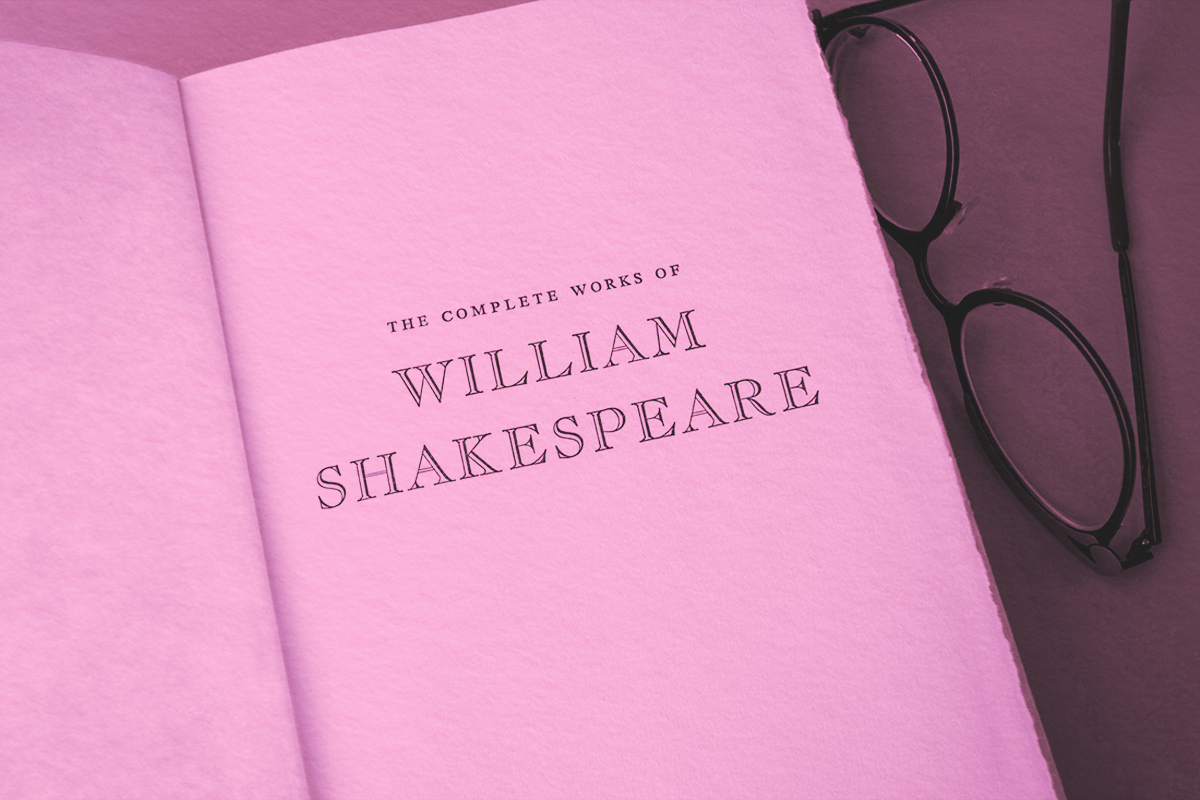
From the “green-eyed monster” to the first knock-knock joke, discover how Shakespeare’s linguistic genius shaped the everyday phrases that still pepper our vocabulary — even if you think it’s “all Greek to me.”
William Shakespeare’s impact in your life is much bigger than just some required reading in your high school English class. It’s believed that almost 2,000 words appeared for the first time in his plays and poetry — including many that are regulars in our everyday modern vocabulary, such as “downstairs,” “eyeball,” and “bedroom.” He also built on existing language by changing words that were previously used as nouns into verbs, and by adding prefixes and suffixes to create new variations. As Shakespeare is widely considered the most influential English playwright, his enormous body of work continues to influence slang and everyday speech more than 400 years after the original pieces were published. Here’s a rundown of popular phrases that were borrowed from the Bard of Avon.
Lie Low
You may think you’re playing it cool, but this common piece of advice comes from Shakespeare himself. As Antonio inMuch Ado About Nothing suggests, “If he could right himself with quarreling, some of us would lie low.”
Green-Eyed Monster
This phrase, referring to jealousy, first appeared in Othello, where envy is the main characters’ undoing. As Othello’s frenemy Iago sagely warns: “Oh, beware, my lord, of jealousy! It is the green-eyed monster which doth mock the meat it feeds on.”
Advertisement
Heart of Gold
Before Blondie’s “Heart of Glass,” there wasHenry V, whose title character is described by supporting character Pistol as having “a heart of gold, a lad of life, an imp of fame, of parents good, of fist most valiant.” High praise, indeed.
Fair Play
All’s fair in love and kingdom negotiations, as Miranda in The Tempestnotes, “Yes, for a score of kingdoms you should wrangle, and I would call it fair play.”
Break the Ice
You can also blame Shakespeare for dreaded ice breaker games. In The Taming of the Shrew, Tranio (disguised as Lucentio) comments, “If it be so, sir, that you are the man must stead us all, and me amongst the rest, and if you break the ice and do this feat, achieve the elder, set the younger free for our access.” In other words, kudos to the protagonist Petruchio for breaking the ice to free up the maiden Bianca for other suitors.
Advertisement
Wild-Goose Chase
A goose chase was a game inspired by the erratic flying patterns of the bird, in which riders trained their horses to conduct a series of difficult maneuvers, and then others had to copy. In Romeo and Juliet, Mercutio cries, “Nay, if our wits run the wild-goose chase, I am done.” Knowing how things turn out for Mercutio and the young lovers, it makes sense that this phrase refers to a fruitless and complex (if not tragic) game of pursuit.
It's All Greek to Me
Not sure what’s going on? Neither was Roman Casca in Julius Caesar, when he said, “But those that understood him smiled at one another and shook their heads; but, for mine own part, it was Greek to me.”
Forever and a Day
This phrase is an emphatic declaration of how long Orlando would love Rosalind in As You Like It, although it was originally used in The Taming of the Shrew(published four years earlier) to bid Bianca an exceptionally long farewell.
Advertisement
As Good Luck Would Have It
We’ve since dropped the “good,” but this saying about a serendipitous event comes from The Merry Wives of Windsor, when Falstaff mentions meeting Mistress Page and gaining some useful information.
Love Is Blind
Chaucer coined it in 1405, but Shakespeare popularized this phrase when The Merchant of Venicepremiered in 1605. Jessica wistfully explains, “But love is blind, and lovers cannot see the pretty follies that themselves commit.”
Shakespeare, not Sir Arthur Conan Doyle, originated Sherlock Holmes’ most famous catchphrase. It pops up in Henry V, spoken by Northumberland to Hotspur and Worcester: “Before the game is afoot thou still let’st slip.”
Knock, Knock! Who's There?
Congrats, Shakespeare! You are the father of the knock-knock joke. While used to cheesy effect today, this line, when uttered multiple times by the Porter in Macbeth, demonstrates a deft sense of cleverness.
Featured image credit: Shiao Risu/ Shutterstock
Advertisement
More from our network
Word Smarts is part of Inbox Studio, which publishes content that uplifts, informs, and inspires.
Casual conversation is chock-full of faux pas that are technically harmless but can be irksome to those in the know. One such topic for debate is the term “whenever.” Its frequent incorrect usage as a substitute for “when” can be a sore spot for wordsmiths, but it’s a nuanced difference.
While both “when” and “whenever” address time, they differ in how we use them. Behold this frequent offender: “Whenever I was a senior in high school…” This might sound natural (for some) in casual conversation, but it’s technically incorrect. The speaker should use “when” because they’re referring to a specific period of time.
By definition, “whenever” means “at whatever time” — it’s flexible. It contradicts its core meaning when misused to replace a specific instance. Here’s a correct example to consider: “When I’m done at the office today, I’ll go to the grocery store.” Here, “when” correctly denotes a specific moment: after work. The incorrect counterpart, “Whenever I’m done at the office today,” erroneously suggests a more vague timeline for the visit to the grocery store. Even if you don’t know the exact time frame you will be done with your work, “when” is still used to indicate that it will be a specific moment in the future. So, when can we use “whenever”?
“Give me a call whenever you can” is a correct usage. It implies flexibility without a clear or fixed appointment. Similarly, “I like to go for beach walks whenever I get the chance” indicates recurring occasions, not one specified point in time. When in doubt, remember that “when” refers to a defined moment, and “whenever” is about the freedom to act at any time.
Featured image credit: DocPhotos/ Shutterstock
Advertisement
More from our network
Word Smarts is part of Inbox Studio, which publishes content that uplifts, informs, and inspires.
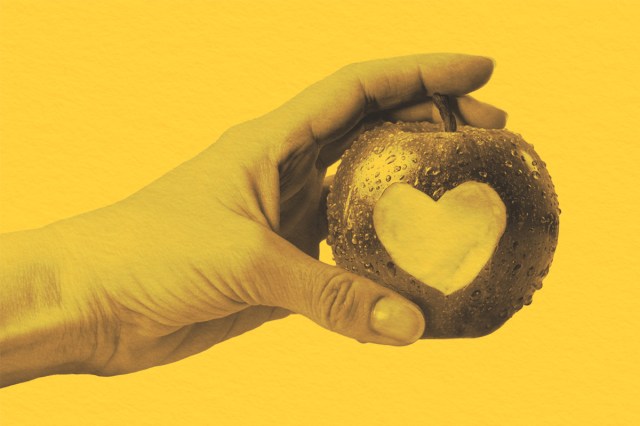
Why is “apple of my eye” a term of endearment? Why not a strawberry? It turns out this idiom started out with a literal meaning, more than 1,000 years ago.
An idiom is a phrase in which the literal meanings of the words don’t translate for the overall intention of the saying. “Apple of my eye” is a term of endearment implying an individual is cherished above others. It can be used romantically or platonically, but always with affection and sometimes suggesting that said “apple” is the center of their world, as in, “His grandson was the apple of his eye.” You might think it’s an idiom because your eye does not contain a literal apple — but if we look at the history and etymology of this phrase, we find a literal meaning that pulls it away from idiom territory.
The phrase was popularized by an appearance in A Midsummer Night’s Dream(c. 1600), Shakespeare’s romantic comedy of errors in which magic and mistaken identity cause lighthearted chaos. Mischievous fairy king Oberon speaks these lines while dripping love potion into a sleeping man’s eyes:
“Flower of this purple dye,
Hit with Cupid’s archery,
Sink in apple of his eye,
When his love he doth espy,”
In 1611, the phrase appeared in the King James Bible in Deuteronomy 32:10: “He kept him as the apple of his eye.” The apple was likely the literal center of the eye in Shakespeare’s version, but the biblical reference was metaphorical.
However, the first documented English-language appearance of the phrase is attributed centuries earlier to King Aelfred the Great of Wessex in 885 CE, beginning the interpretation of the apple referring to the pupil of the eye — the small black dot at the center of one’s eye. In Old English, æppel could refer to anything small and round, including both the fruit and the pupil.
Giving further credence to a literal interpretation of “apple of the eye,” King Aelfred’s Old English had been translated from the Latinpupilla oculi, meaning “pupil of the eye.” The evolution of “apple of the eye” from a literal eye pupil to a figurative term of endearment makes sense to me. Apples hold a prime place in many cultures. The Greek goddess Aphrodite was associated with apples, and in the Bible, they are the forbidden fruit of the Garden of Eden. Students bring an apple to a beloved teacher, and an “apple a day keeps the doctor away.”
Featured image credit: Petra Schueller/ Shutterstock
Advertisement
More from our network
Word Smarts is part of Inbox Studio, which publishes content that uplifts, informs, and inspires.
Words that are extremely similar across multiple languages are called “cognates,” meaning they share the same root word or origin. Here are several words that travel across borders and languages.
You say “toe-may-toh,” I say “toe-mah-toe.” While this playful phrase highlights the differences between British and English accents, there are many words that are extremely similar across multiple languages. Linguists call these terms “cognates,” meaning they share the same root word or origin. Here are several words that travel across borders and languages, always staying recognizably similar.
Chocolate
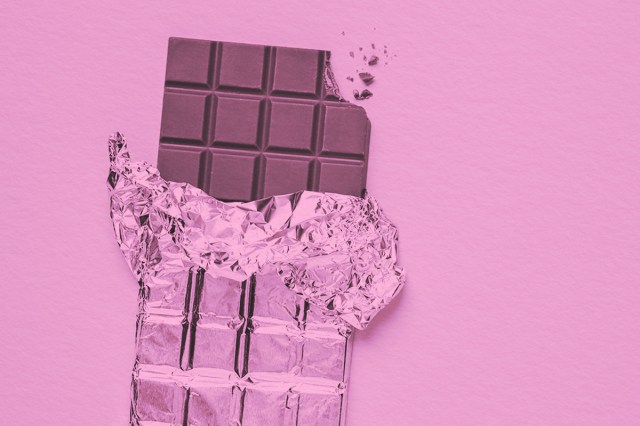
The edible chocolate known and loved today comes from the cacao bean, first grown thousands of years ago in the Amazon basin. These beans were so valuable for flavoring food and drink that Indigenous peoples traded the beans as currency when Europeans arrived in the region. The word “chocolate” was first used in European and Mexican writings in the late 1500s — “chocolate” was the Pipil people’s word in the Nahuat language for a cacao bean drink.
As the cacao bean traveled the world, the word “chocolate” became associated with the taste of any of the sweet treats made with the bean, even if they weren’t beverages. Today, whether we call it chocolat (French), čokoláda (Czech), shokolad (Hebrew), or chokolid (Korean), we’re enjoying an item grown and produced by Indigenous Americans thousands of years ago.
Coffee
This delicious caffeinated beverage first appeared in Yemen around the 15th century. One early name for the drink — qahwah — comes from the Sufi Muslims of Mocha. It is derived from a longer phrase that means “wine of the bean.” There are several accounts from different Europeans who encountered a dark, hot beverage in the Middle East around the late 16th century, and the spellings for the drink include “chaube,” “cavee” “caova,” and “cahue.” By the 18th century, coffee was part of Europeans’ everyday life.
The term “coffee” eventually became the standard spelling for the drink in English circles, and other languages adopted similar phonetics. From the French café and the German Kaffee to the Hindi kofee and Afrikaans koh-fee, the word has stayed remarkably similar across the globe.
Pineapple
While many world languages refer to this tropical fruit as ananas, in English, it’s a pineapple. The fruit was first called nanas (which meant “excellent fruit”) by the South American Indigenous Tupi-Guaraní people. European explorers came across the fruit in the late 1400s and called it a pineapple, because they thought it resembled a pinecone.
Today, the fruit is called a pineapple in English, piña in Spanish, and pinya in Tagalog. However, many more languages use the Tupi version — including French (l’ananas), Swedish (ananas), and German (Ananas).
Taxi
Being the most recently coined word on this list has helped “taxi” become more widely adopted across the planet. Horse-drawn carriages for hire were ferrying passengers around London as early as 1605, but the word “taxicab” is a late-19th-century invention. With the advent of gas-powered cars (cabs) came a need to measure the distance and the fare. The device to do that was called a taximeter, taken from the French taxe (“tariff”) and mètre (“measuring”). The taximeter monitored the rides of taxicabs, which soon became shortened to just “taxis.” Today, more than 20 languages use some version of the word “taxi,” making it easier for travelers everywhere to hail a ride.
Tea
For the most part, two versions of the word “tea” are used worldwide, and we would recognize both in English. One is a variation of “tea,” and the other is a version of the word “chai,” from Hindi. Both terms come from China, where these goods originated hundreds of years ago.
According to some linguists, the “tea” versions are used in countries where traders would have traveled by sea to bring the beverage to locals, such as England (“tea”), Italy (tè), and the Netherlands (thee). The “chai” variations are popular in areas where the leaves would have come via the Silk Road, such as Korea (cha), India (chay), Russia (chay), and Arab countries (shay).
Featured image credit: New Africa/ Shutterstock
Advertisement
More from our network
Word Smarts is part of Inbox Studio, which publishes content that uplifts, informs, and inspires.
Much like there’s no consensus on the perfect way to cook a steak (I’ll take mine rare) or the best hot dog toppings (mustard and sauerkraut, obviously), there are some idioms that lack any sort of universally accepted origin story. “To a tee,” which dates back to the late 17th century, is widely understood to mean “executing something exactly or impeccably,” but the etymological debate rages on over the phrase’s precise origins.
Some claim that this idiom comes from sports, either the idea of aiming at the tee line in the winter sport of curling or the image of a golf tee. Others say it has to do with a drafting tool called a T-square, which is used by carpenters and architects for drawing crisp lines on perfect angles. But according to the Oxford English Dictionary, those options have been researched to the point that they’re largely regarded as untenable.
Of all the purported theories, the most likely connects “to a tee” to the concept of a tittle — a noun defined as “a tiny part of something.” While a tittle can describe any small part, traditionally it’s used for the little dot found atop a lowercase “i” or “j.” What makes this theory so reputable is that the phrase “to a tittle” predates “to a tee” by nearly a century, though both are used in similar contexts.
“To a tittle” appears in a 1607 play written by Francis Beaumont and John Fletcher, in the line, “I’ll quote him to a tittle.” The implication here is “to get the quote exactly right,” much like “to a tee” means “to adhere to small detail.” It’s believed that “tittle” was shortened to a simple “tee” sound in speech over the ensuing decades, and in 1693, a version of “to a T” appeared in a satire by James Wright. People went on to use the variations “to a T” and “to a tee” interchangeably, though “to a tee” became the more common spelling by the 20th century.
Featured image credit: Alexander Mils/ Unsplash+
Advertisement
More from our network
Word Smarts is part of Inbox Studio, which publishes content that uplifts, informs, and inspires.
Newton’s third law of motion states that for every action there is an equal and opposite reaction. While that concept is true in physics, there’s no “Webster’s law” insisting that each word has an equal and opposite term. In fact, there are plenty of unpaired words in English. One of the most confusing to be without an opposite is “nonplussed.”
“Nonplussed” is an adjective that describes a person who is so surprised or confused by a situation that they don’t know how to respond. “To be nonplussed” is often used to mean to be at a loss for words, for example. It’s easy to assume the “non-” acts as a negating prefix, as in the words “noncommittal” or “nonexistent,” but that linguistic principle doesn’t apply to “nonplussed.” While you can find “existent” (meaning “having reality or existence”) in the dictionary, you won’t find “plussed.”“Non” isn’t a prefix at all in the case of “nonplussed.” It’s not meant to negate another term; instead, it comes directly from the Latin non plus, which translates to “no more.” “Nonchalant” and “disgruntled” follow a similar pattern — one cannot be simply “chalant.” (“Gruntled” is found in some dictionaries, but it was created as a backformation in the 1930s to mean “pleased, contented,” serving as the opposite to “disgruntled.”)
However, things have gotten more complicated in recent decades with “nonplussed.” While the usage of “being so shocked they don’t know how to respond” has been in English since the 1600s, around the 1960s the word began to be used in American English in the exact opposite way. People began to use “nonplussed” to describe someone who was unperturbed — essentially making “nonplussed” an antonym of itself, as it can describe someone who’s startled or relaxed. The latter isn’t considered standard usage, but it is growing in popularity. So, while there’s no “plussed,” “nonplussed” has evolved into a redundancy to fill that void.
Featured image credit: ViDI Studio/ Shutterstock
Advertisement
More from our network
Word Smarts is part of Inbox Studio, which publishes content that uplifts, informs, and inspires.
Enter your email to receive daily lessons that dive into what makes English so fascinating. Each email is packed with odd rules, etymologies, and the tools you need to be a better communicator.
Sorry, your email address is not valid. Please try again.
Sorry, your email address is not valid. Please try again.